



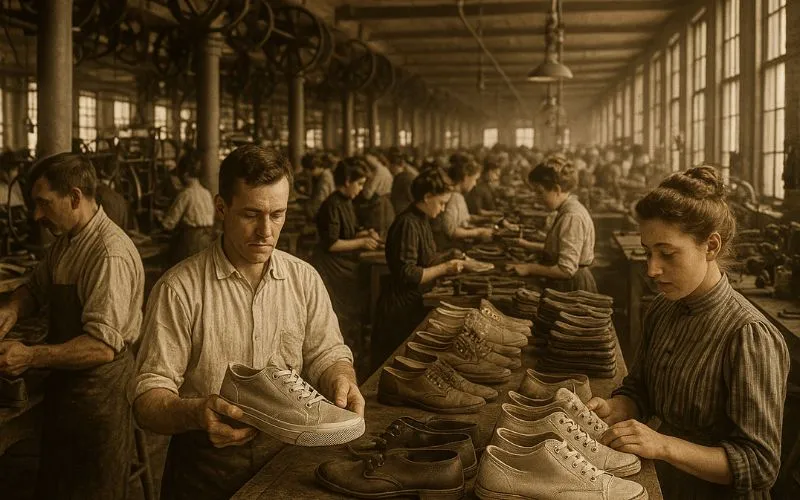
Few things in fashion have travelled as far as the sneaker. The evolution of sneakers is really a story about the way we live: how we work, move, celebrate and dress. What began as humble athletic footwear now sits comfortably beside heels at a wedding and trainers on a morning walk, styled with everything from denim to a lehenga.
For women especially, sneakers have gone from gym-bag afterthought to wardrobe hero. Styles like wedge sneakers for women pair a subtle lift with all-day comfort, proving that practical and pretty were never opposites. Here is how sneakers evolved from sportswear into the fashion staples we can’t stop reaching for.
The Evolution of Sneakers Begins: A Historical Perspective
Early Beginnings in Sportswear
The sneaker’s origin story starts in the late 1800s with the “plimsoll,” a simple canvas shoe on a rubber sole, prized for its grip and quiet step. The name “sneaker” itself is a nod to how silently the wearer could move. By 1917, Converse had launched the All-Star, a basketball shoe that would go on to sell in the hundreds of millions and outlast nearly every trend that followed.
The Brands That Built a Foundation
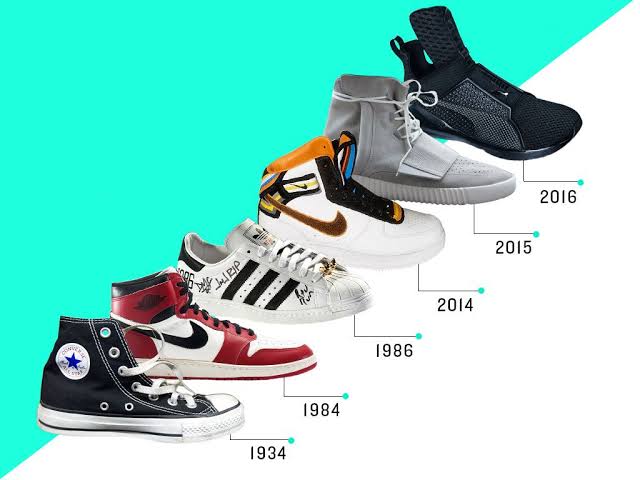
Those early years were shaped by a handful of now-legendary names. Two feuding German brothers split the family business into Adidas and Puma, then redefined track and field between them. In the United States, Nike arrived with the featherlight Cortez and a waffle-iron sole that changed what a running shoe could be. Together, these houses turned sports equipment into objects of desire, taking the first real step in the evolution of sneakers.
When Sneakers Became Culture
The 1970s, ’80s and ’90s pulled sneakers off the court and into everyday life. Hip-hop made them a language: when Run-DMC rapped about their Adidas, they sold the shoe to a generation without a single athlete in the frame. Michael Jordan’s 1985 Air Jordan line fused sport, style and identity into something far bigger than basketball, while the Air Max let everyone literally see the cushioning underfoot.
Sneakers on Screen
Film and television did the rest. Futuristic kicks in blockbuster movies, celebrity collections splashed across magazines, and music videos on constant rotation turned sneakers into aspirational fashion. By the close of the century, the right pair signalled taste, belonging and no small amount of status.
From the Court to the Catwalk
The early 2000s blurred the line between sportswear and streetwear for good. Sneakers became genuine everyday essentials, dressed up with jeans and dressed down from tailoring. Then came the collaboration era. Limited-edition drops, where a brand releases only a few thousand pairs at a time, created queues, hype and a booming resale market in which a single coveted shoe could sell for many times its retail price. This stretch of the evolution of sneakers quietly rewrote the rules of fashion.
Luxury Houses Embrace the Sneaker
High fashion soon followed. Gucci, Balenciaga, Louis Vuitton and Dior all folded sneakers into their collections, marrying premium leather and craftsmanship with street-born silhouettes. Almost overnight, a sneaker could be couture. It is a shift that resonates with a brand like Anaar, where comfort and craft are never in competition.
The Rise of Women in Sneaker Culture
For a long time, sneaker culture was told as a men’s story. That has changed. Women now drive a fast-growing share of the market, and some of the most celebrated designs of the last decade have come from collaborations with women in sport, music and fashion. No honest history of sneakers is complete without them.
The women’s chapter also gave us the wedge sneaker: a concealed heel tucked inside a sporty upper that arrived in the early 2010s and never really left. It captured exactly what many women wanted, the ease of a trainer with a flattering lift. In India, where a single day can run from a work meeting to a mehendi, that versatility is priceless, and it is why wedge sneakers have earned a permanent place in the wardrobe.
The Future of Sneakers
Technology and Sustainability
The next stage of the evolution of sneakers is being built in the lab. Expect smarter cushioning, adaptive fits, and a firm pivot toward sustainability, with recycled plastics, organic textiles and repair-and-resell programmes as shoppers ask more of the brands they love.
The Digital Sneaker Economy
The resale boom shows little sign of cooling. Industry research now values the global sneaker resale market at more than US $10 billion, with forecasts pointing toward roughly US $30 billion within the decade. Drops sell out in minutes, social feeds set the trends, and a great pair is treated as both fashion and quiet investment.
The Takeaway
From plimsolls to the podium, the evolution of sneakers mirrors our own move toward a life that is more comfortable, more expressive and a little less formal. For women, they have become the rare shoe that does everything: effortless, elevated and endlessly wearable. Whether you lean flat and minimal or love the quiet confidence of a wedge, there has never been a better moment to make sneakers a staple of your own story.