


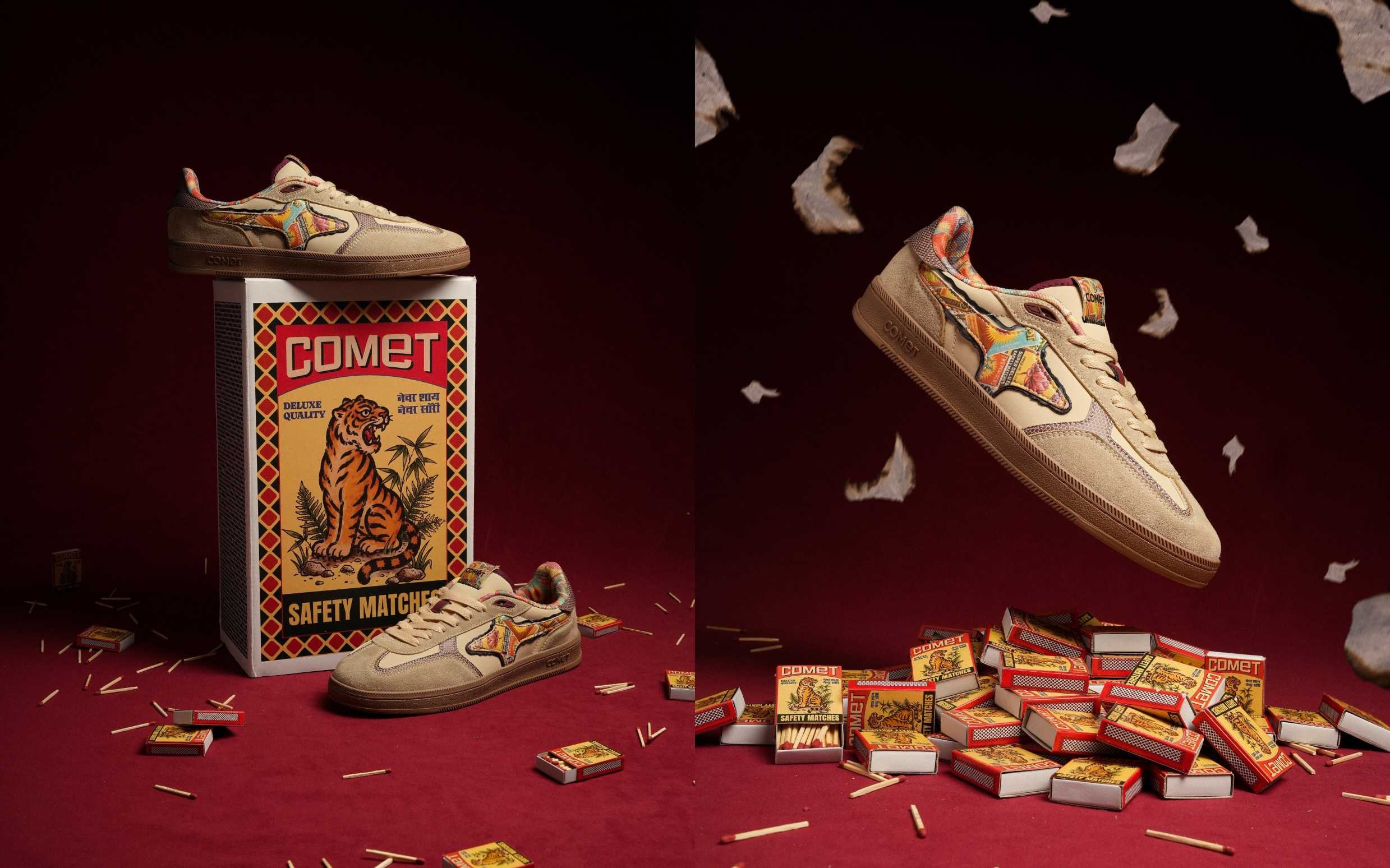
On the 24th of June 2026, at 6 PM Indian Standard Time, a Bengaluru-based sneaker brand called Comet dropped 800 pairs of a shoe called the Comet Maachis. By the time most people saw the notification, it was gone.
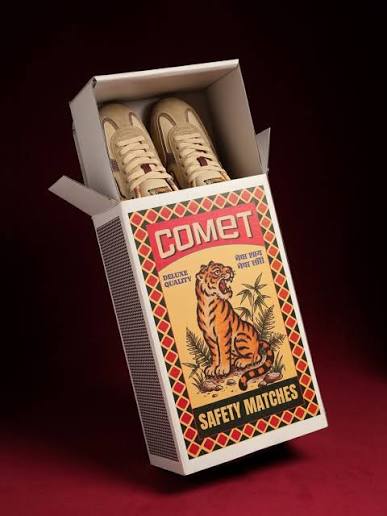
The Maachis (matches, in Hindi) is not a normal sneaker. It comes packaged inside a life-sized matchbox that slides open like the real thing. It’s built in beige suede with bold red graphics lifted directly from vintage Indian matchbox labels. And, most improbably, tucked beneath the heel tab is a functional striker strip. Flip the tab, drag a matchstick across it, and it lights. Actual fire, at your heel.
This is the Comet Maachis. And it’s worth understanding what Comet just pulled off, because it’s the sharpest piece of Indian streetwear design we’ve seen this year.
Comet Maachis, at a Glance
| Model | Comet Maachis (Aeres silhouette) |
| Drop | 24 June 2026, 6 PM IST |
| Run size | 800 pairs |
| Restocks | None planned |
| Status | Sold out |
| Upper | Soft microfibre with suede overlays |
| Colourway | Beige suede with bold red matchbox-inspired graphics |
| Signature feature | Functional match striker strip beneath the back heel tab |
| Packaging | Life-sized Comet matchbox that slides open |
| Where | wearcomet.com (Vault drop, no restocks) |
1. The Match Striker Is Real, and That’s the Whole Point
Every sneaker brand claims to reinvent something. Comet actually did.
The Maachis has a real functional striker strip built into the sneaker itself, hidden under the back heel tab. Lift the tab, drag a matchstick against the strip, and it lights. According to Impact Magazine, Comet is calling this the world’s first sneaker with a functional match striker, and no other footwear release contradicts them.
Utkarsh Gupta, co-founder of Comet, told Impact the idea came from the cinematic gesture of striking a match against a boot, referencing both classic Western films and, more directly, the recent Bollywood film Dhurandhar, in which Ranveer Singh does exactly that. Turn that gesture from theatre into infrastructure and you have the Comet Maachis.
The functional bit matters. Novelty features on sneakers are usually decorative — printed to look like a thing, not actually the thing. Comet’s striker is not decorative. It works. That decision, more than any graphic or colourway, is what makes the Maachis genuinely new.
2. Built on Comet’s Aeres Silhouette
The Maachis is not a new sneaker shape. It’s an existing Comet silhouette — the Aeres — reworked into a themed edition.
That’s the smart move. Building the Maachis on a proven silhouette meant Comet could concentrate all the design attention on the storytelling: the matchbox packaging, the striker mechanism, the graphics, the material choices. The shoe itself is a known quantity.
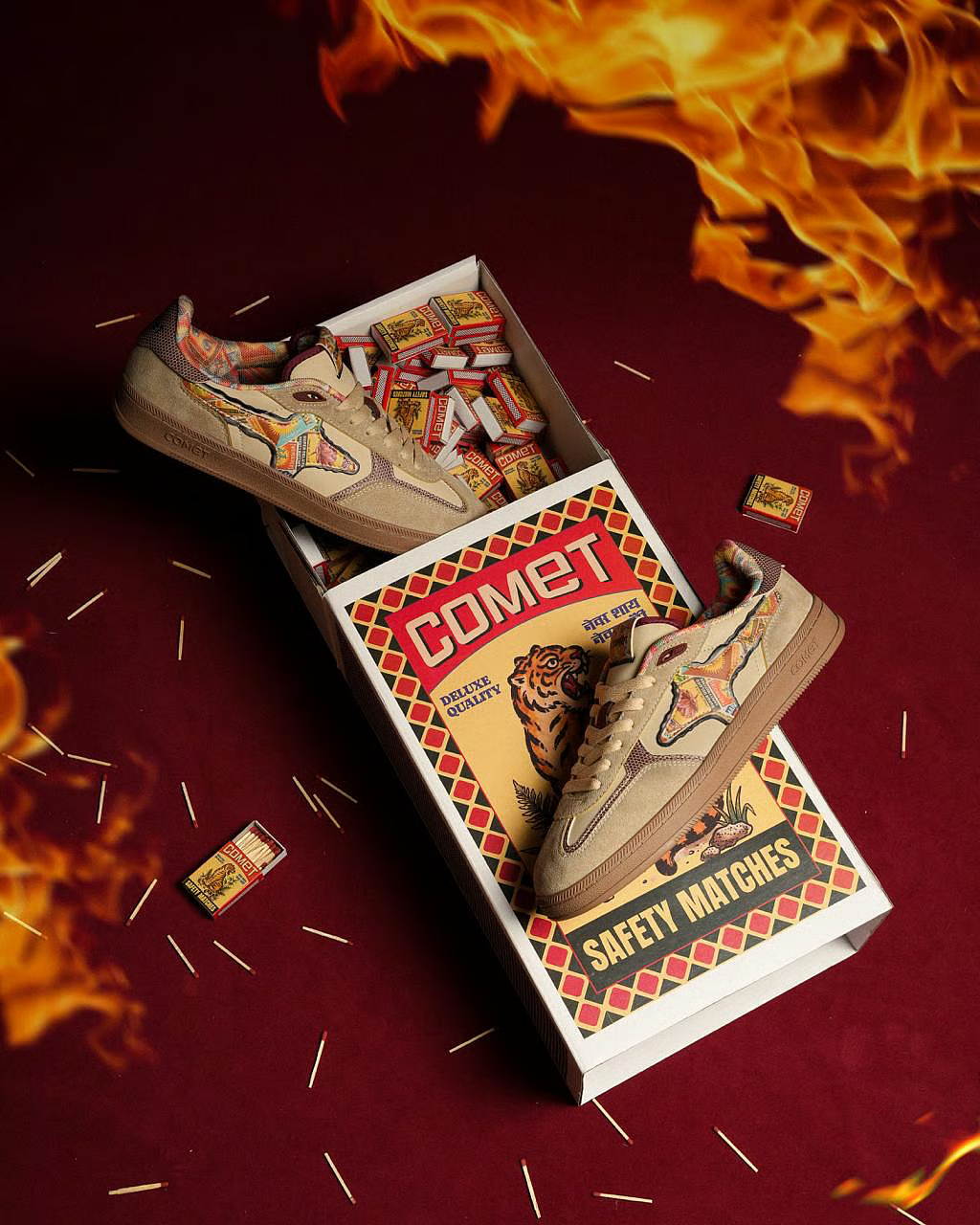
Per Comet’s own product page, the upper combines soft microfibre with suede overlays in a beige base, the inner lining is printed with matchbox art, and Comet’s signature shooting-star logo is re-rendered in red to match the matchbox palette. The whole build reads as heritage-graphic streetwear, precisely the vernacular that carries in 2026.
3. Why the Matchbox Reference Actually Matters
To an outsider, matchboxes are a random object to build a sneaker around. To anyone who grew up in India, they’re not. This is the design decision that took the Maachis from clever to real.
Homegrown’s launch coverage makes the case cleanly. Matches were originally imported to India from Sweden and Japan. After Independence, matchbox labels became storytelling tools for the new nation, illustrated with radios, telephones, aeroplanes, trains, farmers, cricketers — a running visual diary of what modern India was supposed to look like. For the second half of the twentieth century, the matchbox was one of the most widely distributed pieces of graphic design in the country.
Comet has, in effect, taken a piece of Indian visual culture that everyone recognises but nobody thinks of as design, and put it on a sneaker. The graphics on the Maachis are not new artwork inspired by matchboxes. They are the visual language of matchboxes, moved onto a different object.
This is what heritage streetwear looks like when it works. Not a logo slapped on a mood board. An actual reference, understood by the audience, executed with respect.
4. The Drop Strategy: 800 Pairs, No Restocks
Comet did not gently launch the Maachis. They shipped it as a Vault drop: 800 pairs, one release window, no restocks. The Instagram announcement laid it out in exactly that language, and the shoe sold out on the day.
Small drops have become the default in streetwear because they build immediate secondary-market value and generate outsized attention per pair produced. Eight hundred pairs is genuinely tight. For context, a hyped Nike SB drop through SNKRS is typically in the thousands.
For Comet, an Indian brand that raised US $5 million in Series A per Dealroom, this is a positioning move as much as a sales move. Selling 800 sneakers is not the business — the business is a broader lifestyle line at ₹2,500 to ₹5,500 across their bestsellers. The Maachis is a marketing artefact that says: this is a design-first sneaker brand, treat us that way.
Judging by the number of write-ups the drop generated — Homegrown, Impact, Medianews4u, InFashion Business, plus a wall of Instagram Reels — the strategy worked exactly.
5. Comet Maachis vs the Usual Storytelling Sneaker
Most brand-storytelling sneakers do one of two things: put a cultural reference in the graphics, or put it in the naming. Very few do both, and almost none add a functional layer. The Maachis does all three, which is why it stands out.
| Typical storytelling sneaker | Comet Maachis | |
|---|---|---|
| Reference | Graphic overlay | Object, packaging, graphic, and mechanism |
| Function | Decorative | Functional striker actually lights matches |
| Packaging | Standard shoebox with themed sleeve | Life-sized matchbox that slides open |
| Cultural depth | Surface-level | Rooted in a specific 20th-century visual tradition |
| Run size | Hundreds to thousands | 800 pairs, one drop |
| Media response | Product post | Multi-outlet editorial coverage |
The Maachis clears every column. That is a rare thing for a debut concept from a still-young brand.
6. What the Comet Maachis Signals About Indian Streetwear
For a decade, “Indian streetwear” mostly meant licensed international brands sold at a premium, or local brands that borrowed heavily from American and Japanese templates. Comet’s Maachis is a signal that a different lane is opening: Indian brands, Indian references, Indian cultural literacy, executed at the standard the global sneaker media takes seriously.
The Maachis is not the first Indian sneaker collaboration to lean on domestic culture. But it might be the first one where the culture is not decorative garnish. The matchbox is not a print. It’s the whole design language, the packaging, and a working mechanism. That level of commitment, at 800 pairs, from a brand valued at US $20 million, is genuinely encouraging for the direction of the category.
Expect more of this. And expect Comet’s next Vault drop to be worth watching very closely.
The Bottom Line
The Comet Maachis is a shoe that lit a match, made a matchbox into a shoebox, and turned an object every Indian household owned into a piece of streetwear that sold out in minutes. It is, by any measure, the sharpest thing an Indian sneaker brand has done this year.
If you missed the 800-pair drop, you are not getting a pair. That is the deal Comet made with the Vault format, and they are not breaking it. Follow the brand for whatever they do next.
Because if the Maachis is any indication, whatever Comet ships next is going to be worth showing up for.
More about Comet Maachis
What is the Comet Maachis?
The Comet Maachis is a limited-edition sneaker released by Indian brand Comet on 24 June 2026. Built on Comet’s existing Aeres silhouette, it is designed as a tribute to vintage Indian matchboxes: beige suede upper with red matchbox-inspired graphics, packaged in a life-sized matchbox, and — most notably — fitted with a functional match striker strip beneath the back heel tab that can genuinely light a matchstick.
Can the Comet Maachis actually light a match?
Yes. According to Comet’s product page and Impact Magazine, the striker strip tucked under the back heel tab is fully functional. Flip up the tab, drag a matchstick across the strip, and it lights. Comet describes it as the world’s first sneaker with a functional match striker.
How many Comet Maachis pairs were made?
800 pairs. Per Comet’s official Instagram announcement, the Maachis was released as a Vault drop with 800 pairs, no restocks planned. It sold out on release day.
How much does the Comet Maachis cost?
The retail price at the 24 June 2026 drop was set by Comet through their Vault format. Because the drop is sold out and no restocks are planned, current availability is limited to resale. Comet’s broader Aeres line sits between roughly ₹2,500 and ₹5,500 for reference — the Comet Maachis was pitched as a premium collectible above that everyday tier.
Can I still buy the Comet Maachis?
Not from Comet directly. The 800-pair drop is sold out and no restocks are planned per Comet’s own announcement. The only remaining routes are the secondary market and resale platforms, where prices will vary considerably from the original retail.
What is the Comet Aeres, and how is it different from the Maachis?
The Aeres is Comet’s existing sneaker silhouette. The Maachis is a limited-edition themed version of that silhouette, with the matchbox graphics, packaging and striker strip added. Structurally, the two share the same base shoe.
Who founded Comet?
Comet was co-founded by Utkarsh Gupta and is based in Bengaluru. Per Dealroom, the brand raised a US $5 million Series A at a US $20 million valuation and positions itself as a homegrown Indian lifestyle sneaker label.