


Open any shopping magazine on a Tuesday and you will find a headline about podiatrist approved sneakers. The claim covers everything: podiatrist approved sneakers for standing, for bunions, for wide feet, for celebrities, for moms. The claim is by now so common it barely registers, which is precisely the problem. Because in almost every case, no podiatrist is named. No credential is cited. No standard is even referred to. The shoes are described as podiatrist approved the way a tea might be described as calming: as a mood, not as a fact.
Meanwhile, an actual credential exists. The American Podiatric Medical Association Seal of Acceptance is a real, evaluated, laboratory-tested endorsement granted by a standing committee of licensed podiatrists to specific footwear models. It has been running since 1972. There is a public database of every product that carries it. Almost none of the shoes on the “podiatrist approved” shopping lists appear in it.
This is a piece about that gap. What “podiatrist approved” means in commerce media, what it means clinically, what a real endorsement looks like, and why the two versions never meet.
The Podiatrist Approved Sneakers Pattern in Shopping Media
Start with the receipts. Over the past twelve months, four of the largest US shopping-content publications have run near-identical articles using the exact phrase.
- People, March 2026: “Podiatrist approved sneakers Scarlett Johansson wore for 20,000 steps a day”
- People, June 2026: “Podiatrist-mom-approved comfy sneakers on Amazon“
- InStyle, ongoing: “Best podiatrist approved sneakers for women”
- Real Simple: “Podiatrist-recommended sneakers that don’t look orthopedic”
- Us Weekly: “Celebs love these podiatrist approved sneakers”
Every one of these articles uses the phrase in the headline. Not one of them names a podiatrist in the body. There is no interview, no quote, no citation of a study, no reference to a professional standard. The shoes are described as “beloved by podiatrists” or “recommended by foot doctors” in the passive voice, and then the list moves on to the affiliate links.
This is not investigative journalism. This is a category of writing sometimes called service commerce, which is the shopping-media term for content that exists to generate affiliate revenue. And “podiatrist approved” turns out to be an unusually effective phrase for it, because it clears three tests that most product claims fail:
- It reads as authoritative without being verifiable.
- It flatters the reader — you are the sort of shopper who cares about medical opinion.
- It cannot be sued over, because no specific podiatrist has been misquoted.
For the podiatrist approved sneakers economy that shopping media has built, the phrase does not need to be true to work. It needs to sound true. And it is genuinely working: the four articles above each drove millions of pageviews and, per publicly available affiliate data, hundreds of thousands of dollars in commissions per publication.
What “Podiatrist Approved” Would Actually Have to Mean
There are exactly three things a footwear claim about podiatric endorsement — the phrase behind every ‘podiatrist approved sneakers‘ headline — could legitimately mean. Only one of them is verifiable at scale.
1. A named podiatrist has publicly recommended the product. This is the standard used when, say, a fitness magazine interviews a named doctor and quotes them. It is legally defensible because there is a named person accountable for the claim.
2. A clinical study has demonstrated a specific benefit. This is the standard used when a shoe brand cites, for example, a University of Virginia laboratory study on impact absorption. OOFOS does this. Brooks does this.
3. The product carries the APMA Seal of Acceptance. This is the only industry-wide, institutional standard that exists in the United States for endorsing a footwear product on foot-health grounds.
Almost none of the shopping-list articles use any of these three. They use the passive “beloved by podiatrists” — which is a fourth thing, and that fourth thing is a marketing formulation, not a medical one.
What the APMA Seal Actually Is
If you want a defensible test for genuinely podiatrist approved sneakers, this is the one that exists. The American Podiatric Medical Association Seal of Acceptance is the closest thing footwear has to a peer-reviewed endorsement. Here is what earning it actually requires.
Manufacturer submission. APMA does not test all products on the market. A brand has to formally submit a shoe for evaluation.
Committee review. The Podiatric Seals Committee is a standing group of licensed podiatrists. Per APMA’s own documentation, each committee member independently evaluates every product submitted.
Wear testing and clinical evidence. Per Brooks Running, which carries the Seal on seven models, review includes lab-based biomechanics testing and multi-round wear tests. Products must also satisfy specific physical standards for materials, construction, quality control and safety.
Ongoing accountability. The Seal is granted per model, not per brand. Brooks has seven approved styles; not all Brooks shoes carry it. OOFOS carries it across every model in their range. FitFlop has it on Anatomiflex-technology styles only.
Public listing. The full database of approved shoes, socks, insoles and equipment is public at apma.org/seal-db. Anyone with an internet connection can check whether a given shoe actually has the credential.
The Seal is, in APMA’s own words, “not an endorsement, but a recognition granted to products” — a careful distinction that reflects its regulatory limits. It does not claim to be a “best-shoe” ranking. It claims only that the shoe qualifies as a genuinely podiatrist approved sneakers candidate on one narrow test: it allows normal foot function and promotes quality foot health. That is a narrow claim. It is also a real one.
Which Brands Actually Carry the Seal
Because this is the concrete data most of the shopping articles refuse to publish, here it is: the brands whose specific models can accurately be called podiatrist approved sneakers today.
Brands with substantial APMA Seal presence, from the public database and press releases:
- Brooks Running. Seven running-shoe models carry the Seal, per Brooks’ own confirmation.
- OOFOS. The full range of recovery footwear carries the Seal, per OOFOS’ 2020 announcement.
- FitFlop. Styles built on the Anatomiflex technology are approved.
- New Balance. Several running and walking models across the 800, 900 and 1500 series carry the Seal.
- HOKA. Selected recovery and stability models are Seal-approved.
This is a partial list. Approximately 100 shoes across the industry carry the current Seal per third-party tracking (see MySoleMatch’s APMA catalogue).
Now here is the tell. Many of the shoes on the “podiatrist approved” shopping lists are New Balance 574s, HOKA Bondis, and Skechers Slip-Ins. Some New Balance and HOKA models carry the Seal. But the specific models named in the shopping listicles very often are not the ones that carry it. The 574, for example — the shoe that starred in the People Scarlett Johansson piece — does not appear in the current APMA database. Neither does the Skechers Go Walk Joy that People named in June.
This does not mean these are bad shoes. They may well be excellent shoes. It means the podiatrist approved sneakers descriptor was applied without checking the one credential that would substantiate it. It means the “podiatrist approved” descriptor was applied without checking the one credential that would substantiate it.
The APMA’s Own Caveat
One point of intellectual honesty. APMA is very careful about the limits of its own program.
Per their own guidance: “APMA is not a testing laboratory and does not test all products on the market. Only products that are submitted to APMA are evaluated.”
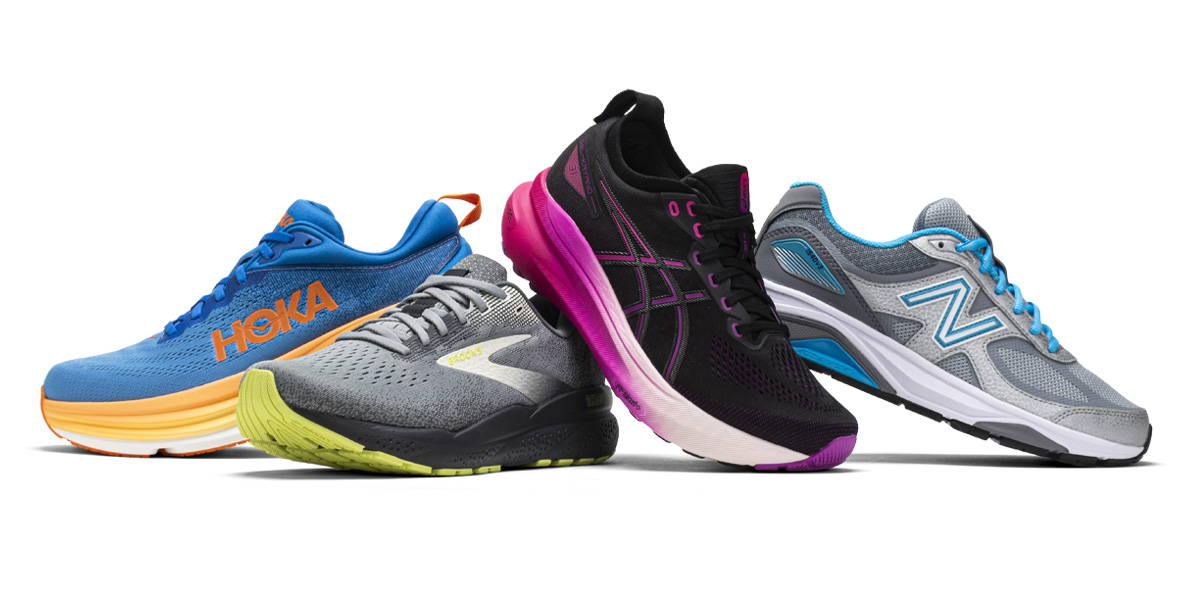
Which means the absence of the Seal from a given shoe does not prove the shoe is unsuitable. A brand may simply have not applied. That caveat matters, because it means the universe of genuinely podiatrist approved sneakers is broader than the APMA database alone can show. This is why the Seal is a positive signal but not a negative one — a shoe without it may still be excellent. What the Seal does prove, when present, is that a specific model has passed a defined standard.
That distinction is precisely the one the shopping listicles collapse. They present “podiatrist approved” as a bright line between good shoes and bad ones, when in reality the only bright line that exists in the industry is the APMA Seal, and it is a bright line about a much narrower question.
Why the Shopping Media Won’t Use the Real Credential
There is a reason none of these articles cite the APMA Seal, and it is not laziness. It is that citing the Seal would collapse the article.
If People wrote “here are eight sneakers that carry the APMA Seal of Acceptance,” they would end up recommending seven Brooks running shoes and one OOFOS recovery slide. This is not a very saleable list on Amazon Prime Day. The affiliate-commission structure of shopping media requires product diversity: multiple brands, multiple price points, multiple aesthetics. A list constrained to the actual credential would be short, technical, and dominated by two or three brands.
So the shopping media invented a broader phrase — the podiatrist approved sneakers formulation you now see everywhere, — “podiatrist approved,” passive voice, no source required — that lets them recommend whichever shoe is currently selling on Amazon while borrowing the authority of the credential without the constraints of it.
This is not an accusation of fraud. Every one of these articles carries a disclosure that they are affiliate content. They are legally in the clear. But there is a difference between legally in the clear and journalistically defensible, and the “podiatrist approved” claim sits precisely in that gap.
What Actually Makes Podiatrist Approved Sneakers Genuinely Good
Because we can’t run this whole piece without answering the underlying question. If you searched for podiatrist approved sneakers because your feet hurt after long shifts, here is what the medical literature and independent lab data actually indicate.
High shock absorption. Independent lab testing at RunRepeat measures this in SA units. Above 90 SA is above average for a walking or standing shoe. The New Balance 574 scores 92; the OOFOS OOriginal scores substantially higher.
Wide, stable base. Forefoot width above 110 mm is unusually wide and helps women with broader feet or bunions. Genuine width fittings (B, D, 2E in the US system) are more useful than sizing up.
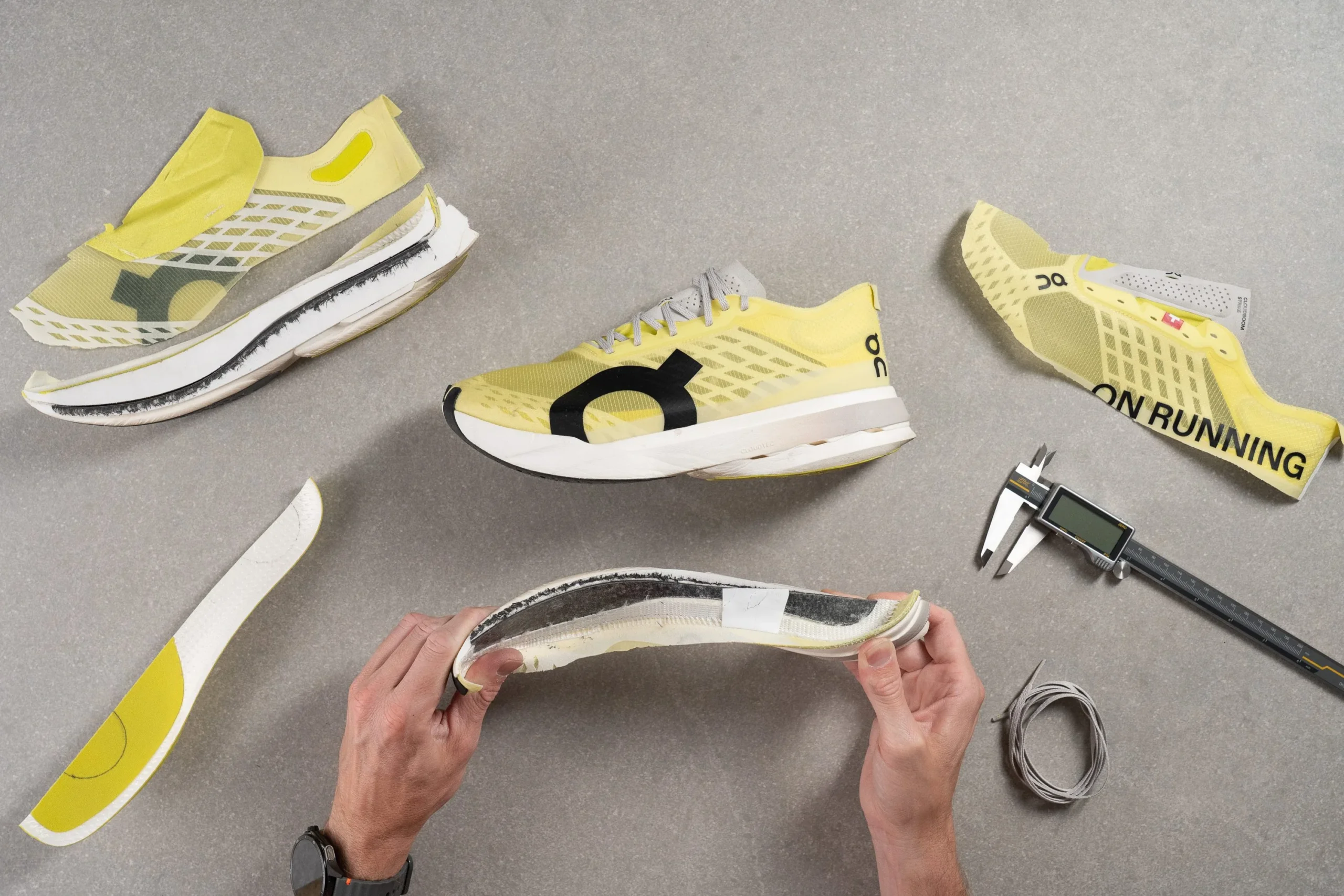
Modest, sustained cushioning rather than extreme softness. Very soft foam creates instability. Dual-density constructions — a soft core wrapped in a firmer frame, like New Balance’s ENCAP or HOKA’s meta-rocker with EVA — do this reliably.
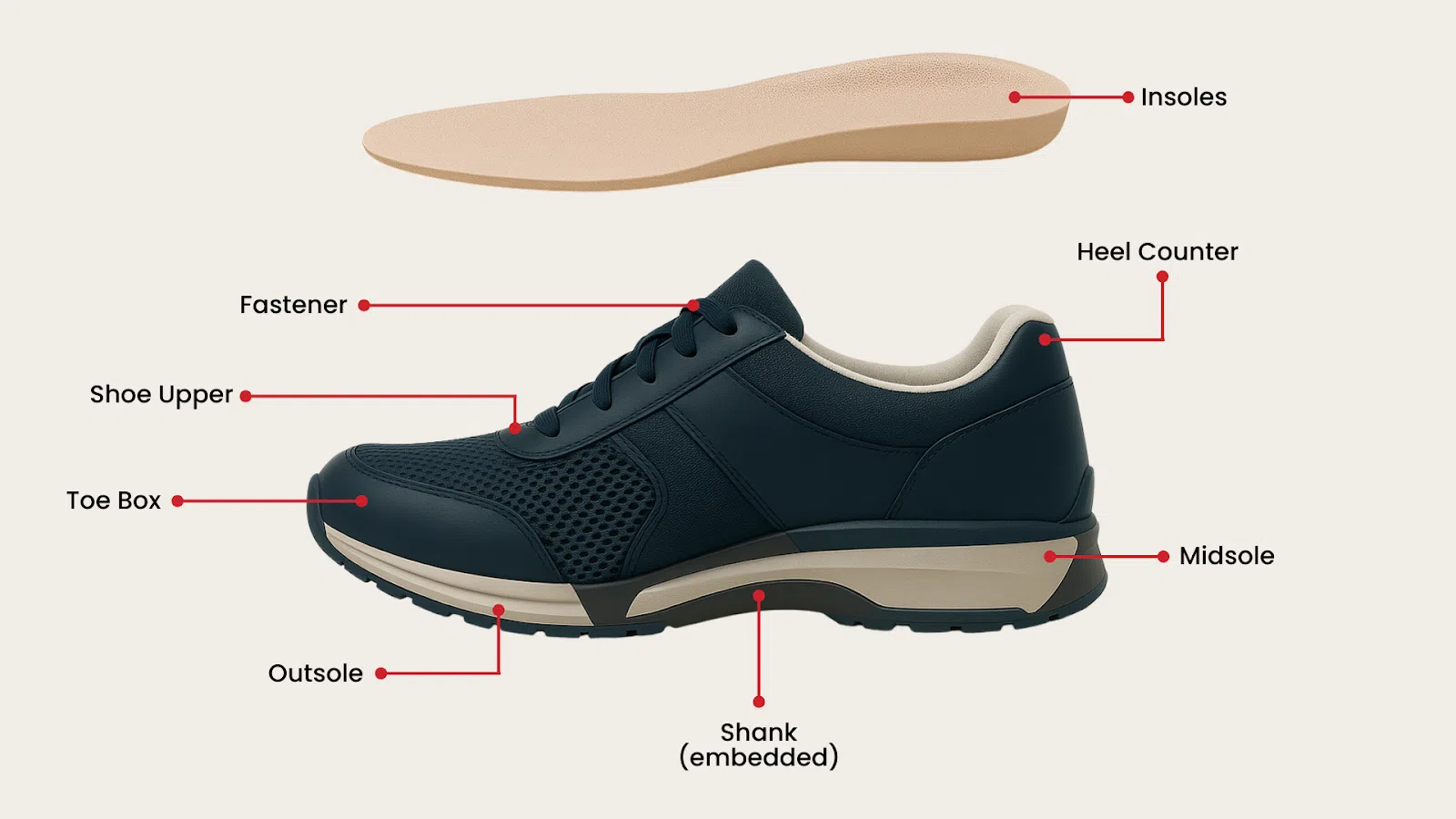
Structured heel counter. A firm cup around the heel reduces ankle roll on long standing days. This is more important than any specific technology story.
A good fit, sourced from a specialist store if possible. No shoe recommendation is worth as much as being fitted properly. This is the one thing every real podiatrist you can name will tell you.
Note what is not on this list: aesthetics, brand cachet, celebrity association, or the phrase “podiatrist approved.” Those are marketing categories, not clinical ones.
The Bottom Line
Podiatrist approved sneakers as a search term and podiatrist approved sneakers as a marketing claim are two very different things. The first is a legitimate question. The second is a phrase doing enormous commercial work with vanishingly little verification behind it. There is a real credential — the APMA Seal of Acceptance — that would legitimately let a writer make the claim. Almost none of the writers using the phrase invoke that credential, because doing so would restrict them to a narrow set of technical running and recovery shoes that do not drive Amazon commissions.
None of this makes the podiatrist approved sneakers on those lists bad shoes. Most of them are fine, some are excellent, and a few — the New Balance 574 in particular — have been quietly working for four decades. What it makes is the language around them dishonest. A reader who buys a shoe because they believe a podiatrist recommended it deserves to know whether a podiatrist actually did.
If you want a genuine list of podiatrist approved sneakers, check the APMA database directly. It is free. It takes ten seconds. And it will tell you more about whether a shoe is fit for your feet than any celebrity sighting or magazine list ever will.
The shopping media will keep writing podiatrist approved sneakers because it keeps working. But now, at least, you know what the phrase actually costs when nobody names the podiatrist.
WHY Podiatrist Approved Sneakers
What does “podiatrist approved sneakers” actually mean?
In its rigorous, verifiable form, it means a specific footwear model has been evaluated and granted the APMA Seal of Acceptance by the American Podiatric Medical Association’s Podiatric Seals Committee — a standing group of licensed podiatrists that reviews wear-testing and clinical data. In the vast majority of shopping-media articles, however, “podiatrist approved sneakers” is used as an unattributed marketing phrase with no named podiatrist, no cited study, and no reference to the APMA credential. The phrase, in commerce content, is best read as a mood rather than a fact.
How do I find genuinely podiatrist approved sneakers?
Check the APMA Seal of Acceptance database directly. It is free and public. As of the current listing, approximately 100 shoe models carry the Seal. Major brands with multiple approved models include Brooks Running, OOFOS, FitFlop, New Balance, and HOKA. The Seal is granted per model, not per brand — so verify the exact shoe, not just the label.
Are New Balance 574s podiatrist approved?
Not per the APMA Seal of Acceptance database, which lists other New Balance models but not the 574 as of the current listing. That does not mean the 574 is a poor shoe — it consistently tests above average for shock absorption in independent lab testing and offers genuine width fittings, both of which matter for foot health. It means only that the specific “podiatrist approved” claim, when applied to the 574 in shopping articles, is not backed by the APMA credential.
What is the APMA Seal of Acceptance?
The APMA Seal of Acceptance is a credential granted by the American Podiatric Medical Association to footwear, insoles, socks, and materials that have been evaluated by a standing committee of licensed podiatrists and found to promote good foot health, allow normal foot function, and meet quality and safety standards. It has been running since 1972 and is the closest thing the US footwear industry has to a peer-reviewed medical endorsement. Products must be submitted by the manufacturer; APMA does not test unsolicited products.
Do podiatrists actually recommend specific podiatrist approved sneakers to patients?
Individual podiatrists routinely recommend footwear to individual patients based on that patient’s foot shape, medical condition, and gait — usually after examination. A recommendation from a podiatrist you have consulted is meaningful; a generic phrase in a shopping list is not. If you have specific foot health concerns, the appropriate first step is a consultation with an actual podiatrist, not an Amazon list.
What features make podiatrist approved sneakers actually good for long days?
The evidence points to five things: high shock absorption (above 90 SA in independent lab testing), a wide and stable base, dual-density cushioning rather than extreme softness, a structured heel counter, and proper fit — ideally through a specialist store that offers width fittings. These are the mechanical properties that determine comfort over long standing hours. Aesthetics, brand cachet, and celebrity association are not on the list.