


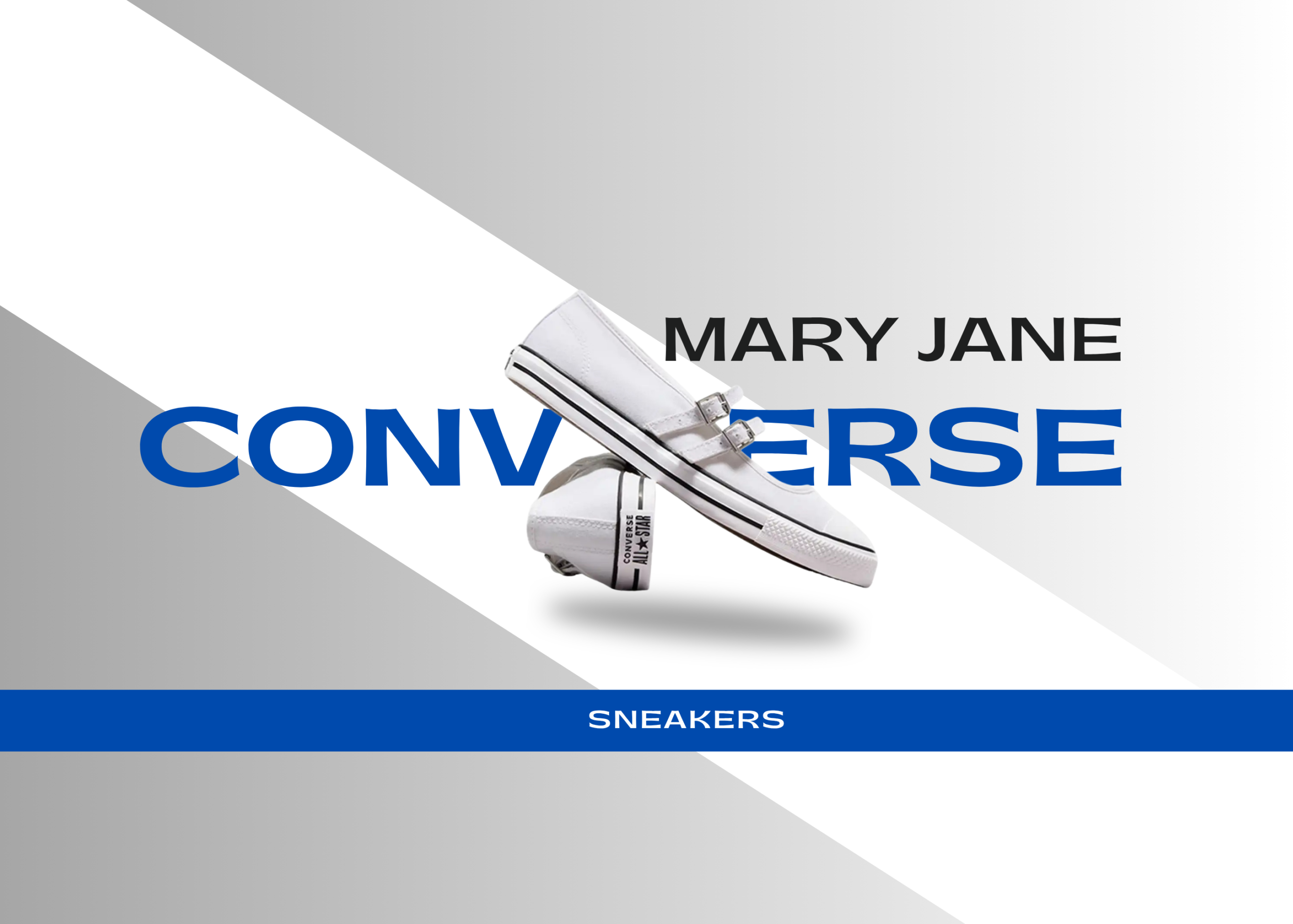
The Converse Mary Jane sneaker has the elegance of a Mary Jane and the stability of a Chuck. That single sentence is why this shoe exists, why it is having a moment, and why women who have never worn Converse in their adult lives are buying them right now. It is also, remarkably, how Converse’s own retailer describes it: a fresh twist on a timeless classic that blends the iconic Chuck Taylor silhouette with the elegance of Mary Jane styling.
For once, the marketing is not overselling. The Converse Mary Jane sneaker really does thread the needle between formal and comfortable in a way no other $70 shoe currently does. This piece breaks down what the shoe actually is, the three models to know, the sizing truth nobody spells out clearly, and how to style it so it reads as intentional rather than accidental.
The Converse Mary Jane Sneaker, at a Glance
| Model name | Chuck Taylor All Star Dainty Mary Jane |
| Also available as | Lugged Heel Platform Mary Jane, Openwork Dainty variant |
| Upper | Sturdy canvas with dual adjustable buckle straps |
| Cushioning | OrthoLite insole for premium comfort |
| Sole | Glossy cupsole with the classic Chuck rubber outsole |
| Silhouette | Ultralow-top, slimmer than a standard Chuck Taylor |
| Colourways | Black, egret, lilac pewter, cream, seasonal editions |
| Retail price | $70 US on converse.com (₹6,500 to ₹7,500 in India) |
| Sizing | Runs half a size large — size down half |
| Where | converse.com, Nordstrom, Journeys, Shoe Carnival, Amazon, Ajio |
What the Converse Mary Jane Sneaker Actually Is
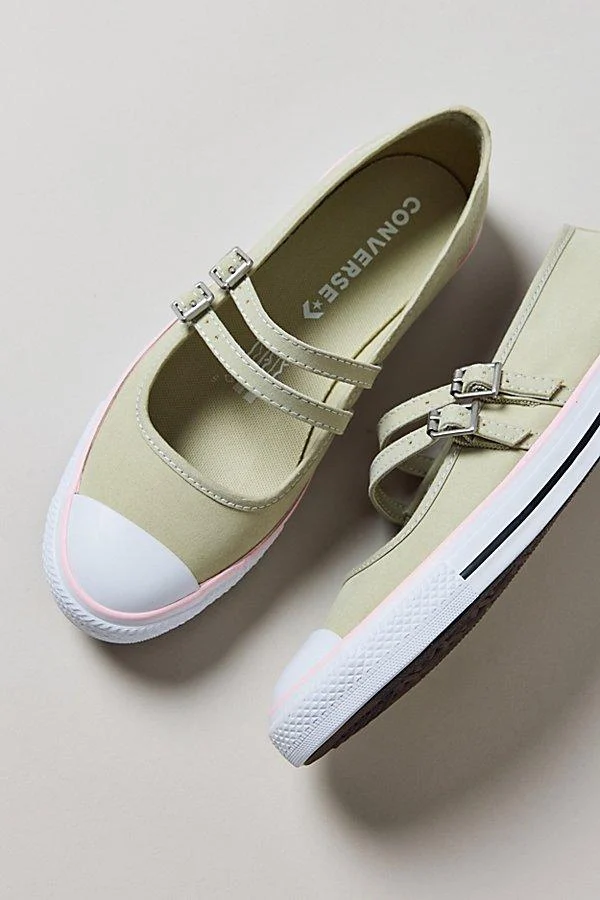
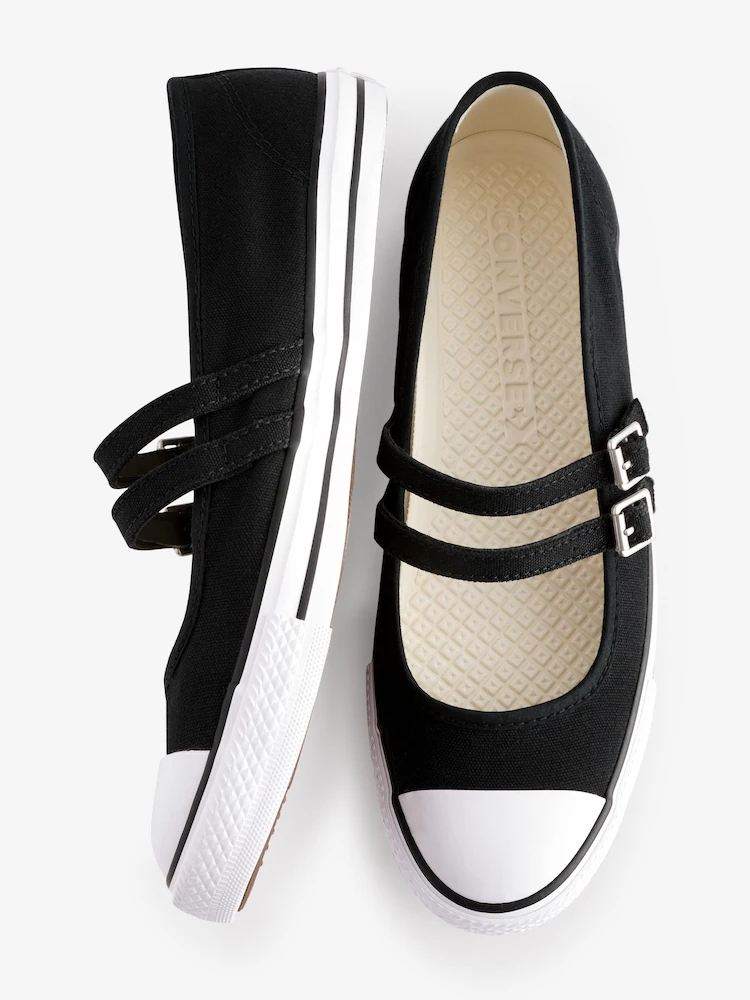
Take a Chuck Taylor All Star. Lower the profile. Slim the silhouette. Cut the shoe down until it stops looking like a basketball sneaker and starts looking like something you’d wear to a lunch. Add two thin adjustable buckle straps across the top instead of laces. Keep the rubber cupsole and the All Star license plate on the heel. Put an OrthoLite cushioning insole underneath.
That is the Converse Mary Jane sneaker. Officially, the Chuck Taylor All Star Dainty Mary Jane, a shoe Converse describes in its own product notes as “lower and lighter, but every bit as iconic.” It has been in the Converse women’s line since 2023 and has quietly become one of the most-searched sneakers on the internet in 2026.
The hook is simple. Traditional Mary Jane flats look elegant but destroy your feet after four hours of walking. Sneakers are comfortable but read as too casual for anywhere that has a dress code. The Converse Mary Jane sneaker sits precisely in the middle. It looks refined enough for smart-casual dress codes, offices, restaurants, art galleries. It walks like a Chuck Taylor with an insole upgrade. There is nothing else on the market at this price doing both jobs at once.
Which is why women who own zero other Converse are buying this pair — and why fashion editors who normally wear only leather Mary Janes are quietly adding a canvas one to the rotation.
The Three Converse Mary Jane Sneaker Models to Know
The Converse Mary Jane sneaker is not a single product. It’s a small family of models with meaningful differences. Get the wrong one and the shoe doesn’t work.
Chuck Taylor All Star Dainty Mary Jane — $70. The core model. Ultralow profile, dual thin canvas straps with metal buckles, OrthoLite insole, classic rubber cupsole. Sold on converse.com in black, egret cream, lilac pewter, and rotating seasonal colours. This is what most people mean when they say Converse Mary Jane sneaker. Buy this first.
Chuck Taylor All Star Lugged Heel Platform Mary Jane — approximately $95. The chunkier sister model. Per Nordstrom’s product page, this version has “a chunky, lugged block heel and platform” with three buckled straps in leather rather than canvas. Reads harder than the standard Dainty. Better with denim or oversized tailoring, less good with dresses.
Chuck Taylor All Star Dainty Openwork Mary Jane — around $80. A slightly newer variant with a breathable openwork upper instead of solid canvas, per Nordstrom’s product listing. This is the summer version — lighter, more ventilated, works in warmer climates. Same silhouette and price band as the standard Dainty otherwise.
If you can only buy one Converse Mary Jane sneaker, buy the standard Dainty in black or egret. It goes with everything, works in every season, and is the version most reviewers describe as “the comfort of sneakers but stylish enough for work” (per Converse’s own community reviews).
The Sizing Truth Nobody Spells Out Clearly
Almost every retailer selling the Converse Mary Jane sneaker buries a specific sizing note deep in the product page. Here it is up front.
The Converse Mary Jane sneaker runs half a size large. Per Nordstrom’s fit experts, per Shoe Carnival’s sizing notes, per most reviewer quotes on converse.com — size down half. If you are a US 8 in most shoes, order a 7.5 in the Converse Mary Jane sneaker. If you are between sizes, size down not up.
On width. The Chuck Taylor Dainty Mary Jane runs narrower than the standard Chuck Taylor All Star. This is by design — the “dainty” silhouette is the whole point. If you have wide feet, order the M (unisex/men’s) sizing, which functions as Wide in women’s terms per Nordstrom’s fit conversion (M=D Women’s extra-wide). Converse also stocks the standard Chuck Taylor line in genuine Wide width, but the Dainty Mary Jane variants are less consistent about it.
On the strap. Both buckles are adjustable. If your foot is high-instepped, loosen the top strap first. If your foot is narrow, tighten both. The straps are canvas with metal buckles — they will soften slightly after the first three or four wears, which is normal, not a defect.
One reviewer flag worth naming. Several reviewers on converse.com note that the OrthoLite insole is genuine but thin. If you have plantar fasciitis, high arches, or plan to walk more than five miles a day in these, add a supportive insole. This is not a Brooks running shoe. It’s a Chuck with an upgrade, and that is what it should feel like.
How to Style the Converse Mary Jane Sneaker
This is where the shoe genuinely earns its price. Because the Converse Mary Jane sneaker can be styled harder in more directions than almost any other $70 shoe on the market.
With a slip dress. Bias-cut satin midi, opaque tights in winter or bare legs in summer, black Dainty Mary Jane. Reads as intentional dress-down — the elegant-shoe-cool-sneaker balance the whole shoe was designed to strike. This is the outfit fashion editors have been photographed in constantly this year.
With tailored trousers. Cream or dove-grey wide-leg trousers, a crisp shirt, and the egret Converse Mary Jane sneaker. Office-appropriate without being boring. Works especially well in creative industries where a full oxford or heel would read as overdressed.
With denim. Straight-leg or slightly cropped denim, an oversized blazer or cardigan, black Dainty Mary Jane. This is the balletcore weekend uniform. Fold or cuff the hem so the buckle strap is visible.
With a skirt suit. Yes, actually. A relaxed skirt suit in cream or navy with the Converse Mary Jane sneaker underneath reads as the modern equivalent of a 1990s Miu Miu campaign — controlled, feminine, quietly rebellious.
With athleisure. Skip. The Mary Jane strap on all Converse Mary Janes fights every athletic silhouette. If you’re going to the gym, wear a real sneaker.
The universal styling rule for the Converse Mary Jane sneaker: let the shoe be the point of tension. Every outfit that works with it has one moment of formality (the dress, the trousers, the blazer) that the Chuck sole undercuts. Every outfit that fails uses the shoe as an afterthought. It works when it’s an intentional choice, not a default.
Where the Converse Mary Jane Sneaker Sits in the Broader Trend
For context, because it explains why this shoe is doing so well right now.
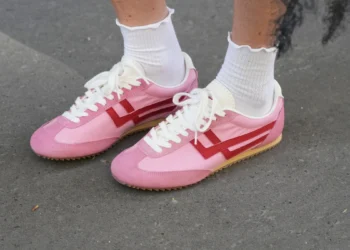
The Converse Mary Jane sneaker is part of what fashion critics call the ballet sneaker trend — hybrid footwear combining feminine, ballet-adjacent detailing with sneaker construction. The trend was documented by Marie Claire starting July 2024 in the context of the Sandy Liang × Salomon collaboration, which put pink ribbon laces on a technical trail runner and made it aspirational.
Since then, everyone has followed. Sandy Liang sells a $495 Ballerina Sneaker. Alaïa’s mesh flats retail above $1,200. Simone Rocha’s beribboned sneakers hit similar price points. Even Skechers and Puma have shipped balletcore-adjacent styles. The trend is real, editorially validated, and financially inaccessible to most readers.
The Converse Mary Jane sneaker is the accessible tier of that trend at $70. It gives you the aesthetic without asking you to spend $495. This is the same play Steve Madden ran with the Mavis wedge sneaker in the Isabel Marant Bekett trend, and the same play Dr. Scholl’s ran with the Time Off platform in the chunky-comfort-sneaker trend. Accessible trend interpretation is a real category, and the Converse Mary Jane sneaker is currently running it well.
The read for readers is straightforward. If the ballet sneaker moment is a trend you’d wear if it weren’t $500, and you’ve been searching for Converse Flats or Mary Janes that actually work for real life, the Converse Mary Jane sneaker is the answer. It won’t be the coolest answer to that question in a fashion-editor sense — a Sandy Liang or a Miu Miu will always be — but it is the correct answer for anyone who wants to participate at a real-life price.
Care and Longevity
Because canvas Mary Janes with buckles are more delicate than they look.
Waterproof spray on day one. The canvas upper on the Converse Mary Jane sneaker is treated for basic wear but not weatherproofed. A colourless sneaker waterproof spray, applied from about 6 inches away, adds meaningful protection to both the canvas and the metal buckles.
Buckles need occasional attention. Metal buckles on canvas straps develop patina and can catch fabric. Wipe them dry after wet weather. If the buckle mechanism stiffens, a drop of neutral shoe oil at the pivot point restores function.
Spot-clean the canvas. Kohl’s product notes recommend spot-cleaning only — no machine washing. A magic eraser handles the rubber sidewall; a mild detergent and a soft brush handle the canvas upper.
When to replace. The OrthoLite insole will compress meaningfully after 12 to 18 months of regular wear, at which point the shoe stops feeling like it has the OrthoLite advantage. Replace the insole (any $12 OrthoLite aftermarket insole works) rather than the shoe — the canvas upper typically lasts 24 to 36 months if cared for properly.
The Bottom Line
The Converse Mary Jane sneaker is the rare shoe that does the job the marketing claims it does. It has the elegance of a Mary Jane and the stability of a Chuck. It costs $70 and lasts two years. It works at brunch, at the office, at the gallery, on the flight, and on the walk home from the flight. It participates in the biggest women’s footwear trend of 2026 without asking you to spend $495.
If you’re picking one shoe to add to your rotation this year, and you want something more interesting than another white sneaker, this is the recommendation. Buy the standard Chuck Taylor All Star Dainty Mary Jane in black or egret cream. Size down half. Waterproof it before you wear it. Style it with an intentional feminine counterweight. That’s the whole play.
The Converse Mary Jane sneaker is not going to be the coolest shoe in the room. But it is going to be one of the most-worn shoes in your closet a year from now, and that is a different and more useful thing.
More About Converse Mary Jane Sneaker
Is the Converse Mary Jane sneaker actually comfortable?
For most wearers, yes. The Chuck Taylor All Star Dainty Mary Jane uses an OrthoLite cushioning insole underneath the canvas upper, which is a meaningful upgrade from the paper-thin insole in the standard Chuck Taylor. Reviewers on Converse’s own product page consistently describe it as having “the comfort of sneakers but stylish enough for work.” That said, this is not a walking or running shoe. If you plan to walk more than five miles a day or have specific foot conditions, add a supportive insole.
Does the Converse Mary Jane sneaker run true to size?
No. The Converse Mary Jane sneaker runs approximately half a size large. Per Nordstrom’s fit experts, per Shoe Carnival’s sizing guidance, and per most reviewer notes, size down half. If you are between sizes, size down not up. This is the single most common return reason for the shoe, and it is easily avoided.
How much does the Converse Mary Jane sneaker cost?
The core Chuck Taylor All Star Dainty Mary Jane retails at $70 US on converse.com. The Openwork variant runs approximately $80. The Lugged Heel Platform Mary Jane is around $95. In India, expect ₹6,500 to ₹9,000 depending on model and retailer (Amazon India, Ajio, and Nykaa Fashion all stock various styles).
Is the Converse Mary Jane sneaker good for wide feet?
The standard Dainty Mary Jane runs narrower than a regular Chuck Taylor All Star — the “dainty” silhouette is the design intent. For wide feet, order the M (men’s/unisex) sizing, which functions as Women’s Extra-Wide per Nordstrom’s size conversion notes. The standard Chuck Taylor line offers genuine Wide width more consistently — if you have significantly wide feet, that may be a better starting point than the Dainty Mary Jane.
Can I wear the Converse Mary Jane sneaker to the office?
Yes, in most business-casual and creative-industry offices. The Mary Jane strap and slim silhouette read as intentionally styled, not sneaker-casual. The shoe works best with tailored trousers, midi skirts, or slip dresses. It does not work in strict formal-office dress codes that require closed-toe leather. Judgment call by workplace, but the shoe is designed to sit in the middle territory and does that job well.
How does the Converse Mary Jane sneaker compare to a Sandy Liang ballerina?
The Converse Mary Jane sneaker sits at the accessible end of the same broader ballet sneaker trend that the Sandy Liang Ballerina Sneaker sits at the designer end of. The Sandy Liang retails at $495 and uses premium nappa leather, custom construction, and a more balletcore-explicit aesthetic. The Converse retails at $70 and gives you the trend at a mass-market price with genuinely functional Chuck construction. Different tiers, same aesthetic register. Buy Converse to participate; buy Sandy Liang if you specifically want the designer version.
Are Converse Mary Jane sneakers still in style in 2026?
Yes — arguably more in style than they were in 2025. The ballet sneaker trend that carries this shoe was documented by fashion press starting July 2024, hit mass adoption in 2025, and is peaking editorially in 2026. Expect strong relevance through late 2026 and into 2027, with gradual decline after that as fashion cycles move on. The Converse Mary Jane sneaker will remain wearable long past the trend’s peak because the silhouette is quiet enough not to date the way louder ballet-sneaker interpretations will.