


Recovery slides used to mean one thing. Rubber. Foam. A logo. Something you shuffled out of a locker room in because your actual shoes were a war crime by that point.
Nike has decided that’s not enough.
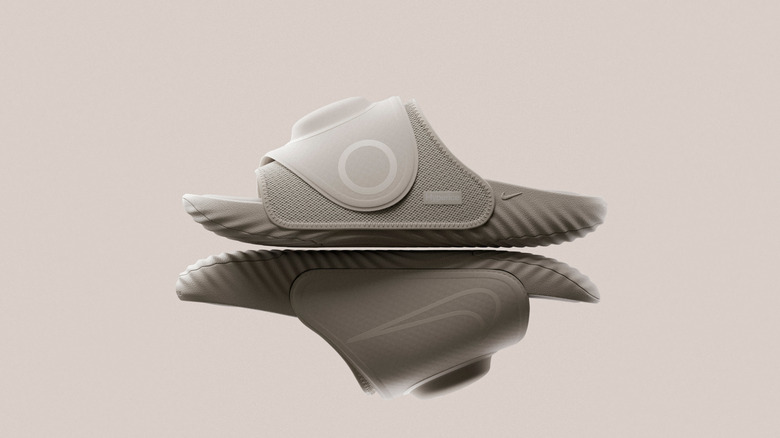
The Nike Air Zoom Hyperslide, made with Hyperice, is a slide with a battery in it. It heats your foot. It vibrates your foot. It runs on a timer and talks to an app on your phone. It arrives in select markets from 29 September 2026, and it is either the most useful thing Nike has put on a foot in years or the most elaborate way ever invented to make a pool slide need charging.
Probably both. Let’s get into it.
What the Nike Air Zoom Hyperslide Actually Is
Strip the marketing and you get three things stacked together: heat, vibration, and a full-length Air Zoom unit.
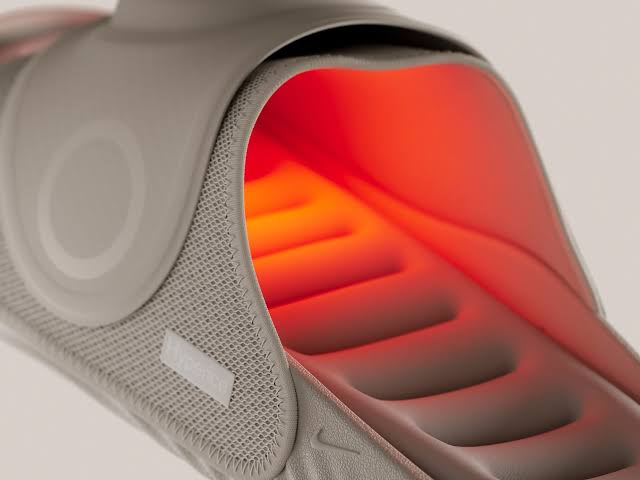
The heat and the vibration come from a Hyperslide Pod — a removable unit that connects magnetically and sits inside the wide adjustable strap. Not under your heel. Not in the midsole. On top of your foot, across the instep, where the strap already crosses.
That placement is the whole design argument. Hyperice could have buried the hardware in the footbed and made a slide that felt like standing on a phone. Instead the recovery tech lives in the part of the shoe that isn’t load-bearing, and the part that is load-bearing gets to be a normal, good slide.
Three heat settings. Three vibration settings. Fifteen-minute cycles. You can run it from the pod itself or from the Hyperice app, which means yes, there is now a scenario where your slides need a firmware update.
The Pod Is the Whole Story
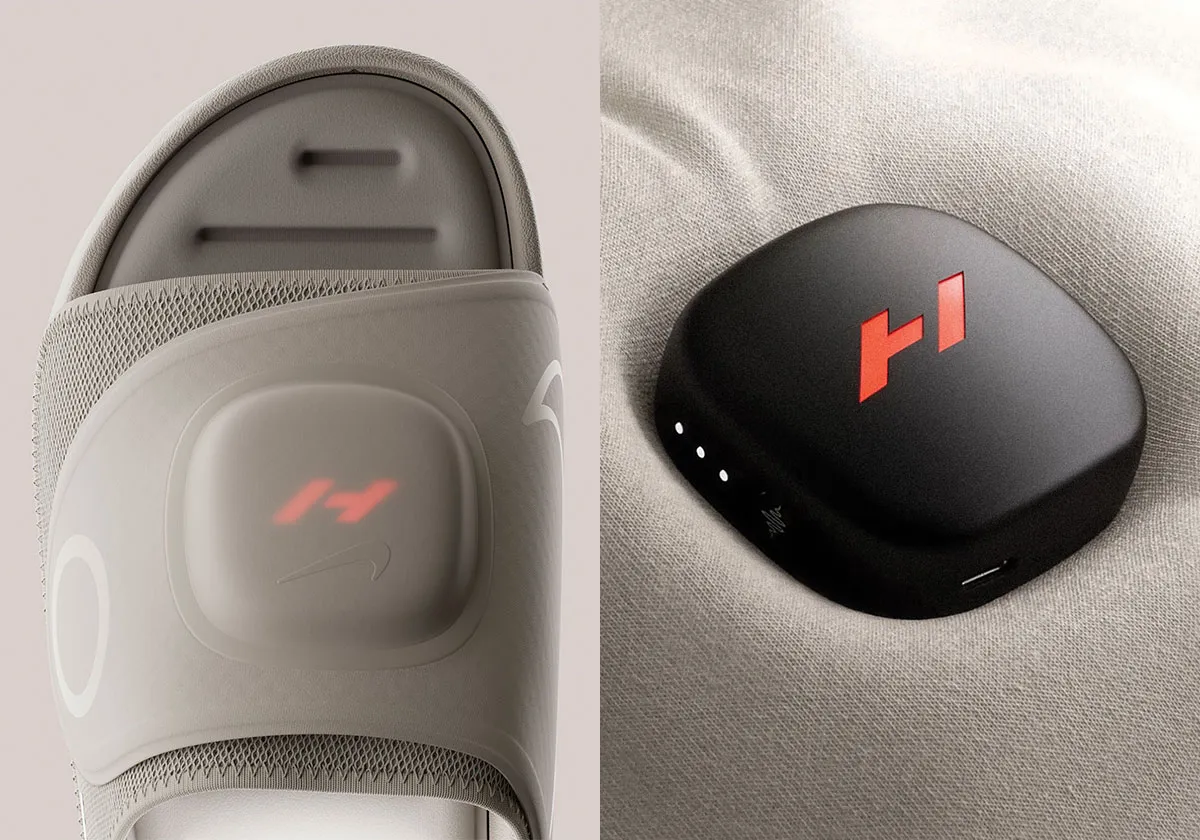
Here’s the part that separates the Hyperslide from every gimmick shoe that came before it: the pod comes out.
Magnetic connection, removable unit. That’s a small detail with big consequences. It means the slide survives the battery. It means you can charge one part and wear the other. It means the thing you’re wearing isn’t permanently welded to a lithium cell with a five-year lifespan.
Compare that to every light-up sneaker, self-lacing experiment and app-connected midsole of the last decade, most of which became landfill the moment the battery gave up. Nike appears to have learned something.
It also puts the Hyperslide in a different bracket to the pure concept work floating around right now. Something like the Mantis biomimicry concept sneaker exists to make you stare. This exists to be worn on a Tuesday.
Also worth flagging, because the press imagery is doing its best to confuse you: those glowing red shots of the footbed are a visualisation, not a heating element. The warmth comes from the pod on top. Your soles are not being toasted from below.
Air Zoom Under Your Foot, Not Just Marketing
The other half of the pitch is cushioning, and Nike hasn’t cheaped out here.
Full-length Air Zoom, a deeply moulded footbed and a sculpted outsole give the Hyperslide considerably more architecture than the flat slab of foam most recovery slides get away with. It’s a proper shoe underneath the sci-fi.
Nike and Hyperice athlete Virgil van Dijk has been fronting the launch, and his take is that the two systems together are the point — heat and vibration doing the recovery work while the Air Zoom keeps it comfortable enough to actually leave on. <span style=”opacity:.85″>“It’s the combination that stands out,”</span> he said of the setup.
Which is the sensible read. A recovery device you take off after ten minutes does nothing. A slide you keep on for two hours while you watch telly does considerably more, even at lower intensity.
This Isn’t Nike and Hyperice’s First Rodeo
The Hyperslide is the second piece of footwear from this partnership. The first was the Hyperboot — a battery-powered high-top that combined heat with full-foot air compression.
The Hyperboot was, to be blunt, a recovery machine that happened to be shoe-shaped. Impressive, expensive, and roughly as portable as a small dog.
The Hyperslide is the version you can throw in a gym bag without a second thought. That’s the actual innovation here. Not the heat, not the vibration — the format. Nike took a device people used at home and put it in the shape of the thing athletes were already wearing out of the building.
Recovery tech has been chasing this for years, and it isn’t just a footwear problem. The wider wearable-recovery category has been trying to solve the same friction — the best device is the one you don’t have to remember to use — which is exactly why wearable health tech has attracted serious money over the past few funding cycles. Passive beats active. Always has.
Price, Battery and the Bits Nike Hasn’t Confirmed
This is where the article gets honest with you.
Nike has not officially announced pricing. Independent reports put the US figure at around USD$250, which lands the Hyperslide somewhere between “premium slide” and “actual recovery device” — and, notably, well below what a dedicated Hyperice unit costs.
It’s a strange number to sit with. Two-fifty for slides sounds absurd until you remember the market has spent a decade being trained to accept four-figure footwear — a shift we picked apart in our look at how luxury sneakers conquered high fashion. At least this one does something when you plug it in.
Battery life is also unconfirmed by Nike. Gear Patrol’s reporting suggests roughly an hour of runtime depending on settings, with a recharge taking around three hours. Treat both numbers as provisional until Nike says otherwise.
Indian pricing and availability? Nothing yet. Given how Nike has handled tech-forward launches in this market before, expect a delay and expect a markup. Set your expectations accordingly and your proxy contacts on standby.
The Colourways
Two options at launch, and they say completely different things.
The off-white pair is the clinical one. Medical, restrained, the kind of thing that looks at home next to a foam roller and a bottle of electrolytes. It’s the easier one to wear in public without explaining yourself.
The black pair, with its red interior, has fully committed to the recovery-tech aesthetic. Visible mesh structure, layered upper, oversized pod, red glow. It looks like something a video game character wears in the third act.
There’s no wrong answer here. One is a tool. The other is a statement that you own a tool.
Nike Air Zoom Hyperslide: Specs at a Glance
| Spec | Detail |
|---|---|
| Product | Nike Air Zoom Hyperslide (Nike × Hyperice) |
| Recovery tech | Heat + vibration via removable Hyperslide Pod |
| Pod placement | Inside adjustable strap, across top of foot |
| Settings | 3 heat levels, 3 vibration levels |
| Cycle length | 15 minutes |
| Control | On-pod controls or Hyperice app |
| Cushioning | Full-length Air Zoom, moulded footbed, sculpted outsole |
| Colourways | Off-white; black with red interior |
| Release date | 29 September 2026, select markets |
| Price | Not confirmed by Nike; reported around USD$250 |
| Battery | Unconfirmed; reported ~1 hour use, ~3 hour recharge |
| India availability | Not announced |
Pros and Cons
What works
- Removable pod means the slide outlives the battery
- Hardware sits on top of the foot, so cushioning stays uncompromised
- Full-length Air Zoom is a genuine upgrade over standard recovery foam
- Gym-bag portable in a way the Hyperboot never was
- App control plus on-device control — no phone dependency
What doesn’t
- Reported ~1 hour battery is short for something you’d wear on a couch
- Around USD$250 is a lot of money for slides, however you frame it
- No confirmed India pricing or date
- The black pair is loud enough to require a conversation
- Clinical benefit of heat-plus-vibration on feet is under-studied — this is comfort tech more than proven therapy
Who Should Actually Buy This
Buy it if you train hard and consistently, you already own recovery gear you don’t use because it’s a hassle, and you’d genuinely wear a slide around the house for an hour. The Hyperslide’s entire value proposition is removing friction from a habit you already want.
Also worth a look if you’re not an athlete at all but you’re on your feet for a living. Nurses, chefs, retail staff, anyone finishing a twelve-hour shift with feet that feel like they’ve been through a car park — the use case is arguably stronger there than it is for a footballer with a physio on speed dial. We went deep on that crowd in our guide to the best sneakers for nurses, and the Hyperslide is the natural end-of-shift companion to any of them.
Skip it if you’re buying it because it looks cool. At this price there are far cheaper ways to look cool, and the pod will be dead weight on your strap by month three. Also skip it if you were expecting clinically validated therapy — this is well-executed comfort tech, not a prescription.
Consider instead a good non-powered recovery slide plus a separate massage gun if you want the function without the integration. You’ll spend less. You’ll also use it less. That’s the trade.
The Verdict
The Nike Air Zoom Hyperslide is the rare piece of sneaker tech where the format matters more than the feature list.
Heat and vibration aren’t new. Air Zoom isn’t new. Putting all of it into something you’d throw in a bag and wear without thinking about it — that’s the move. Nike figured out that the best recovery device is the one you don’t have to decide to use.
Whether that’s worth roughly USD$250 depends entirely on how seriously you take your recovery, and how comfortable you are with footwear that needs charging. Ask again after the first battery dies.
September’s calendar is filling up fast either way — keep an eye on our running drop guide for everything landing around it.
Key Takeaways
- The Nike Air Zoom Hyperslide combines heat, vibration and full-length Air Zoom cushioning in a recovery slide
- A removable magnetic pod in the strap runs 15-minute cycles with three heat and three vibration settings
- Control via the pod itself or the Hyperice app
- Launching 29 September 2026 in select markets; India availability unannounced
- Reported price around USD$250; battery reportedly ~1 hour use, ~3 hours to charge — both unconfirmed by Nike
- Second Nike × Hyperice footwear product after the Hyperboot, and the far more wearable of the two