


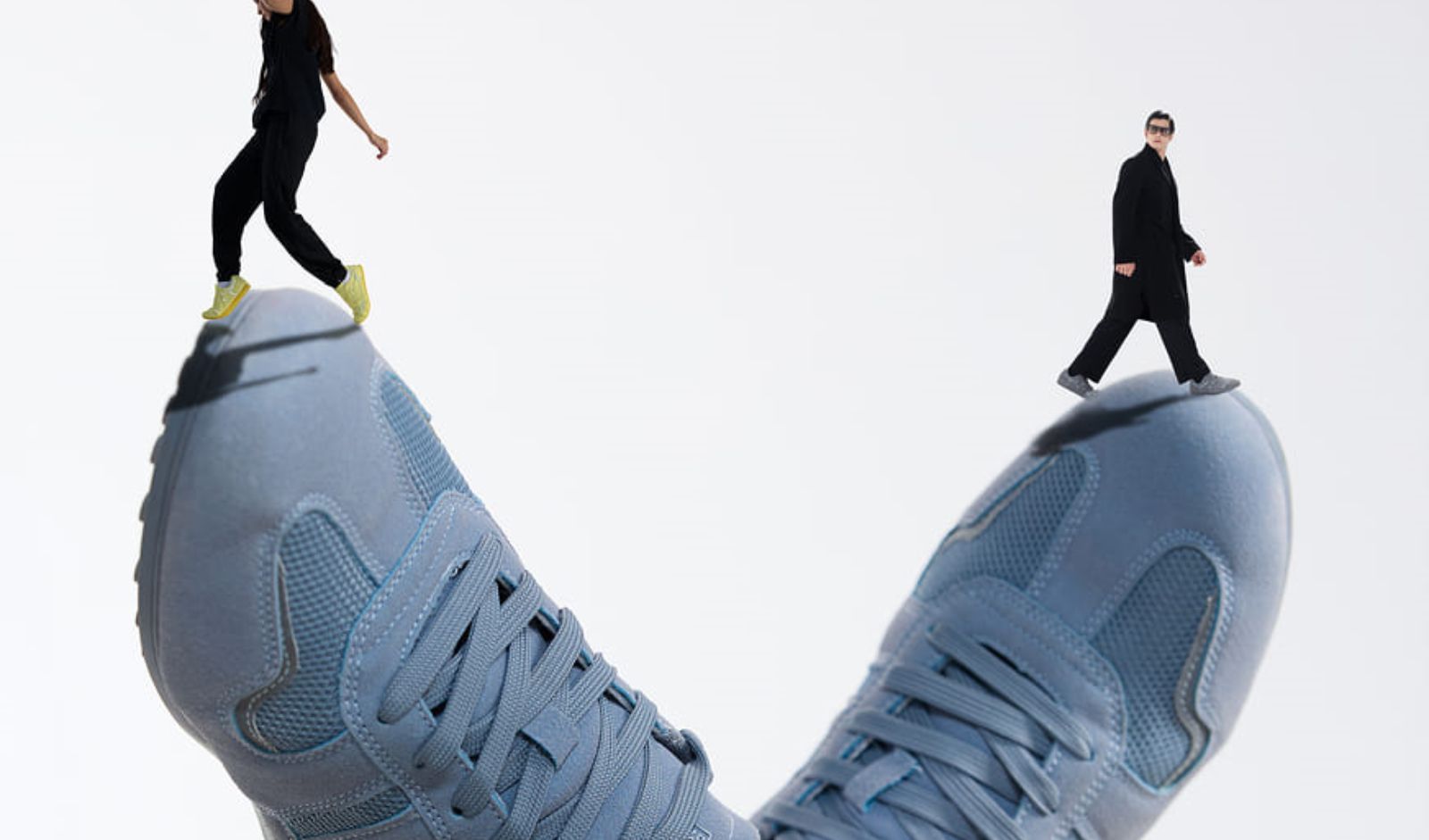
Rare’Z OTIMO sneakers arrived in India this month with a proposition that runs directly against a decade of sneaker design: less shoe, not more. The footwear label from The House of Rare — the group behind Rare Rabbit and Rareism — has built its new flagship silhouette around a flat sole and a low-slung profile borrowed from the Italian driving shoe. It also marks the first time Rare’Z has made footwear for women, roughly two years after the label launched.
At ₹5,999, OTIMO is not chasing the hype-drop crowd. It is chasing the far larger group of Indian buyers who want one pair that works with jeans on Saturday and trousers on Monday, and who have quietly grown tired of tripping over their own midsoles.
What Rare’Z OTIMO Actually Is
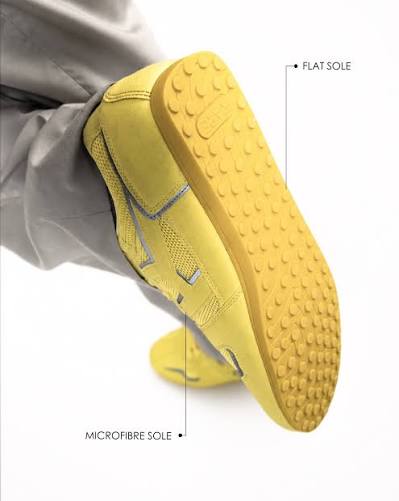
Strip away the launch language and OTIMO is a low-top, lace-up sneaker with a deliberately thin, flat outsole and no visible cushioning stack. The upper combines vegan suede with breathable mesh panels — a sensible pairing for a country where a suede-heavy shoe becomes a sweatbox by April — plus reflective detailing that reads as a subtle design accent rather than a safety feature.
The name comes from ótimo, Portuguese for “excellent.” Rare’Z frames the shoe as a driving moccasin reworked into sneaker form: the moccasin’s ground feel and flexibility, the sneaker’s lacing, structure and daily durability.
Founder and Creative Director Manish Poddar has been unusually candid about why that combination took so long. Simple products, he told Indian Retailer at launch, are the hardest to design, because a clean silhouette hides nothing — every millimetre of height, proportion and toe shape is exposed. It is a rare admission in a category that usually markets complexity.
From Ferrari Pedals to Footpaths: The Driving Shoe Backstory
The reference point here has a real lineage. In 1963, in the shoemaking town of Vigevano, an Italian artisan named Gianni Mostile patented the first driving shoe — a deconstructed loafer with tiny rubber studs set into the sole, sold under the brand Car Shoe. The design solved a specific problem for owners of cramped Italian sports cars: formal leather soles slipped on pedals and wore through at the heel.
The functional logic is worth understanding, because it explains OTIMO’s sole. A driving shoe’s sole is thin on purpose. Drivers want to feel the pedal, and the thinner the barrier between foot and surface, the finer the control. Flexibility matters for the same reason — the shoe has to bend with the ankle through the pedal stroke.
Car Shoe stayed an elite object. Tod’s turned the idea into a global one, with the pebble-soled Gommino worn by Gianni Agnelli, John F. Kennedy and a generation of people who wanted to look expensive without looking like they were trying. Prada acquired Car Shoe in 2001.
What Rare’Z has done is take the sole philosophy and drop the moccasin construction. You get the ground feel and the flexibility without the slip-on fit that many people find insecure for actual walking. It is the same instinct we traced in our look at how sneaker design is converging across brands — heritage references, stripped for parts.
Why a Flat Sole Lands in 2026
Timing is the most interesting thing about this launch. The chunky sneaker era — Fila Disruptors, dad shoes, midsoles measured in inches — has been unwinding for several seasons, and 2026 is the year the correction fully arrived on runways. Spring/summer collections from Dries Van Noten and Fendi both pushed slim, low-profile silhouettes, and the retail momentum behind the Puma Speedcat and adidas Taekwondo has followed the same slope. We mapped the full shape of it in our fall 2026 sneaker trends guide.
There is a structural argument underneath the fashion one. Low-top sneakers already generate the largest share of revenue in India’s sneaker market, which analysts sized in the region of $3.2 billion in 2023 with mid-single-digit growth projected through the end of the decade. Treat any single market figure as an estimate — methodologies differ wildly between research houses — but the directional point holds: India buys low-tops, and it buys them for daily wear rather than collection.
A flat, unfussy sneaker at a mid-premium price is therefore not a risky bet. It is arguably the safest product Rare’Z could have built. The risk sits elsewhere: a low-profile sneaker has nowhere to hide bad proportions, and buyers in this segment are increasingly literate about last shape and toe spring.
The Women’s Line Is the Real Headline
Most coverage has led with the sneaker. The more consequential news is that Rare’Z is finally selling women’s footwear at all.
The label launched in 2024 alongside Rare Ones, the group’s kidswear line, and ran men’s-only until now. The brand says it spent roughly two years working on fit and construction before releasing a women’s range, rather than scaling a men’s last down — the shortcut that has produced two decades of women’s sneakers that fit nobody particularly well.
That claim is unverifiable from the outside, and it should be treated as brand positioning until people have worn the shoe. But the commercial logic is sound. Rareism gives The House of Rare an established womenswear customer and over 1,100 retail touchpoints across exclusive brand stores, large-format retail and multi-brand outlets. Selling her a sneaker is a shorter distance than acquiring a new customer.
It also lands into a genuine shift: for a large share of women buyers, the sneaker has replaced the flat as the default non-heel shoe across commuting, work and evenings out. A slim silhouette in Light Yellow or Light Blue is aimed squarely at that use case — and sits a long way from the saturated-colour statement pairs dominating the other end of the season.
Specs, Sizes and Pricing at a Glance
| Detail | Men’s | Women’s |
|---|---|---|
| Price (MRP) | ₹5,999 | ₹5,999 |
| Size run | EU 41–45 | EU 36–40 |
| Colourways | White, Black, Light Grey, Light Blue, Light Yellow | White, Black, Light Blue, Light Yellow |
| Upper | Vegan suede with mesh panels | Vegan suede with mesh panels |
| Sole | Flat, low-profile construction | Flat, low-profile construction |
| Extras | Reflective detailing | Reflective detailing |
Two gaps are worth flagging. The men’s run stops at EU 45, which leaves larger feet unserved — a persistent problem across Indian premium footwear. And the women’s run starts at EU 36, so anyone smaller is out of luck.
Where ₹5,999 Sits in the Indian Market
This is a crowded shelf. Around ₹5,000–7,000, an Indian buyer is choosing between imported terrace and court classics — adidas Sambas and Gazelles, Puma Speedcats, Onitsuka Tiger’s Mexico 66, Nike’s Killshot family — and a growing bench of domestic D2C labels, including heritage-minded Indian makers like Gully Labs.
Rare’Z is not competing on heritage; it cannot. What it is competing on is silhouette specificity. Nobody else in that band is selling a driving-shoe-derived flat sole in India, and the label has a distribution footprint most D2C challengers would need years and a funding round to replicate.
The honest counterpoint: the imported alternatives carry resale value, cultural weight and decades of fit data. OTIMO carries none of that yet. What it offers instead is availability, a warranty-backed retail relationship and a shoe you can try on in a mall before buying.
Deal status caveat: Prices in this band move constantly with platform sales and festive discounting. Treat every figure here as indicative, not a quote.
Who Should Buy — and Who Should Skip
Buy it if you:
- Want one versatile pair that reads smart-casual without reading formal
- Prefer ground feel and flexibility to stack height and bounce
- Are shopping in the low-profile lane and want something that is not on every third pair of feet
- Value being able to walk into a store, size up and return easily
Skip it if you:
- Need cushioning for long standing shifts or walking commutes — our guide to sneakers for nurses and all-day standing covers better tools for that job
- Have high arches or need structured support; a flat sole gives you almost nothing
- Are buying for resale, collection or hype value
- Want proven fit data before spending; there is no long-term wear record on this last yet
Buying OTIMO in India
The collection is available through The House of Rare’s exclusive brand stores, the brand’s own product page and app, and major online marketplaces.
Multi-brand sneaker retailers such as VegNonVeg, Superkicks and Mainstreet Marketplace stock the imported alternatives in this price band and are worth walking into for a side-by-side comparison, even if they do not carry Rare’Z. Keep an eye on our weekly drops roundup for restocks and colourway additions.
A practical note on counterfeits: mid-premium Indian labels are increasingly cloned on social-commerce listings and marketplace third-party sellers. Buy from the brand’s own channels or an authorised seller. If a listing is priced meaningfully below ₹5,999 outside a declared sale window, treat it as suspect.
Anyone with wide feet should size up in store rather than online. Low-profile lasts tend to run narrow, and a flat sole gives you no forgiveness on volume.
The Verdict
Rare’Z OTIMO sneakers are a well-timed, well-reasoned product rather than a spectacular one — and that is a compliment. The label read the room correctly on silhouette, priced sensibly for its distribution, and, more importantly, stopped treating women’s footwear as a rounding error. The flat sole will not suit everyone, and the size run has real gaps. But as a first serious swing at a full-portfolio footwear brand, this is a considerably smarter opening than most.
The thing to watch is what comes next. Rare’Z has said OTIMO is the start of a broader footwear range across new materials and colourways. Whether the women’s line gets equal development budget in round two will tell you more about the brand’s seriousness than any launch campaign.
Key Takeaways
- Rare’Z OTIMO launched at ₹5,999 across men’s and women’s ranges, built on a flat, driving-shoe-derived sole
- The collection marks Rare’Z’s first entry into women’s footwear, roughly two years after the label launched
- Materials include vegan suede, mesh panels and reflective detailing; sizes run EU 36–40 (women) and EU 41–45 (men)
- The launch lands squarely in 2026’s low-profile silhouette shift, away from chunky midsoles
- It is a versatility play, not a performance shoe — buy it for daily wear, not for distance or support