


There are two versions of Indian sneaker culture, and they almost never appear in the same article.
The first is the one publications like this one cover: Sambas at ₹11,000, Miu Miu archive revivals at a lakh and a half, auction lots, resale platforms, import duty maths. The second sold 25.97 million pairs last financial year at an average selling price of ₹683.
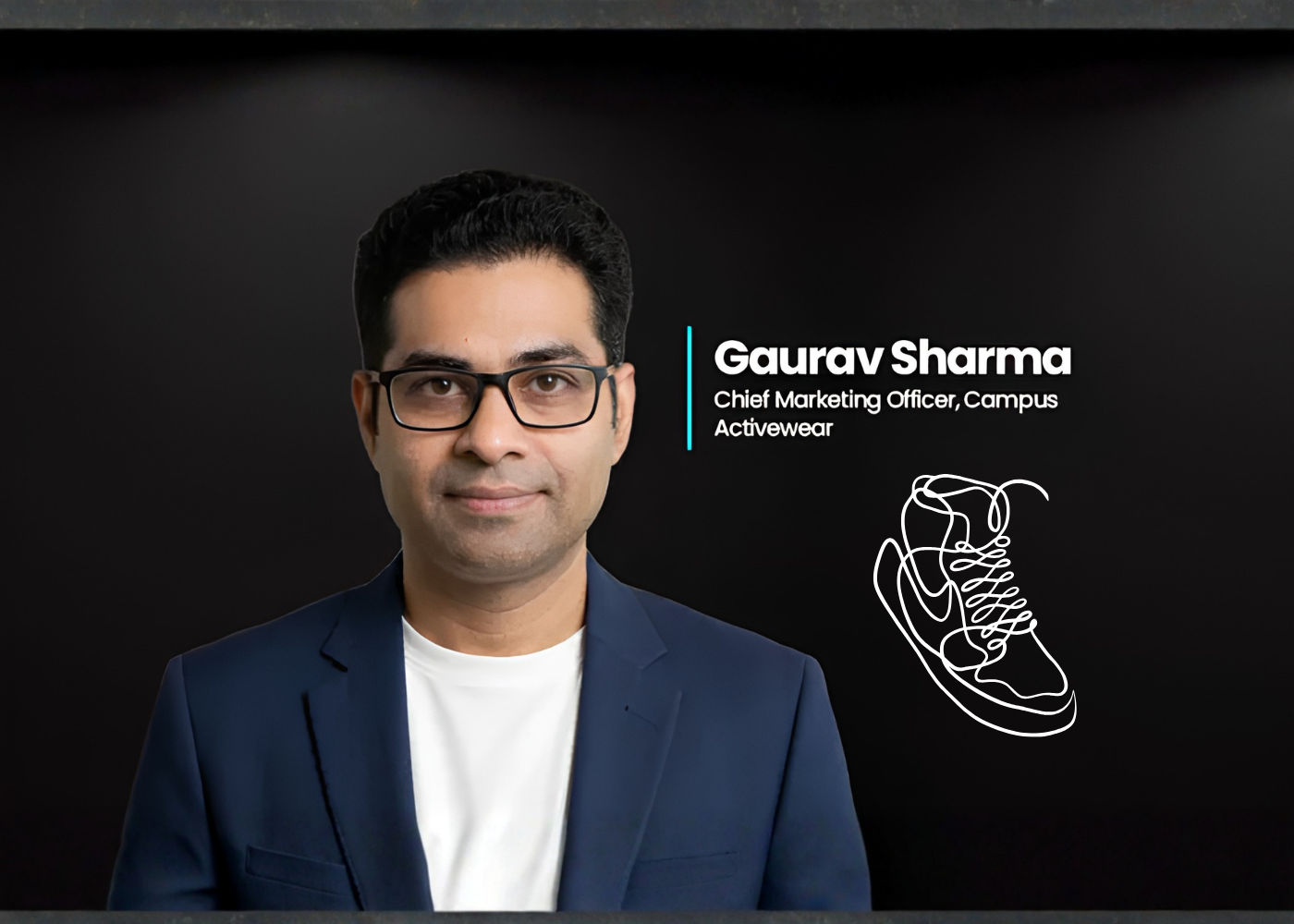
That second version is Campus Activewear — India’s largest sports and athleisure footwear brand by volume, holding roughly 17% of the branded sports and athleisure market. This week its CMO, Gaurav Sharma, gave an interview about repositioning the brand around sneaker culture, creators and Gen Z.
Read alongside the company’s FY26 results, that interview becomes considerably more interesting than a marketing story. Because the numbers explain exactly why the pivot is happening — and it isn’t because someone in a boardroom discovered streetwear.
Indian Sneaker Culture: The Five Numbers
| # | Number | What It Is |
|---|---|---|
| 1 | ₹683 | Campus’s average selling price per pair, FY26 — up 7% year on year |
| 2 | 25.97 million | Pairs sold by Campus in FY26 |
| 3 | 109% | Year-on-year growth in Campus’s sneaker portfolio |
| 4 | 12.7% | Share of total Campus volume that sneakers represent |
| 5 | 11.4% vs 21% | Campus revenue growth against category growth — the gap that explains everything |
Hold that last one. It explains more about Indian sneaker culture than any campaign does, and we’ll come back to it.
The Two Economies of Indian Sneaker Culture
Sneaker media in this country — us included — covers a market that represents a rounding error in volume terms.
A ₹15,000 New Balance is a genuine cultural object and worth writing about. But Campus alone moved nearly 26 million pairs last year at an average of ₹683. Add Bata, Relaxo, Liberty and the unorganised market, and the volume disparity becomes almost comic.
These aren’t competing markets. They’re barely adjacent.
- The premium tier runs on scarcity, drops, resale value and global brand equity. Buyers are concentrated in metros, are highly online, and treat footwear as collectible.
- The mass tier runs on distribution, price points and replacement cycles. Buyers span 650+ cities, buy for occasions rather than collections, and until recently weren’t being sold “culture” at all.
What’s changing is that the second tier has started borrowing the language of the first. That’s what the Campus interview is actually about, and it’s why it matters more than a typical brand-marketing piece.
The interesting question isn’t whether mass-market brands can sell culture. It’s what happens to Indian sneaker culture when the definition expands from a few hundred thousand collectors to twenty-six million buyers a year.
What Campus Said About Indian Sneaker Culture
The substance of Sharma’s interview, paraphrased fairly:
Footwear has shifted from function to self-expression. The old playbook — comfort, durability, price, performance — no longer differentiates. Marketing has moved to storytelling built around consumer behaviour and aspiration rather than product features.
Three forces are reshaping the category: sneakerisation, premiumisation, and consumers building wardrobes of footwear for different occasions rather than owning one pair for everything.
Product innovation alone doesn’t differentiate anymore. With consumers exposed to more brands and content than ever, what sticks is the story and the emotion attached to it.
Creators shape discovery, not just reach. Campus says its approach prioritises relevance over scale — larger creators build awareness, while niche and regional creators generate stronger trust inside specific communities.
Channel thinking is obsolete. A purchase might start with a creator’s reel, move to marketplace research, then a store visit to try the product, then an online checkout. The consumer experiences that as one journey.
Next phase: campaigns to communities. Sharma expects less campaign-led marketing and more sustained engagement, with AI playing a growing role in personalisation.
On the campaign work itself — Move Your Way, You Go Girl, and Most Elegant Man in Town for the ÉLAN line — Sharma’s framing is that the shoe stops being the subject of the story. As he puts it: “The footwear naturally becomes part of the narrative instead of being the narrative itself.”
That’s a real departure from how Indian footwear has historically been sold, where the product was the hero and the consumer was scenery. For Indian sneaker culture, it’s the clearest signal yet that the mass market has stopped selling shoes and started selling belonging.
The Growth Gap Reshaping Indian Sneaker Culture
Here’s the context that makes the strategy legible, and it wasn’t in the interview.
Campus grew revenue 11.4% in FY26. India’s sports and athleisure footwear category grew roughly 21%.
The market grew at nearly twice the rate of its largest volume player. Campus under-grew the category by half.
Profit still rose 23.8% to ₹150.1 crore, and EBITDA margin expanded 145 basis points to 17.5%. But look at how: ASP rose 6.9% while volume rose 4.2%. Price did more work than units.
That’s a specific commercial situation. Volume has flattened. Growth is coming from selling existing customers more expensive shoes rather than from selling more shoes to more people.
And that is precisely when a mass-market brand starts talking about Indian sneaker culture.
This isn’t cynicism — it’s strategy working as intended. If you can’t win on volume against a category growing at 21%, you move up the value chain. Culture-led marketing is how you justify a higher ASP. The pivot the CMO describes and the numbers the CFO reports are the same decision viewed from two angles.
Why 109% Is the Indian Sneaker Culture Number That Matters
The single most striking figure in Campus’s FY26 results: the sneaker portfolio grew 109% year on year.
It doubled. In a business where total volume grew 4.2%.
But the second half of that statistic is equally important — sneakers contribute 12.7% of overall volumes. Roughly one pair in eight.
Both facts matter:
The trajectory is real. Doubling isn’t a rounding adjustment. Sneakers are genuinely where Indian mass-market footwear demand is moving, and it maps directly onto what we’ve tracked in summer 2026 India trends.
The base is still small. Seven in eight pairs Campus sells aren’t sneakers. The category everyone is excited about is still a minority of what actually moves.
That’s not a contradiction. It’s what an inflection point looks like from inside: rapid growth off a small base, with the incumbent business still doing most of the volume. If sneakers keep doubling, the mix flips inside three years — and at that point Campus is a sneaker company that also sells other footwear, rather than the reverse.
What Premiumisation Means at ₹683
“Premiumisation” is doing heavy lifting across Indian retail right now, and it’s worth being precise about scale.
Campus’s ASP rose from roughly ₹639 to ₹683. That’s a ₹44 increase. Not ₹4,000.
In global sneaker terms, ₹683 is under $8. It’s a fraction of what a Samba costs, less than the shipping on an imported pair, and roughly a two-hundredth of the Miu Miu Bubble we covered recently.
But premiumisation is relative to where you start. For a buyer moving from a ₹500 pair to a ₹700 pair, that’s a 40% increase in what they’re willing to spend on shoes. Multiply across 26 million pairs and it’s ₹115 crore of additional revenue from price alone.
This is the part global sneaker coverage consistently misunderstands about Indian sneaker culture. The premium conversation here isn’t ₹8,000 versus ₹15,000. For most of the market it’s ₹500 versus ₹800 — and that shift, at scale, is worth more than the entire hype segment combined.
Campus also flagged its channel mix: D2C reached 48.3% of Q4 revenue, up from 44.8%, with online at 37.8%. Nearly half the business now runs direct. That’s what makes creator-led marketing viable — you can trace a reel to a checkout on your own platform.
The Creator Economy Reaches Indian Sneaker Culture
The most credible part of the Campus strategy is the creator approach, specifically the emphasis on regional and niche creators over reach.
That’s the correct read of this market. India isn’t one sneaker audience; it’s dozens, split by language, city tier and subculture. A Delhi streetwear creator and a Tamil-language lifestyle creator are reaching populations that barely overlap, and neither is served by a national celebrity campaign.
It’s also a cheaper strategy, which matters when your ASP is ₹683 and your marketing budget has to make sense against it. Regional creators may end up doing more to shape Indian sneaker culture than any national campaign ever has.
The company separately refreshed its brand identity with Gautam Gambhir fronting the unveiling — a reminder that mass-market Indian footwear still runs on cricket, whatever the creator strategy says. Both things are true at once, and the tension between them is worth watching.
What This Means for Indian Sneaker Culture Next
Four things to watch over the next eighteen months.
1. Does the sneaker mix cross 20%? At 12.7% and doubling, that’s the number confirming whether Indian sneaker culture is undergoing a structural shift or simply had a good year.
2. Does Campus rejoin category pace? Growing at 11% against a 21% market isn’t sustainable indefinitely. FY27 tells you whether culture-led marketing actually converts, or whether it was a margin story dressed as a brand story.
3. Do domestic brands start making design-led product? Marketing repositioning is cheap. Building genuinely desirable sneakers is not. Indian labels like Rare’Z with the OTIMO are attempting the harder version, and it’s a different game from repositioning existing SKUs.
4. Does the gap between the two economies close? Right now a ₹683 buyer and a ₹15,000 buyer share a category and nothing else. If mass-market brands successfully sell culture, that changes — and the ₹2,000–₹4,000 band becomes the most contested space in Indian footwear.
The Editorial Take
We should be honest about our own blind spot here.
Sneaker media covers the top 1% of this market by volume because it’s the part with stories — drops, scarcity, collaborations, resale. That coverage isn’t wrong, but it produces a distorted picture of what Indian sneaker culture actually is.
The truthful version: it’s 26 million pairs at ₹683, growing steadily, with a sneaker segment doubling off a small base, sold mostly through distribution across 650 cities to people who aren’t collecting anything.
The Campus interview matters because it’s the mass-market end starting to speak the language of the culture end. That’s either the beginning of a real convergence, or a marketing layer applied to a pricing strategy.
Our read: genuinely both. The 109% growth is real demand, not manufactured narrative. But the timing — a culture pivot arriving exactly when volume flattened and the category outgrew you — tells you what triggered the decision.
Watch the FY27 numbers. If the sneaker mix keeps climbing while Campus closes the gap on category growth, the culture story was true. If ASP keeps rising while volume stays flat, it was a margin play with good copy.
- Indian sneaker culture has two economies that rarely appear in the same conversation: a small premium import market and a mass market moving tens of millions of pairs.
- ₹683 is the real number — Campus Activewear’s FY26 average selling price, across 25.97 million pairs.
- The sneaker portfolio grew 109% year on year but still represents only 12.7% of volume. Real inflection, small base.
- Campus grew 11.4% against a category growing 21% — under-performing the market by half, with profit driven by price rather than volume.
- That gap explains the culture pivot. Culture-led marketing is how a mass brand justifies higher ASP when volume flattens.
- Premiumisation here means ₹500 to ₹700, not ₹8,000 to ₹15,000. At scale, it’s worth more than the entire hype segment.
- D2C is now 48.3% of Q4 revenue, which is what makes creator-led marketing commercially traceable.
- Watch FY27. If the sneaker mix keeps climbing while the growth gap closes, the culture story was real.
The most useful thing about this week’s Campus interview isn’t what the CMO said about creators and Gen Z. Most brands say versions of that.
It’s what sits underneath: Indian sneaker culture is being redefined right now by a company selling shoes at ₹683 to buyers in 650 cities, most of whom have never read a sneaker publication and never will.
That’s not the market we usually write about. But it’s the one that’s growing, and it’s where the next decade of Indian footwear will actually be decided — not in a resale queue, but in a distribution network moving two lakh pairs a month.
The hype end will keep producing better stories. The other end will keep producing the market.