

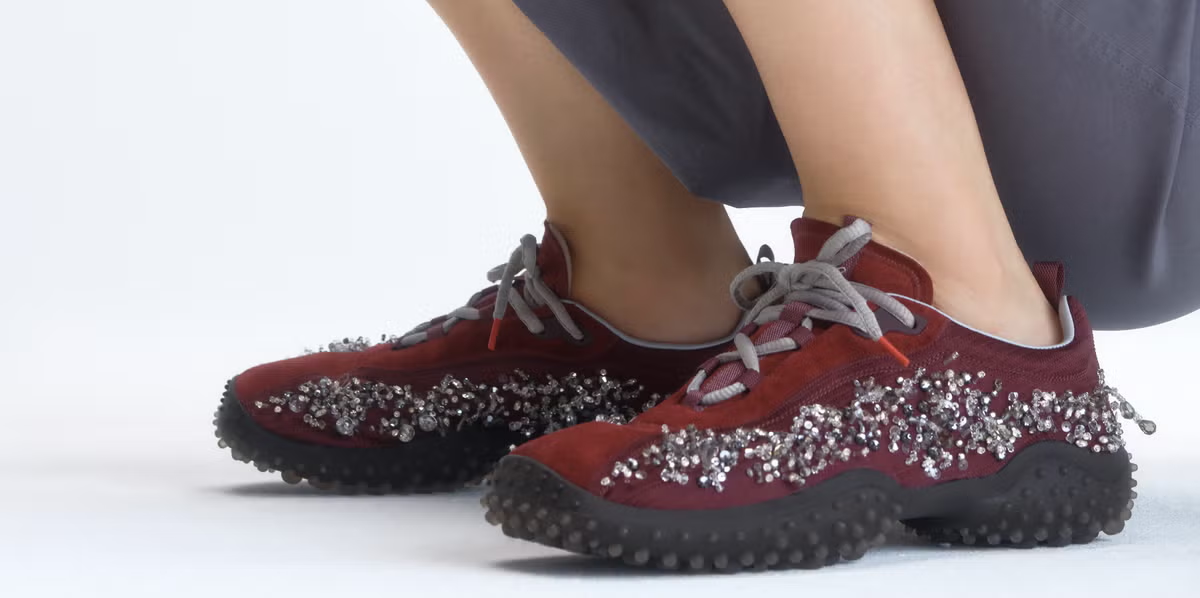
The Miu Miu Bubble sneakers are back, and the pricing tells you what the house thinks it has. The base version lands at $1,170. The crystal-embellished one runs to roughly twice that. Sizes across both started disappearing within days of the shoe going live.
That’s a lot of confidence for a silhouette nobody was asking for eighteen months ago. But the context makes it legible: Miu Miu has spent three years turning a New Balance collaboration into the most imitated luxury sneaker of the decade, and it has now put an in-house archive shoe on shelves at a comparable price with no partner logo on the sidewall.
The Bubble is not just a retro revival. It’s a test of whether the last three years belonged to Miu Miu or to the collaboration.
Miu Miu Bubble Sneakers: The Facts
| Detail | Confirmed Information |
|---|---|
| Model | Miu Miu Bubble shoe |
| Archive origin | First released 1999, early-2000s sportswear era |
| Runway debut | Fall/Winter 2026, Paris, March 2026 |
| Retail launch | Early August 2026 — available now |
| Base version | Technical fabric and suede — around $1,170 |
| Embellished version | Technical nylon with crystal and sequin embroidery — around $2,300 |
| Base colorways | Dark Brown, Cloudy Gray |
| Embellished colorways | Dark Brown, Ivory; Burgundy listed as coming soon |
| Availability | miumiu.com and Miu Miu boutiques; several sizes already sold out |
| India release | No dedicated India launch announced |
One flag on pricing. The embellished version has been reported at both $2,300 and $2,250 across outlets covering the launch within the same 48 hours. The higher figure comes from the more direct brand-facing reporting, but the gap is real and probably reflects regional variation or a mid-week adjustment. Verify on the product page for your region before quoting it to anyone.
The 1999 Original and What Came Back
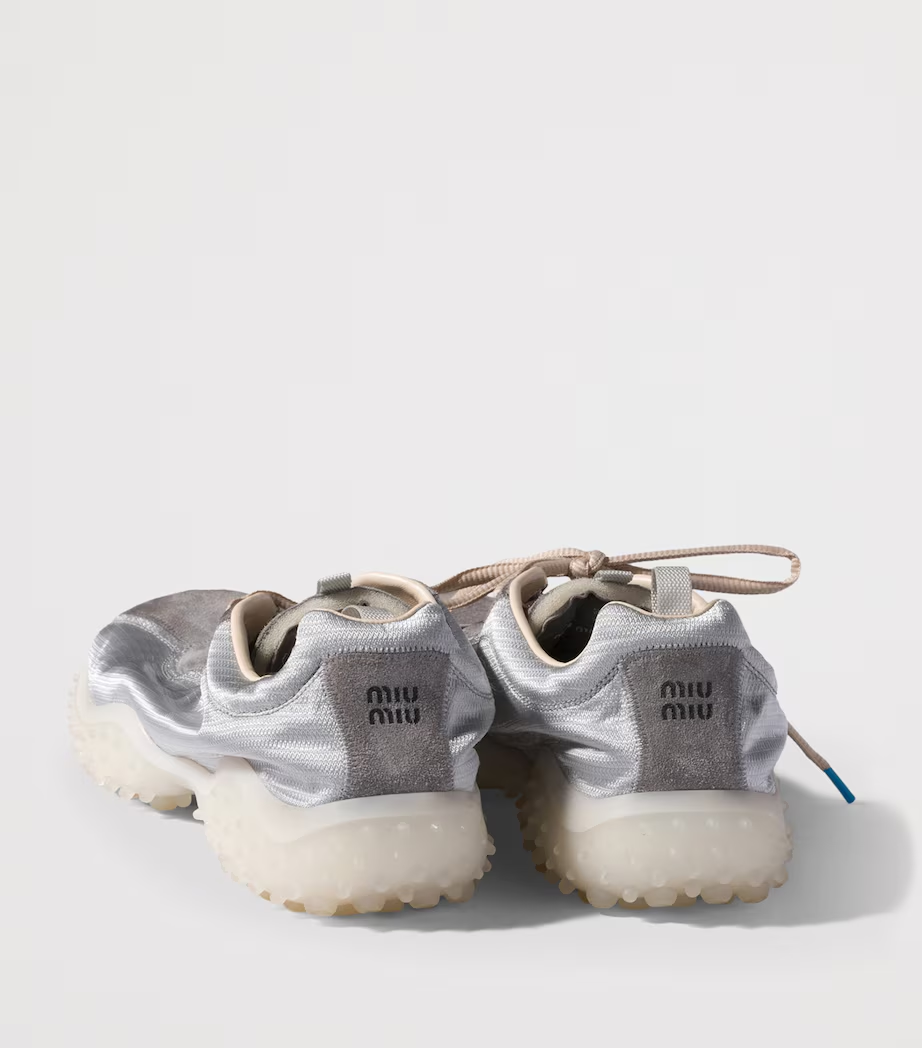
The Bubble is genuinely old. Miuccia Prada first put this shoe out in 1999, into a market that was briefly obsessed with footwear that looked engineered rather than designed.
The original was defined by two things: a squared toe, and a studded sole that gave the shoe a distinctly textured, almost tactile profile. It was athletic in reference but never athletic in function — a fashion object borrowing the language of performance at exactly the moment that language was becoming culturally dominant.
It did not become a mainstream hit. It became something more useful to a brand twenty-five years later: a cult object. Vintage pairs have circulated on resale for years, usually described in the same slightly bewildered register — sporty, wearable, weird, unmistakably Miu Miu. Listings routinely note that some of the bubbles have fallen off the sole, which tells you both how distinctive the construction was and how poorly it aged.
That combination — visually memorable, physically fragile, never mass-produced — is close to ideal archive-revival material. There’s demand with nowhere to go, because the originals are scarce and the surviving ones are falling apart.
What Actually Changed on the Relaunch
This is where the Bubble differs sharply from the Reebok approach we covered in our G-Unit G6 piece, where the entire strategy was to change nothing at all.
Miu Miu changed quite a lot.
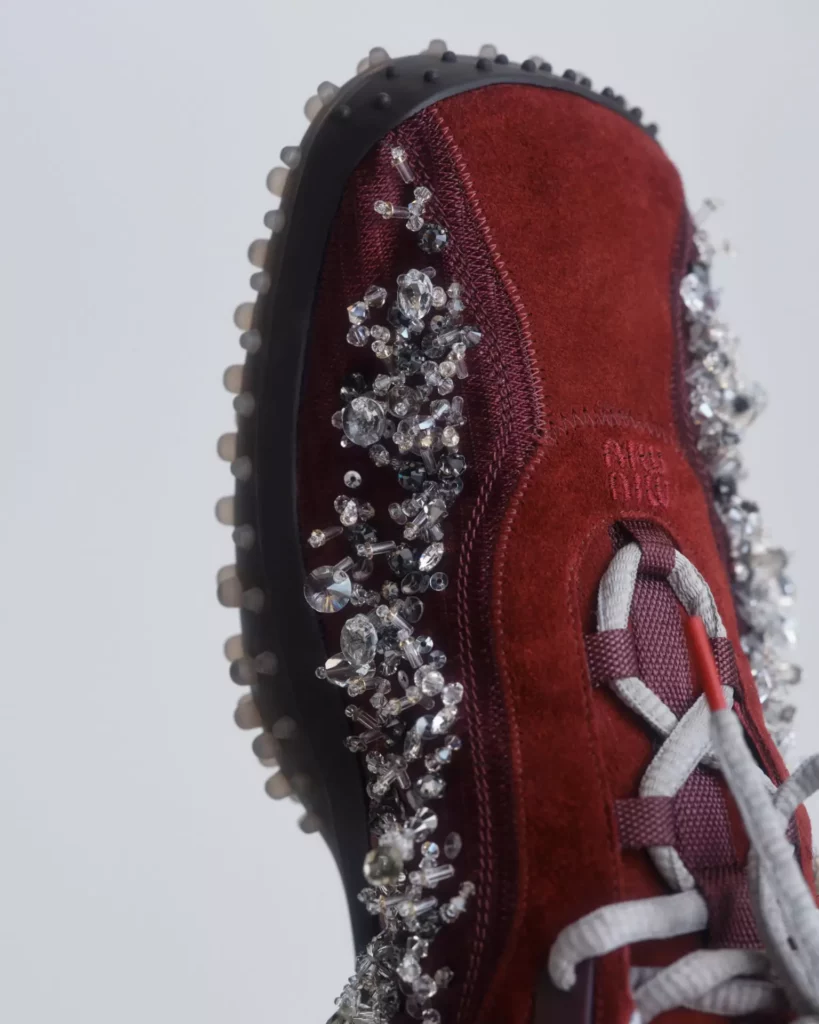
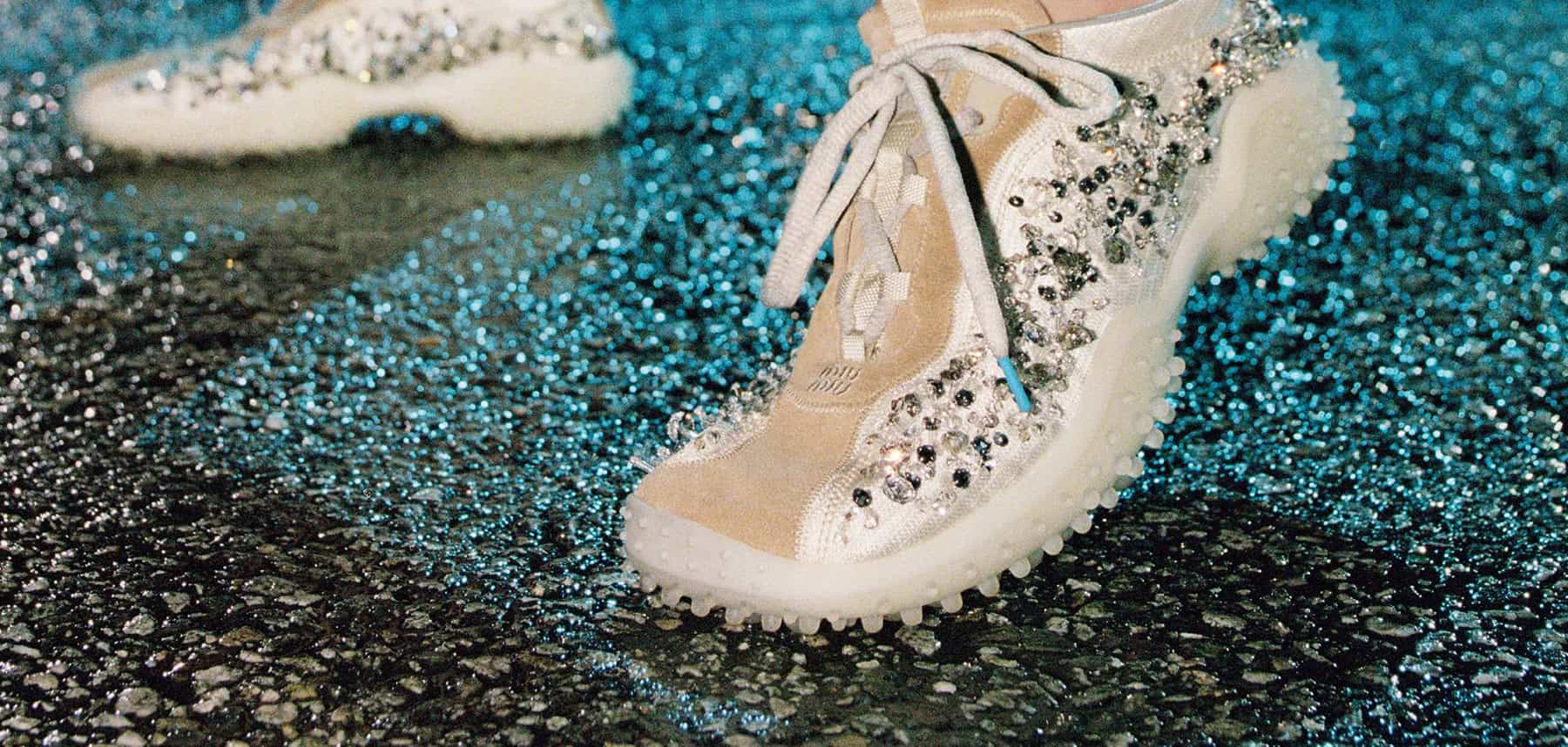
The sole was re-engineered. The bubble profile survives, but it’s been lightened using newer construction and resculpted into something more layered. Translucent elements have been worked in. This is the single biggest departure from the original, and it addresses the exact failure the vintage market complains about.
The upper was softened. The relaunch uses lightly padded leather and suede in a deliberately deconstructed build. The original read as more rigid and technical; this reads softer, closer to a house slipper that happens to be a sneaker.
The laces got specific. Ribbed technical cotton, with tips dipped in a contrasting varnish. It’s a small detail and an expensive one, and it’s the sort of thing that separates a considered relaunch from a reissue.
The texture mix is new. Suede running through the middle of the shoe, combined with transparent accents and layered materials, gives the 2026 version a depth the 1999 original didn’t have.
So: same silhouette, substantially different shoe. Whether that’s better or worse than a faithful 1:1 depends on what you wanted. If you wanted the 1999 shoe, this isn’t it. If you wanted the 1999 shoe without the bubbles falling off, this is exactly it.
The Two Versions — and Which One Is the Real Product
| Base Version | Embellished Version | |
|---|---|---|
| Materials | Technical fabric and suede, padded leather | Technical nylon with crystal and sequin embroidery |
| Price | ~$1,170 | ~$2,300 |
| Colorways | Dark Brown, Cloudy Gray | Dark Brown, Ivory (Burgundy soon) |
| Runway origin | Fall 2026 collection | Debuted on the Paris runway in March |
| Wearability | Everyday-viable | Occasion piece |
| What you’re buying | The silhouette | The spectacle |
The embellished version is the one that photographs, and it’s the one that made the runway coverage. Crystal and sequin embroidery across a technical nylon upper is an aggressive proposition on a sneaker, and it’s clearly aimed at a specific buyer.
But the base version is the actual product. At $1,170 in Dark Brown or Cloudy Gray, it’s a wearable shoe in earth tones that sits inside a normal wardrobe. The embellished pair is a $2,300 statement that will be worn a handful of times and photographed every one of them.
Editorial read: if you’re buying one, buy the base. The bubble sole is already the loud part. Adding crystals to it is belt-and-braces styling, and the earth-toned version lets the sole do the work it was designed to do.
Why This Matters: The New Balance Shadow
Here’s the context that most coverage of this launch is skipping.
Since 2022, Miu Miu’s partnership with New Balance has produced the single most influential luxury sneaker of the current era. The 530 SL — razor-thin sole, suede-and-mesh construction, mismatched double laces — did not just sell. It reset the category. Slim-profile sneakers went from niche to default across the entire market, and the imitations came from everywhere, including from New Balance itself with a more affordable version of the same idea.
That collaboration currently sells at around $1,270 a pair and continues to sell out with minimal announcement. Miu Miu has been able to drop new colorways quietly and watch them disappear.
Which raises an obvious commercial question: how much of that is Miu Miu, and how much is New Balance?
The Bubble is the answer being tested in public. It’s priced within a hundred dollars of the 530 SL. It occupies the same slot in the wardrobe. It carries no co-branding, no partner sidewall logo, and — critically — no revenue share.
If the Bubble performs, Miu Miu has demonstrated it can run a luxury sneaker business on its own archive. If it doesn’t, the last three years belonged as much to the 530 as to the house that reshaped it.
Early signs favour Miu Miu: sizes across both versions began selling out almost immediately. But early sell-through on a limited first run is a weak signal, and anyone treating it as proof is reading a launch as a trend. The real test is the second and third colorway drop, and whether the shoe still moves when it isn’t new.
Where the Bubble Sits in the Wider Trend
Two things are happening in footwear right now, and the Bubble sits at the intersection.
The archive is the strategy. Luxury houses have collectively concluded that their own history is cheaper and safer than new design. We’re seeing the same logic across the market — Reebok mining its collaborative back catalogue, fashion houses reissuing early-2000s silhouettes, and the whole Y2K revival cycle arriving on schedule roughly twenty-five years after the fact.
The chunky-vs-slim pendulum is swinging back. The Miu Miu x New Balance collaboration drove a market-wide move toward razor-thin soles. The Bubble is a deliberate counterpoint — a rounded, textured, visually substantial sole from the same house that made flatness fashionable. That’s not a contradiction; it’s a house hedging both sides of its own trend, which is what you do when you’ve been right long enough to know it won’t last.
The broader shift away from minimal footwear is something we mapped in our Fall 2026 trends guide, where volume is coming back across the board. The Bubble is the luxury-tier version of the same move.
Worth noting the silhouette is having a wider moment. Rounded, sci-fi-adjacent sneaker shapes are appearing across price tiers right now — the Bubble is the $1,170 interpretation of an idea that also exists at a fraction of the cost.
Sizing, Wear and Practical Reality
Miu Miu has not published dedicated fit guidance for the relaunch, so treat everything here as directional.
Sizing. The shoe runs in Italian sizing. The 1999 original had a squared toe with a relatively contained forefoot; the 2026 version is described as softer and more deconstructed, which usually means slightly more forgiving. If you’re between sizes and can’t try, the padded build argues for going up rather than down. Try in a boutique if you possibly can — at this price, a sizing mistake is expensive and international returns are slow.
The suede problem. The base version uses suede prominently. Suede is the wrong material for rain, and it’s very much the wrong material for an Indian monsoon. This is a dry-season shoe, and it needs protection from day one — our sneaker care archive covers suede treatment properly, and the India-specific seasonal guide covers which materials actually survive here.
The sole question. The original Bubble’s studded sole shed its bubbles over time. Miu Miu has re-engineered the sole with newer construction, which should address this. Should. There is no long-term wear data on a shoe that launched last week, and anyone claiming otherwise is guessing. If you’re spending $1,170, ask about the warranty terms.
Styling. The shoe was shown on the Fall 2026 runway alongside minimal, 90s-leaning clothing, and that’s the register it works in. The sole is the statement. Everything above it should be quiet. The embellished version, obviously, ignores this advice entirely and is styled at your own risk.
Buying Miu Miu Bubble Sneakers in India
Straight answer: there’s no dedicated India launch, and this is a harder buy than most.
Miu Miu’s India footprint is thinner than Prada’s, and the newest seasonal footwear rarely lands domestically at the same time as it does in Europe or the US. A shoe selling out globally within days is unlikely to be prioritised for a market where the brand has limited retail presence.
Route 1 — Indian luxury e-tail. Ajio Luxe, Tata CLiQ Luxury and Myntra carry designer footwear and are the right domestic starting point. Expect the wider Miu Miu catalogue before you see a week-old runway release, if you see it at all.
Route 2 — Miu Miu direct or international department stores. The most reliable route to the actual shoe. You’re paying import duty on a four-figure item, which is the expensive part, and returns become a genuine problem across borders.
Route 3 — Global luxury multi-brand platforms. Wider size availability, variable pricing, and worth comparing across several before committing.
Indicative India Landed Cost
| Version | US List | Rough India Landed Estimate |
|---|---|---|
| Base (fabric and suede) | ~$1,170 | ₹1,35,000 – ₹1,70,000 |
| Embellished (crystal) | ~$2,300 | ₹2,60,000 – ₹3,30,000 |
These are editorial ballparks, not quotes. Luxury import duty on footwear is substantial and varies with declared value and platform. Domestic luxury e-tail sets its own pricing independently of US list, and sale periods move these numbers significantly. Verify the full landed total at checkout — customs is where these purchases go wrong.
Note that VegNonVeg, Superkicks and Mainstreet Marketplace do not stock Miu Miu. This is a fashion house moving through luxury distribution, not sneaker retail. Same distinction we drew in the Marc Jacobs guide, and it matters more here given the price.
Counterfeit Warning
A four-figure sneaker with a visually distinctive sole is a counterfeit magnet, and the Bubble’s profile is very easy to approximate badly.
- The sole construction. The relaunch uses a lightened, resculpted sole with translucent elements and layered detail. Fakes reproduce the bubble shape but flatten the layering and get the translucency wrong — it reads as cloudy plastic rather than a finished component.
- The lace tips. Ribbed technical cotton with contrast-varnish-dipped tips is a specific, expensive detail. Counterfeits substitute plain cotton or painted tips that chip.
- Suede quality and padding. The relaunch is deliberately soft and padded. A stiff, thin upper is disqualifying.
- Embroidery density on the embellished version. Crystal and sequin work across a full nylon upper is difficult and costly to fake convincingly. Check density, alignment and setting quality.
Buy from Miu Miu directly or an authorised luxury stockist. At this price the discount on a grey-market listing is never worth the risk, and authentication on newly released luxury footwear is harder than on established sneaker models — the platforms themselves have limited reference data on a shoe this new.
The Vintage Market After a Relaunch
Original 1999 Bubble pairs have been trading quietly on resale for years, typically at accessible prices given their age and condition. Listings consistently note bubbles missing from the sole.
A relaunch changes that market in two directions at once.
Attention rises. People who have never heard of the Bubble now know it exists and that the archive version is the “real” one. That pushes interest toward vintage.
But the retro solves the problem vintage can’t. The reason to want a 1999 pair was that no alternative existed. Now one does, and it’s structurally sound. A twenty-seven-year-old shoe with a disintegrating sole is a display object; the 2026 version is footwear.
Practical read: vintage Bubbles are now provenance items, not wearable ones. If you find a clean pair at a reasonable price, buy it knowing you’re buying an artefact. If you want to actually wear the shoe, the relaunch is the only sensible answer — a point that applies to archive revivals generally, and one we made about the G6 for exactly the same reason.
Who Should Buy — and Who Absolutely Shouldn’t
Pros and Cons
| Pros | Cons |
|---|---|
| Genuinely distinctive silhouette in a flattened market | $1,170 is a serious price for a sneaker with no technical function |
| Sole re-engineered to fix the original’s known failure | No long-term wear data — the fix is unproven |
| Base colorways are wearable, not costume | Suede build is fragile and climate-limited |
| Archive provenance rather than trend-chasing | Not a faithful 1:1 — purists will be disappointed |
| Strong early demand suggests it holds value | No India availability; landed cost is punishing |
| The counterpoint to a market full of thin soles | The embellished version is nearly impossible to style |
Who Should Buy
- Buyers who already own the 530 SL and want the same slot filled differently
- Anyone who’s been tracking vintage Bubbles and never found a wearable pair
- Collectors of archive revivals who want the fixed version rather than the fragile one
- People genuinely bored of thin-sole minimalism and looking for volume with taste behind it
Who Should Skip
- Anyone treating this as an investment. Early sell-through on a first run is not a resale signal, and luxury sneakers are historically poor stores of value.
- Buyers who wanted the 1999 shoe specifically. This is a reinterpretation, and it says so.
- Anyone in a wet climate looking for one everyday pair. Suede and monsoon do not negotiate.
- Anyone who can’t try it on and can’t absorb a $1,170 sizing mistake.
- Buyers choosing the embellished version as a first Miu Miu purchase. Start with the base.
The Editorial Take
The Bubble is a good shoe and an even better piece of strategy.
Miu Miu identified a silhouette that was memorable enough to be missed, scarce enough to be wanted, and broken enough that the originals couldn’t satisfy the demand. Then it fixed the specific flaw, priced it against its own most successful product, and released it with no partner attached.
That’s not nostalgia. That’s a house auditing its own archive for the thing it can sell without splitting the margin.
Whether it works is genuinely unresolved. The 530 SL succeeded partly because the New Balance association gave a luxury sneaker sports credibility it couldn’t manufacture alone — the tension between the two names was the product. The Bubble has no such tension. It’s Miu Miu, doing Miu Miu, at Miu Miu prices.
Our guess: it sells, but not at 530 SL scale, and the house keeps both running. The more interesting outcome would be Miu Miu discovering it was always the one doing the heavy lifting. Watch the second colorway drop. That’s where we find out.
The Miu Miu Bubble sneakers arrive at a moment when almost every luxury house is doing the same thing: reaching backwards because reaching forwards is expensive and uncertain. What separates this one is the specificity of the choice.
Miu Miu didn’t revive a bestseller. It revived a cult failure — a shoe that was interesting enough to be remembered and flawed enough that nobody could still wear one. Then it fixed the flaw and charged accordingly.
Whether that’s cynical or clever probably depends on how the shoe looks on your foot. But the pricing makes the intent unmistakable. This is a house that has spent three years learning exactly how much people will pay for a Miu Miu sneaker, and is now finding out whether the name on the sidewall was ever the point.