


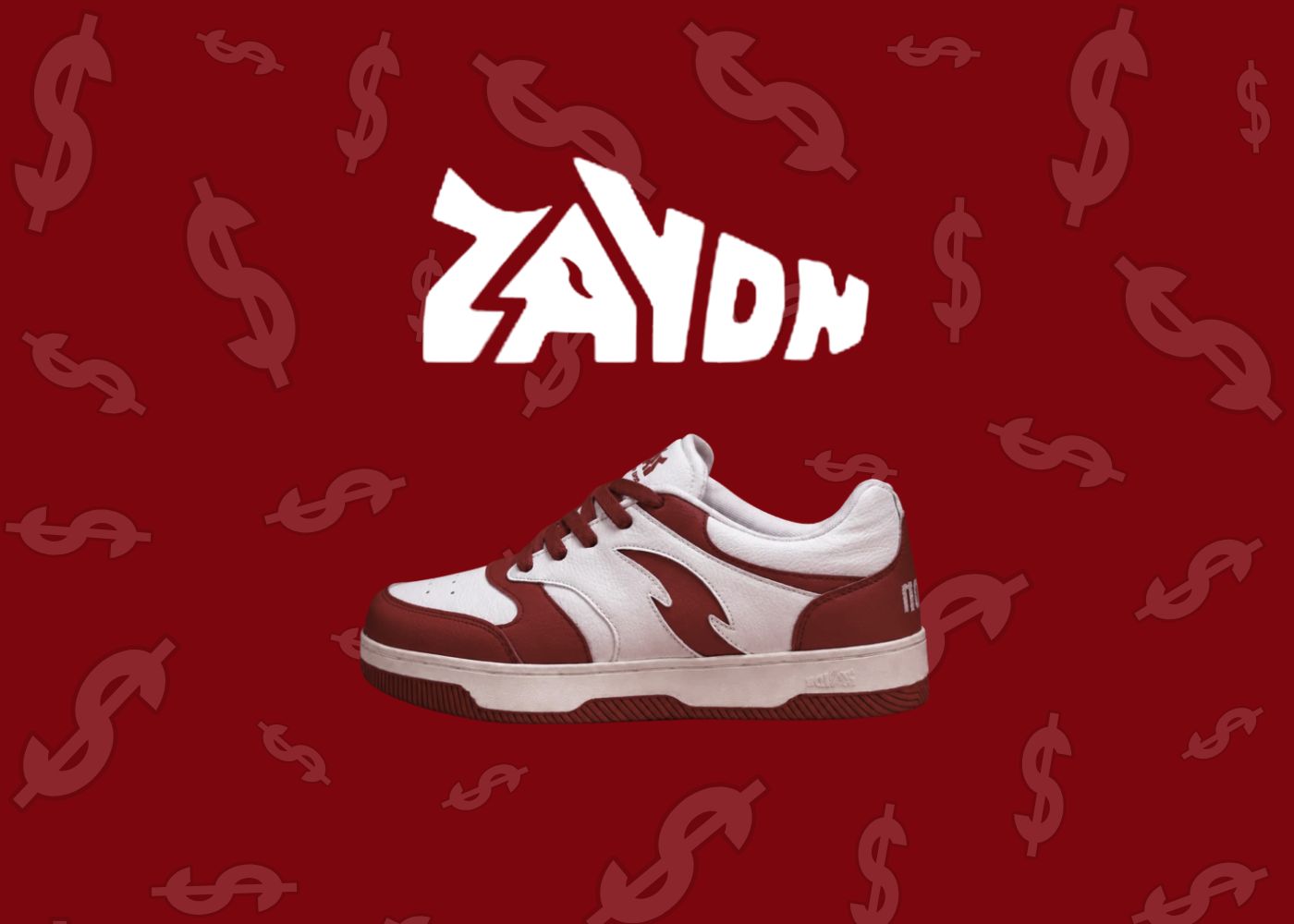
On 20 August 2026, Delhi-based Zaydn announced it had raised $681,000 in a seed round led by Inflection Point Ventures, with BeyondSeed and a group of private angels joining. Converted at current rates, that is roughly ₹6 crore.
Which is a strange amount of money to raise, and an even stranger amount to announce.
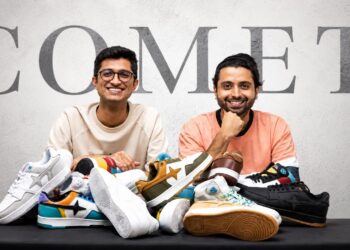
Because in the same category, over the past eighteen months, Comet closed a ₹42.3 crore Series A. Gully Labs took ₹30 crore from Saama Capital in January. Neeman’s pulled in around $4 million. Against that, the Zaydn funding round looks less like a war chest and more like a top-up.
Look at what sits underneath it, though, and the number starts making a different kind of sense.
What Zaydn Actually Raised
The round breaks down as follows.
| Detail | Figure |
|---|---|
| Amount | $681,000 (approx. ₹6 crore) |
| Stage | Seed |
| Lead investor | Inflection Point Ventures |
| Participating | BeyondSeed, private angels |
| Announced | 20 August 2026 |
| Headquarters | Delhi |
| Founded | 2022 |
Inflection Point Ventures is an angel-investing platform rather than a traditional VC fund. By its own account it has deployed over ₹900 crore across 280-plus startups, and backed 16 in the first quarter of 2026 alone.
That matters for reading the round correctly. IPV writes early, writes often, and writes smaller cheques than an Elevation or a Nexus. A ₹6 crore seed from IPV is a normal-sized IPV seed, not a signal that Zaydn asked for more and got turned down.
Who Zaydn Is
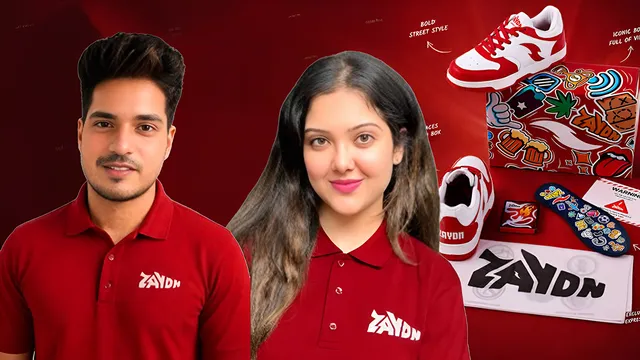
Zaydn was founded in 2022 by Ankit Dass, with Vidushi Chaudhary joining later as co-founder.
The pitch is narrow and legible: design-led sneakers for Indian Gen-Z buyers at what the brand calls mass-premium pricing. Not luxury. Not the ₹999 marketplace floor. The band in between, where a shoe has to look considerably more expensive than it costs.
The product spec reads like a comfort brief rather than a hype brief:
- Wide toe box
- Lightweight TPR soles
- Dual cushioning
- Memory foam insoles
- Breathable uppers
Nothing there is a flex. There is no carbon plate, no proprietary foam name, no collab. It is a list of decisions aimed at somebody who will wear one pair four days a week through a Delhi summer.
The brand has scaled to a claimed ₹10 crore-plus in annual revenue, with a community of over 170,000 followers on Instagram — built, notably, while bootstrapped.
K&B Take: A brand doing ₹10 crore that raises ₹6 crore is not raising to survive. It is raising to buy inventory. Those are completely different stories, and only one of them is worth paying attention to.
Where the Money Goes
Zaydn has said the capital will be deployed across inventory and production capacity, working capital, performance marketing, D2C and marketplace growth, and investment in product development, technology, brand building and team.
Marketplace expansion is specific: Myntra, Amazon and Nykaa.
Strip the press-release phrasing away and there are really two line items that matter.
Inventory and working capital. This is the unglamorous constraint that kills Indian D2C footwear brands. You cannot sell a size run you have not manufactured, and you cannot manufacture a size run without paying for leather, soles and labour months before a single pair sells. Growth is throttled by cash, not demand.
Marketplace distribution. Myntra, Amazon and Nykaa are where Indian Gen-Z actually shops for shoes. A D2C site is a brand asset. A Myntra listing is a revenue channel. Most homegrown labels eventually concede this.
Everything else on that list is rounding.
The Number Nobody Is Talking About
Here is the detail worth sitting with.
$681,000 is an odd figure. Rounds are not usually announced at odd figures. What it almost certainly reflects is a rupee-denominated round — somewhere close to ₹6 crore — converted into dollars for the announcement, because dollars read bigger in a headline than crores do.
That is not a criticism. It is standard practice across Indian startup PR. But it tells you the round was sized in rupees, against rupee costs, for a rupee business.
And ₹6 crore against ₹10 crore of annual revenue is roughly seven months of top line. That is a genuinely conservative raise. Founders who take that little are usually protecting something — most often, equity.
Compare it to the alternative. A brand that raises ₹40 crore at seed has to grow into a valuation. A brand that raises ₹6 crore has to grow into an inventory plan. The second problem is much easier to solve.
Why In-House Manufacturing Is the Real Asset
The most consequential line in the announcement has nothing to do with money.
Zaydn manufactures in-house.
For anyone who has not looked closely at how Indian sneaker brands get made, this is the whole game. We went deep on this in our report on the Agra factory quietly building India’s new sneaker brands, and the structural problem is brutal: most factories want minimum orders of 800 to 1,200 pairs per style before they will run a line.
That single constraint shapes everything downstream. It means a small brand must bet heavily on each design. It means a colourway that flops sits in a warehouse for a year. It means iteration is expensive and slow, in a category where a silhouette can go stale inside a season.
Owning production changes the arithmetic. Adjusting a sole becomes a conversation on a factory floor rather than a renegotiated purchase order. Testing a new last becomes viable. A spec sheet full of small comfort decisions — wide toe box, dual cushioning, memory foam — is only economically sensible to keep tuning if you control the line making it.
Reporting on the round has suggested Dass came into an existing family footwear operation rather than building a factory from scratch. We have not been able to verify that independently, and we would treat it as unconfirmed. But it would explain a 2022 brand having manufacturing depth that normally takes years and considerably more than ₹6 crore to acquire.
The Competitive Picture
Zaydn is entering a crowded and increasingly well-funded field.
| Brand | Base | Founded | Latest raise |
|---|---|---|---|
| Comet | Bengaluru | 2023 | ₹42.3 crore Series A (Elevation Capital) |
| Gully Labs | New Delhi | 2023 | ₹30 crore Series A (Saama Capital), Jan 2026 |
| Neeman’s | Hyderabad | 2017 | ~$4 million Series B-II |
| Zaydn | Delhi | 2022 | $681K seed (IPV), Aug 2026 |
Others in the conversation include Thaely, Banjaaran Studio, CHNKS, 7-10 and Bacca Bucci, each staking out a different corner — recycled materials, South Asian print work, minimalist everyday, chunky vegan high-tops.
Gully Labs is the instructive comparison. Founded 2023, also Delhi, it reports around ₹30 crore in annualised revenue with physical stores in five cities and a stated target of ₹100 crore by FY2026-27. It raised five times what Zaydn just did, and it is chasing an offline retail footprint plus international expansion into the US and UK.
Two Delhi sneaker brands, two completely different strategies. One is buying shelf space. The other is buying stock.
Neither is obviously right. But retail is the most expensive way to grow a footwear brand in India, and it is where a great many of them have quietly stalled.
Is the Market as Big as Everyone Says?
Every announcement in this category comes attached to a market-size figure, and Zaydn’s is no exception. The commonly cited number puts India’s sneaker market at roughly $3.2 billion in 2024, reaching $4.49 billion by 2030 — annual growth of around 6%.
Treat that with some care.
It is a figure supplied by the company, drawn from third-party research, and it is not the only one in circulation. Other research houses put the 2024 base closer to $3.88 billion and the projection nearer $5.9 billion by 2032. The definitions of “sneaker” underlying each are almost certainly different, and neither is independently auditable.
What is not in dispute is the direction. India buys more sneakers every year, buys them younger, and increasingly buys them from brands that did not exist a decade ago. As we found reporting on why India’s biggest sneaker brand sells shoes for ₹683, the volume story in this country runs through price points that international coverage barely acknowledges.
Six percent annual growth, incidentally, is respectable but not explosive. It does not justify a land grab. It justifies exactly the kind of measured, inventory-led scaling Zaydn appears to be planning.
What This Means for Indian Sneaker Buyers
Practically, three things follow.
Wider availability. If the marketplace push lands, Zaydn moves from a D2C site most people have not visited to a listing on platforms they already use. Availability is the single biggest barrier for homegrown labels.
More stock, fewer sellouts. Production capacity is the stated priority. Sold-out size runs are the most common complaint against small Indian sneaker brands, and this money is aimed straight at that.
Pricing should hold. Mass-premium is the brand’s stated position, and taking a small round rather than a large one reduces the pressure to chase margin upward. Brands that raise at aggressive valuations tend to reprice.
Worth remembering what a domestically manufactured sneaker sidesteps entirely: the import duty stack. As we documented in our Hermès sneaker guide, luxury footwear entering India carries roughly 42% in duties before a reseller has taken a rupee. A shoe made here is not fighting that maths. That is the structural advantage every homegrown brand has, and the one most under-used in their marketing.
The Verdict
The Zaydn funding round will not trend. It is too small, and the brand is not famous enough yet for the number to carry a headline on its own.
But there is something clarifying about a sneaker business raising roughly seven months of revenue to buy inventory and factory capacity, in a category where the reflex is to raise thirty months of revenue to buy growth.
India does not have a shortage of sneaker brands. It has a shortage of sneaker brands that can reliably keep a size 9 in stock, ship it in three days, and have it still look good after a monsoon. Those are manufacturing and working-capital problems, and this is a manufacturing and working-capital round.
Whether Zaydn’s shoes are any good is a separate question, and one we will answer properly when we get pairs on feet.
The strategy, though, is more interesting than the cheque.
Key Takeaways
- Zaydn raised $681,000 (approx. ₹6 crore) in a seed round led by Inflection Point Ventures, announced 20 August 2026.
- The brand was founded in Delhi in 2022 by Ankit Dass, later joined by co-founder Vidushi Chaudhary.
- Funds go towards inventory, production capacity, working capital and expansion onto Myntra, Amazon and Nykaa.
- Zaydn reports over ₹10 crore in annual revenue and 170,000-plus Instagram followers, built while bootstrapped.
- The round is markedly smaller than rivals: Comet raised ₹42.3 crore, Gully Labs ₹30 crore.
- In-house manufacturing is the brand’s genuine structural advantage, not the funding.
- Market-size figures cited around this round come from company-supplied research and vary between sources.