


The summer 2026 sneaker trends filling international fashion coverage right now are real, well-documented and, in several cases, completely wrong for anyone reading this from Mumbai, Bengaluru or Hyderabad in late July.
Metallic silver, chocolate brown, box-fresh white, suede, Mary Jane straps, slim terrace revivals, canvas classics — that is the list, and it is accurate. What the international lists leave out is that four of those seven are material or colour choices, and material and colour behave very differently in a country where the monsoon is currently doing what the monsoon does.
So here is the full picture: what is actually trending, why, and an honest verdict on which pairs you should buy in July versus which you should bookmark for October.
What’s Actually Happening: Two Shifts, Not Seven Trends
Trend lists tend to present parallel items. In practice, summer 2026 is running two separate movements, and understanding which is which tells you how long each will last.
The shape shift is structural and slow-moving. Sneakers are getting slimmer, flatter and stranger — hybrids that borrow from ballet flats and Mary Janes, plus archival terrace silhouettes that were always narrow. This has been building for three years, dominated 2025 and shows no sign of reversing. We mapped where it goes next in our fall 2026 sneaker trends guide.
The surface shift is fast-moving and seasonal. Metallics, browns, whites, suede textures. These rotate on a roughly six-month cycle and are far more disposable as purchases.
Buy into the first with confidence. Buy into the second with a clear-eyed sense that you are buying a season, not a staple.
The Shape Shift: Hybrids and Slim Silhouettes
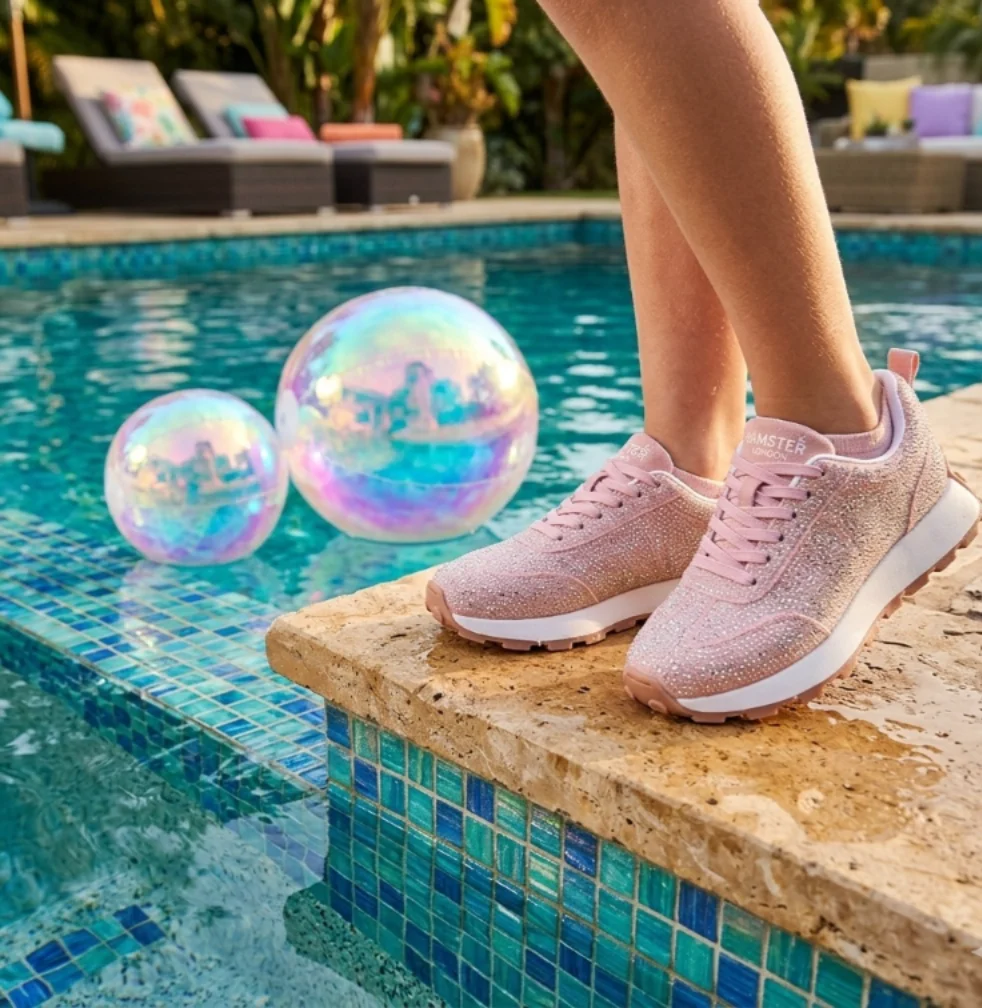
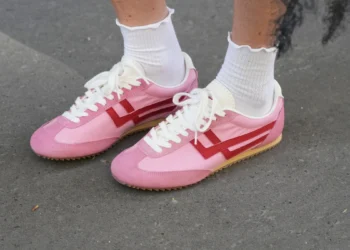
Mary Jane and ballet sneakers
The strap-across-the-vamp sneaker is the defining women’s footwear story of the past three years, and the numbers back it up rather than just the front rows. Search interest for ballet sneakers rose 211 percent between the start of 2025 and the start of 2026. Resale and demand platforms have logged the Nike Air Rift climbing sharply month over month — the split-toe, strapped 1996 design that anchors the category.
What makes this more than a passing hybrid is that it emerged from women’s sneaker culture rather than being handed down from men’s. That is genuinely new. Almost every previous women’s sneaker moment involved taking a men’s silhouette and shrinking it — a pattern we’ve written about before in the context of Indian brands finally building women’s lasts properly.
The category now spans the accessible — adidas has a Mary Jane version of the Samba and a lace-free elastic-strap Tokyo — through to Salomon’s recovery-shoe interpretation and the luxury tier, where prices run into four figures in dollars.
Verdict for July in India: Good, with caveats. The strap construction leaves more of the foot exposed, which helps in heat. But most versions in this category use suede or satin, and both are monsoon liabilities. Look for leather or synthetic uppers.
The adidas Tokyo
The Tokyo is the sleeper hit of 2026 and the shoe most likely to replace the Samba in rotations that already have one.
Its heritage is real: it debuted as a competition track shoe at the 1964 Tokyo Olympics, with a consumer release following in the early 1970s. What brought it back is straightforward — it is narrower and flatter than almost anything else in the adidas archive, which is exactly what the market wants.
The current push includes animal-print pony hair versions in tiger and leopard treatments, plus collaboration editions. But the base model is the interesting one: nylon or leather upper, thin gum sole, serrated Three Stripes running to the outsole, a T-toe and an X overlay at the heel.
Verdict for July in India: Excellent if you pick the leather or nylon version. The nylon iterations dry fast, which matters more than any other single property between June and September. Avoid the pony hair for obvious reasons.
The Surface Shift: Colour and Material
Metallic and silver
International editors called 2026 the year of the silver sneaker early, and the autumn runways have kept it alive. The silhouette carrying it most visibly is the metallic Puma Speedcat, which sits neatly inside the low-profile movement while being loud enough to register as a choice.
Verdict for July in India: Surprisingly practical. Metallic finishes are usually coated synthetics that wipe clean, and they hide water marks better than pale suede. The risk is scuffing, not staining.
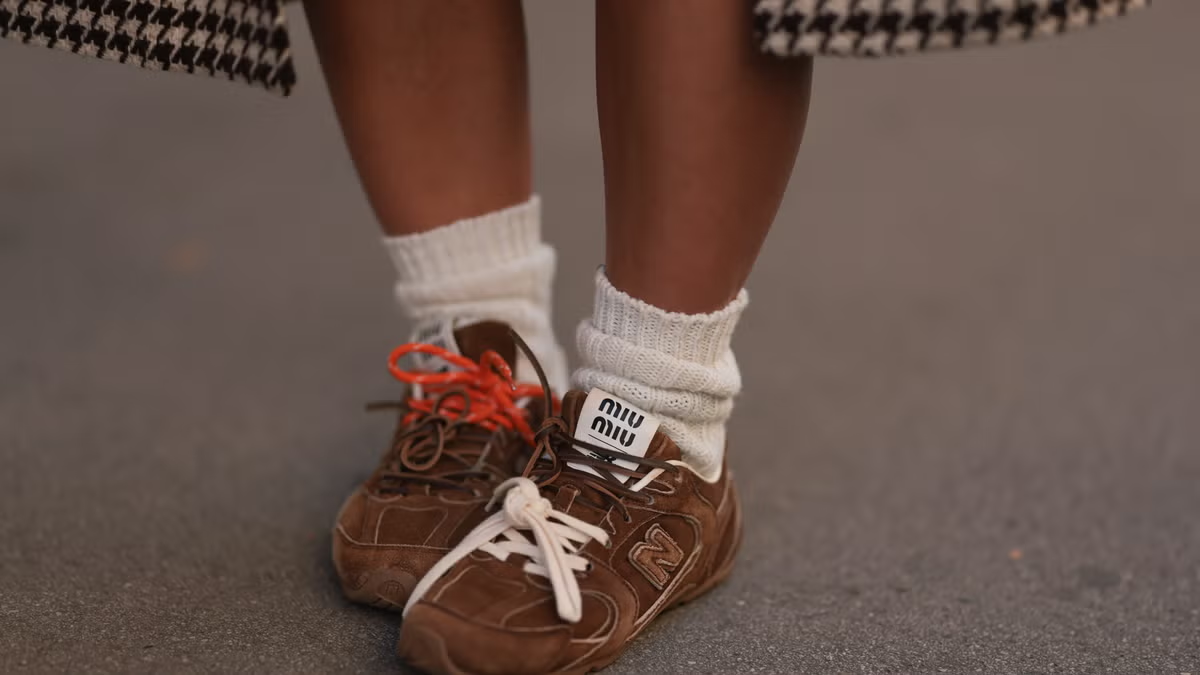
Brown
Chocolate and tan sneakers carried over from a strong autumn-winter run and have not faded. The appeal is straightforward: brown reads warmer and more considered than black, and pairs with the earth-tone palette that has dominated for two seasons — the quieter counterpart to the saturated statement colours running alongside it.
Verdict for July in India: The best colour choice on this entire list. Dark and mid-browns hide mud, slush and water marks in a way white simply cannot. If you are buying one pair this month, buy it in brown.
White
The white sneaker never actually leaves; it just cycles between “basic” and “deliberate.” It is currently deliberate, helped along by ballet-inspired luxury versions and by the fact that white photographs well against summer dressing.
Verdict for July in India: Buy it, wear it in October. A white sneaker in an Indian monsoon is a maintenance project. Professional cleaning in India runs roughly ₹300–600 for basic fabric pairs and ₹600–1,000 for leather and mixed-material construction — costs that add up fast if you are wearing white through slush.
Suede
Suede has spread well beyond its autumn home, turning up on travel sneakers, Speedcats and Cortez-style trainers across the season’s coverage.
Verdict for July in India: Do not. This is the clearest case where international trend advice fails locally. Suede’s raised nap traps dirt and absorbs moisture by design. In Indian monsoon humidity, a damp pair stored in a closed box can develop mould inside 48 hours. If you already own suede, treat it with a repellent spray and keep it out of rotation until the rain stops.
Vans and canvas
Checkerboard slip-ons, Old Skools and Authentics are back in circulation, helped by high-profile collaborations at the collector end.
Verdict for July in India: The most monsoon-tolerant option here, and the cheapest to replace. Canvas is the one upper material that genuinely survives a machine-adjacent cleaning, and dark or patterned canvas hides everything. Not glamorous. Very practical.
The Monsoon Test: Which Trends Survive an Indian July
| Trend | Monsoon rating | Why |
|---|---|---|
| Brown sneakers | Excellent | Hides mud and water marks better than any other shade |
| Canvas / Vans | Excellent | Cleans easily, cheap to replace, dries fast |
| adidas Tokyo (nylon) | Very good | Thin, fast-drying upper; slim profile sheds water |
| Metallic / silver | Good | Coated synthetics wipe clean; watch for scuffing |
| Mary Jane sneakers | Mixed | Depends entirely on upper material — leather yes, suede no |
| White sneakers | Poor | High maintenance; recurring cleaning cost |
| Suede | Avoid until October | Absorbs moisture; mould risk inside 48 hours |
Buying These in India
Most of these silhouettes are available domestically, but availability varies sharply by trend.
- adidas Tokyo, Samba Jane, Stan Smith — widely stocked through adidas India and major marketplaces. The mainstream picks.
- Puma Speedcat, including metallics — one of the better-distributed trend shoes in India right now.
- Nike Air Rift and Rift-adjacent styles — harder. Nike’s India assortment is curated and does not carry most niche silhouettes, a situation that tightened further after the Nykaa handover. Expect to go through authorised multi-brand retailers or resellers.
- Onitsuka Tiger, Asics, New Balance — reasonable domestic presence, particularly at multi-brand stores.
- Luxury collaborations — import or reseller only, at import or reseller prices.
For anything not stocked locally, VegNonVeg, Superkicks and Mainstreet Marketplace remain the sensible starting points before you look at grey-market listings.
Counterfeit warning, and it matters more for this list than most. Sambas, Speedcats and Vans are three of the most heavily faked silhouettes in the Indian market, and the Mary Jane hybrids are now being cloned too. The strap hardware and stitching around the vamp are the usual tells. If a listing is meaningfully below the brand’s own India price outside a declared sale, walk away.
Care: The 48-Hour Rule
Whatever you buy, the same monsoon routine applies, and it is the single highest-value thing in this article.
- Apply a water-repellent spray before first wear, and reapply roughly monthly through the season
- Wipe off mud the day it happens, while it is still soft
- Stuff wet pairs with newspaper to draw moisture out, replacing it once damp
- Air-dry in shade near a fan — never in direct sun, never on a heater, never with a hairdryer
- Never store a damp pair in a closed box. This is the 48-hour rule: in Indian monsoon humidity, that is roughly how long it takes for mould to start
Rotating two or three pairs rather than wearing one daily also prevents the moisture build-up that causes both odour and material breakdown. For pairs you’re on your feet in all day, our guide to all-day standing sneakers covers the rotation logic in more depth.
Who Should Buy What
If you want one pair that works right now: A brown leather low-profile sneaker. The adidas Tokyo in a mid-brown or a brown Samba covers the trend and survives the weather.
If you want the trend that will last longest: A Mary Jane or ballet sneaker in leather. The shape shift has years left in it; the colour trends do not.
If you want maximum wear for minimum money: Dark canvas. A checkerboard or plain Old Skool costs a fraction of the alternatives and you will not agonise over puddles.
If you want the statement pair: Metallic. It photographs well, it wipes clean, and it is the one loud option on this list that is not also a maintenance burden.
What to leave until October: White and suede. Both are excellent choices in a dry season and genuinely poor ones right now.
The Bottom Line
The summer 2026 sneaker trends coming out of international fashion coverage are well-observed and worth paying attention to. The shape story in particular — slimmer, flatter, stranger, and driven by women’s sneaker culture rather than borrowed from men’s — is the most interesting structural shift the category has seen in a decade.
But a trend list written for a Los Angeles July is a different document from one written for a Mumbai July. Buy the shapes now. Buy the surfaces seasonally. And put the suede away until the rain stops.
Key Takeaways
- Summer 2026’s sneaker trends split into a durable shape shift and a seasonal surface shift — buy accordingly
- Mary Jane and ballet sneakers are the defining women’s footwear category, with ballet sneaker search interest up 211 percent year on year
- The adidas Tokyo, a 1964 Olympic track shoe, is the silhouette most likely to succeed the Samba
- Brown and dark canvas are the only trends on the list that are genuinely monsoon-appropriate right now
- Suede is the clearest case of international trend advice failing in India — mould risk starts around 48 hours in a damp closed box