


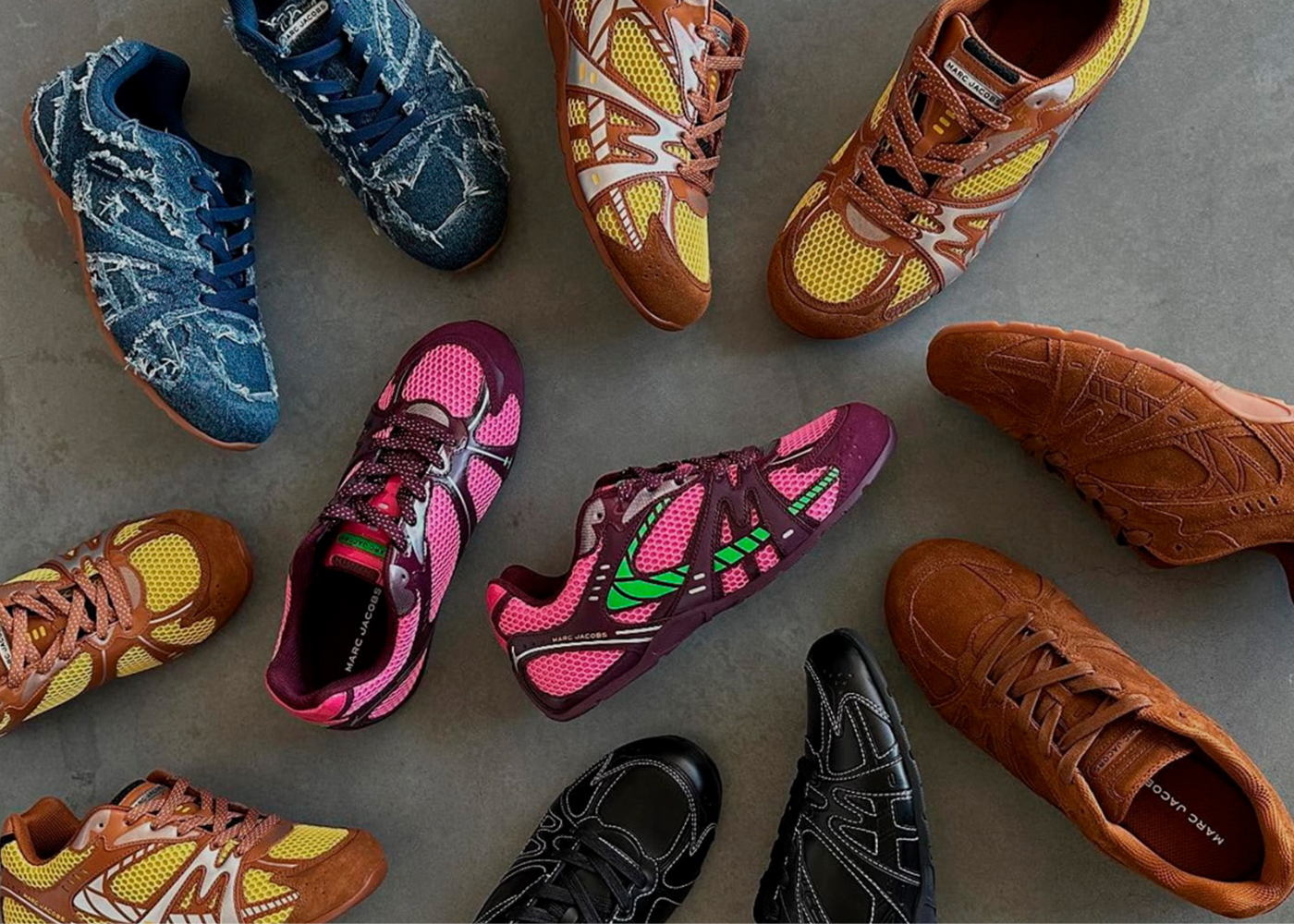
Search interest in Marc Jacobs sneakers has climbed sharply this month, and the reason isn’t a runway show or a celebrity sighting. It’s a size run.
The 72 Spring Sneaker arrived in August 2025 as a women’s shoe, capped at EU 41. It went viral anyway — and a large share of the noise came from people who physically could not buy it. Comment sections filled with variations of the same request: make this in my size. Marc Jacobs eventually did, extending the range and pushing the model into men’s sizing for the Spring 2026 season.
That’s a more interesting story than most designer sneaker launches, because it ran backwards. Usually a brand decides who a shoe is for. Here, the audience decided, loudly, and the brand followed.
What follows is the full picture: every model currently in the line, real prices, honest fit guidance, how the shoes sit against the Sambas and Bottegas they’re competing with, and what buying them in India actually costs.
Marc Jacobs Sneakers at a Glance
| Model | Launched | Approx. List Price (USD) | Silhouette | Best For |
|---|---|---|---|---|
| The 72 Spring Sneaker (mesh) | August 2025 | $225 | Thin-sole low profile | The default pick — most colorways, most availability |
| The Suede 72 Spring | 2025–26 | $250 | Same last, suede upper | Quieter, more autumnal wear |
| The Denim 72 Spring | 2025–26 | $225 | Distressed frayed denim | Texture-forward styling |
| The Stitched 72 Spring | 2026 | $250 | Stitched detail upper | The most “designer-looking” of the family |
| The 400 Bleecker Runner | February 2026 | $228 | Bowling-shoe-derived runner | Slimmer, more menswear-leaning |
| The Jogger | Ongoing line | Varies | Chunkier lace-up trainer | Streetwear-adjacent, older customer |
Prices are manufacturer list, subject to seasonal change and regional variation. Verify at point of sale.
Why Marc Jacobs Sneakers Are Trending Right Now
Three things converged, and none of them is traditional marketing.
The 72 Spring became a genuine TikTok object. Not a paid campaign — an organically circulated one. Boutique accounts, styling videos, unboxings, colorway comparisons. The kind of grassroots retail chatter that moves product without a media budget behind it.
Scarcity by size, not by stock. The original run topped out at EU 41 — roughly a US women’s 11, or a men’s 8. That excluded most men entirely, and plenty of women too. Demand had nowhere to go, so it went into comments.
Marc Jacobs answered. Extended sizing and a men’s push arrived for Spring 2026, with retailers reporting availability up to EU 45. A shoe that had been aspirationally unavailable became purchasable, and a year of pent-up interest converted into searches.
That last step is the whole trend. The spike isn’t people discovering the shoe. It’s people who already wanted it finally being able to look up whether they can have it.
The 72 Spring Sneaker: The One Everyone Means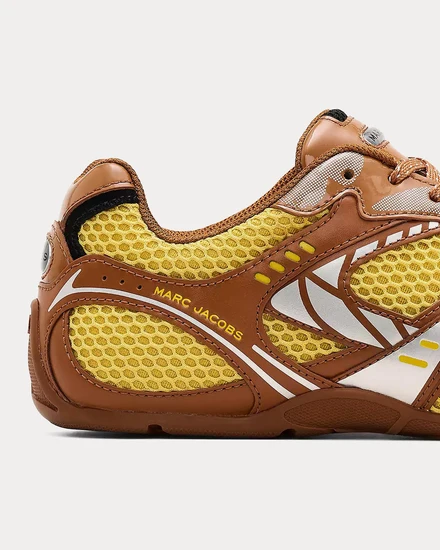
When someone says “Marc Jacobs sneakers” in 2026, this is almost always the shoe.
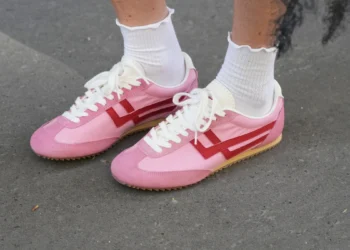
The design. A low-profile, thin-soled silhouette with a breathable mesh base and suede inserts for texture. The brand describes the reference points as sporty retro — which, translated, means a 1970s running-shoe outline reinterpreted through a fashion lens rather than an athletic one.
The construction detail that matters. A custom dual-density insole. This is genuinely the difference between a designer sneaker you wear and one you photograph. Thin-sole shoes are frequently punishing after two hours; the 72 Spring is built to avoid that, and it’s the most defensible part of the $225 price.
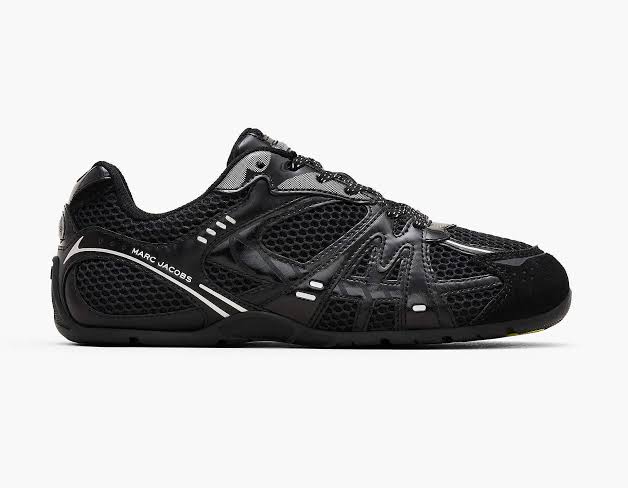
The colorways are where the shoe earns its personality — multicolour combinations rather than the tonal restraint most luxury sneakers default to. Daisy Yellow Multi, Grey Multi, Sky Blue, Raspberry Pink, Lime Green Multi and Black Mesh have all circulated, with restocks running unevenly by size and shade.
The material variants matter more than they usually do. The mesh version is the loud one. The suede version at $250 is the one that works in a wider wardrobe. The denim version, in distressed frayed denim, is the most polarising. The stitched version is the most formal-adjacent thing in the line.
72 Spring Variant Comparison
| Variant | Upper | List Price | Character |
|---|---|---|---|
| Standard | Mesh with suede inserts | $225 | Loudest, most colourways, best value |
| Suede | Full suede | $250 | Most versatile, worst in rain |
| Denim | Distressed frayed denim | $225 | Highest-risk, most distinctive |
| Stitched | Stitched-detail upper | $250 | Cleanest, most understated |
The Sizing Story — And Why It Matters
This deserves its own section because it’s the actual news, and because it tells you something about how fashion houses now make decisions.
At launch, the 72 Spring ran to EU 41 — a US women’s 11 or men’s 8. That’s a conventional women’s-only range, and for a shoe positioned as “a feminine twist on casual footwear,” it was internally consistent.
The problem was that the shoe didn’t read as gendered to the people looking at it. A thin-sole retro runner in bold colour-blocking is, visually, a unisex object. Men saw it, wanted it, and discovered they were locked out at the size chart.
The response was sustained and public. Retailer accounts started fielding the same question repeatedly. Comment sections turned into petitions.
Marc Jacobs extended the range for Spring 2026, with stockists now reporting sizes up to EU 45 and explicitly flagging men’s availability. Restocks of the most in-demand colours — raspberry pink, sky blue — have come back with broader size runs attached.
A practical caveat: availability by size and colourway remains inconsistent. Extended sizing existing at brand level does not mean every colour exists in every size at every stockist. Check the specific product page for the specific colour you want.
The broader read: this is a designer label treating its size run as a live variable rather than a fixed creative decision. That’s still relatively rare, and it’s worth noticing — a point we touched on in our look at how luxury sneakers conquered high fashion, where the gap between what a house intends and what the audience does with it keeps widening.The 400 Bleecker Runner
Released in February 2026, the 400 Bleecker Runner is the more considered of the two flagship models — and the one that gets less attention than it deserves.
The reference is a retro bowling shoe. That’s an unusual starting point, and it produces an unusually slim result: a flexible nylon upper with leather and suede detailing, built light and low.
The name comes from the original Bookmarc location at 400 Bleecker Street in New York — a nod to the brand’s own retail history rather than a generic archive reference. Small thing, but it’s the sort of specificity that separates a considered product from a trend-chase.
The colorways at launch were Blueberry, Shortbread and Bumblebee. The naming tells you the register: playful, food-adjacent, deliberately unserious.
Price: $228.
Who this is actually for. The Bleecker is narrower and more menswear-legible than the 72 Spring. If the 72 Spring reads as a fashion sneaker, the Bleecker reads as a shoe. Under tailored trousers or straight-leg denim it disappears in a way the mesh 72 Spring never will. If you want the brand without the volume, this is the pick.
The Jogger and the Wider Line
Before either flagship existed, Marc Jacobs had The Jogger — a chunkier lace-up trainer that has run through numerous iterations including classic leather, plush teddy and various colourblock treatments.
It’s the older customer’s shoe, and it’s positioned differently: less trend-responsive, more of a permanent catalogue item. It also appears more frequently in Indian retail than the newer models do, for reasons covered further down.
Worth knowing it exists. Not worth prioritising unless the specific texture appeals.
The Collaborations Worth Knowing
Marc Jacobs’ sneaker collaborations tend to be art projects rather than performance partnerships, which is consistent with the house’s instincts.
| Collaboration | Year | What It Was |
|---|---|---|
| Converse Chuck 70 × artists | 2025 | Part of Jacobs’ “Joy” series. Derrick Adams, David Shrigley and Hattie Stewart each reinterpreted the Chuck 70 as a canvas. Stewart’s version used sand leather with hand-drawn florals and a Marc Jacobs license plate at the heel. |
| Dr. Martens × Kiki Boot | 2025 | Not a sneaker, but the most significant footwear collab of the period — the Kiki boot rebuilt on Dr. Martens’ Corran-heeled sole with laddered silver buckles and lock-and-key charms. |
| Vans Slip-On × 17 artists | 2017 | The template for everything above. Extremely limited, sold through Jacobs’ New York and Tokyo stores. |
The pattern is consistent: Jacobs treats collaboration as curation. He brings in artists rather than co-designing with the partner brand. Whether that’s more or less interesting than a technical collaboration is a matter of taste — but it’s a genuine position, and it’s held for nearly a decade.
Where They Sit in the Thin-Sole Trend
The thin-sole sneaker did not start with Marc Jacobs, and it’s important to be honest about that.
The lineage runs from the post-pandemic Adidas Samba surge, through a broad flattening of midsoles across the entire market. By the time Marc Jacobs launched the 72 Spring, the question in footwear wasn’t which brands had made a thin-sole sneaker — it was which hadn’t. New Balance, Vans, and luxury houses including Bottega Veneta were already deep in.
So the 72 Spring isn’t an innovation. It’s an interpretation, and it should be judged as one.
What it does differently: colour. Most thin-sole designer sneakers chase restraint — cream, black, bone, taupe. The 72 Spring runs multicolour panelling as its default. In a category that has become visually homogeneous, that is a real differentiator, and it’s why the shoe photographs distinctively.
What it doesn’t do: anything structurally novel. The last, the profile and the proportions are conventional. You’re paying for the colour work, the insole, and the label.
Whether that’s worth $225 depends entirely on how you weight those three things. We break down the wider category shift in our Fall 2026 sneaker trends guide, where thin-sole silhouettes are still gaining ground against the chunkier stuff.
Sizing and Fit: What to Actually Order
Marc Jacobs publishes a size guide and notes that fit varies by style. Beyond that, here is the aggregated real-world guidance from buyers:
- The 72 Spring runs broadly true to size, with a slightly generous toe box. Multiple buyers report ordering their normal size successfully.
- Wide feet should consider sizing up. The last is not especially accommodating across the forefoot.
- Between sizes, go up rather than down. The thin construction means there’s no give to break in.
- Conversions are approximate. The brand states this explicitly. EU sizing is the primary reference — work from EU, not from US, when ordering internationally.
- Some buyers add an insole. A common report is that the shoe fits but benefits from slightly more underfoot volume, particularly for narrower feet.
On the 400 Bleecker Runner: it’s slimmer than the 72 Spring. If you’re between the two, expect the Bleecker to feel tighter at the same nominal size.
Care note: the mesh and suede variants both need protection, and the denim version is the least forgiving of all. If you’re wearing these through an Indian monsoon, that’s a genuine problem — our sneaker care archive covers suede and textile protection properly, and our summer 2026 India guide covers which materials survive the season.
Are Marc Jacobs Sneakers Worth It?
The honest answer is that this depends on which comparison you’re running.
Against other designer sneakers, the value is strong. At $225–$250, the 72 Spring undercuts most luxury-house sneakers substantially — many comparable designer thin-soles sit well above $400. Marc Jacobs has historically positioned as accessible luxury, and the sneaker line holds that line.
Against athletic brands, it’s expensive. A Samba is a fraction of the price and has more heritage behind it. You are paying a significant premium for the colour work and the name.
Pros and Cons
| Pros | Cons |
|---|---|
| Genuinely distinctive colourways in a homogeneous category | No structural or technical innovation |
| Dual-density insole makes thin-sole wear actually sustainable | Mesh and denim variants are fragile in wet weather |
| Accessible pricing by designer standards | Expensive by sneaker standards |
| Extended sizing now covers a much wider range | Colour-and-size availability remains patchy |
| Multiple material variants suit different wardrobes | The loud colourways date faster than tonal ones |
| Strong resale-independent value — you buy to wear, not to flip | Limited India availability and heavy markup |
Who Should Buy
- Anyone who likes the thin-sole silhouette but is bored of cream-and-bone tonal versions
- Buyers who want designer footwear without four-figure pricing
- People who prioritise all-day comfort in a slim shoe — the insole is the real feature
- Men who spent a year waiting for the size run to extend
Who Should Skip
- Anyone shopping primarily on cost-per-wear. A Samba or a New Balance does the silhouette for far less.
- Buyers in wet climates who want a single everyday shoe. Mesh and suede are the wrong materials for that job.
- Anyone hoping for resale appreciation. These are wear items, not investment pieces, and should be bought accordingly.
- Wide-footed buyers who can’t try before purchasing — the return friction on international orders is real.
Buying Marc Jacobs Sneakers in India
Marc Jacobs has a meaningful India presence, but it works differently from a sneaker brand’s — and that changes the buying strategy.
Route 1 — Indian luxury e-tail. Marc Jacobs is carried by Ajio Luxe, Tata CLiQ Luxury and Myntra. This is the most reliable domestic route: duties are handled, returns are domestic, and authenticity is backed by the platform.
The catch: these platforms tend to stock the broader Marc Jacobs catalogue — bags, the Jogger, older footwear — more consistently than the newest sneaker releases. The 72 Spring and 400 Bleecker Runner may lag or not appear at all. Check current listings rather than assuming.
Route 2 — International direct. Marc Jacobs’ own regional sites and department stores including Saks Fifth Avenue ship internationally. You’ll pay duties on top, and returns become expensive and slow.
Route 3 — Multi-brand luxury resale and comparison platforms. Useful for finding discontinued colourways. Authentication quality varies considerably by platform.
Indicative India Pricing
| Model | US List | Rough India Landed Estimate |
|---|---|---|
| 72 Spring (mesh) | $225 | ₹24,000–₹32,000 |
| Suede / Stitched 72 Spring | $250 | ₹27,000–₹35,000 |
| 400 Bleecker Runner | $228 | ₹24,000–₹33,000 |
These are editorial ballparks, not quotes. Indian luxury e-tail pricing is set independently of US list and varies with duty structure, platform margin and seasonal discounting. Sale periods on Ajio Luxe and Tata CLiQ Luxury can move these numbers substantially in either direction. Always verify at checkout.
Note also that domestic sneaker retailers like VegNonVeg, Superkicks and Mainstreet Marketplace generally do not stock Marc Jacobs — this is a fashion house, not a sneaker brand, and it moves through fashion distribution. Don’t waste a trip.
Counterfeit Warning
Marc Jacobs is one of the most heavily counterfeited names in accessible luxury, and footwear is no exception.
Check these:
- The insole. The dual-density insole is a real construction feature and an expensive one to fake. Counterfeits routinely fit a flat single-density foam insert.
- Colour registration on the mesh. Multi-panel colourwork is difficult to replicate cleanly. Look for bleeding at panel edges and inconsistent saturation.
- Stitching density along the midsole seam. A common failure point on fakes.
- The box, dust bag and style code. Marc Jacobs uses structured style codes — verify against the official product page for the exact variant.
Buy from authorised channels. With a shoe this widely faked and at this price point, the discount on a grey-market listing is almost never worth the risk.
Alternatives Worth Comparing
| If you want… | Consider | Why |
|---|---|---|
| The silhouette for far less | Adidas Samba / Gazelle | The origin point of the trend, at a fraction of the cost |
| Thin sole with performance heritage | New Balance low-profile models | Better technical pedigree, quieter design |
| Quieter luxury | Bottega Veneta sneakers | More restrained, considerably more expensive |
| Genuinely unconventional designer footwear | Raf Simons × Adidas | Actual design risk rather than trend interpretation |
| Retro running with sport credibility | ASICS heritage models | The fashion-sport crossover done from the sport side |
| Indian designer footwear at this price | Domestic labels covered in our India pricing guide | No import duty, local sizing, comparable build |
The Editorial Verdict
Marc Jacobs did not reinvent the sneaker, and the brand hasn’t pretended otherwise. What it did was arrive at a saturated trend with the one thing nobody else was offering — colour — and price it below the luxury norm.
That’s a modest achievement described accurately. It’s also, in a category currently drowning in beige, a genuinely useful one.
The more interesting thing is the size-run reversal. A fashion house launched a product with a fixed idea of who it was for, discovered the audience disagreed, and changed the product rather than the messaging. That happens far less often than it should, and it’s a better argument for the brand than any of the shoes are.
Our pick: the suede 72 Spring at $250 if you want one pair that works across a wardrobe, or the 400 Bleecker Runner at $228 if you want the brand without the volume. Skip the denim unless you already know you want the denim.
Key Takeaways
- Marc Jacobs sneakers are trending because of a sizing decision, not a launch — the 72 Spring extended past its original EU 41 cap into men’s sizing for Spring 2026.
- The 72 Spring is the flagship, from around $225, available in mesh, suede, denim and stitched variants.
- The 400 Bleecker Runner ($228) is the slimmer, more understated alternative, derived from a retro bowling shoe and named for the original Bookmarc address.
- The real feature is the dual-density insole — it’s what makes a thin-sole shoe wearable all day.
- Colour is the differentiator. In a category dominated by tonal restraint, multicolour panelling is the actual selling point.
- No technical innovation here. This is an interpretation of the post-Samba thin-sole trend, not a new idea.
- India buyers should start with Ajio Luxe, Tata CLiQ Luxury or Myntra, expect roughly ₹24,000–₹35,000, and verify that the specific model is stocked before planning around it.
- Counterfeit risk is high. Check the insole construction and colour registration on the mesh.
The appeal of Marc Jacobs sneakers is easy to state and easy to over-claim. These are not technically remarkable shoes. They’re well-made, comfortably built, sensibly priced by designer standards, and — crucially — they look like something rather than like everything else.
In a market where the thin-sole sneaker has been refined into near-uniformity, arriving with daisy yellow and raspberry pink is a position. Not a revolutionary one. But a position.
What’s genuinely worth taking from this is the size-run story. A house shipped a product, watched a year of people telling it the product was for a bigger audience than intended, and adjusted. The shoe is fine. The listening is the part other brands should copy.