

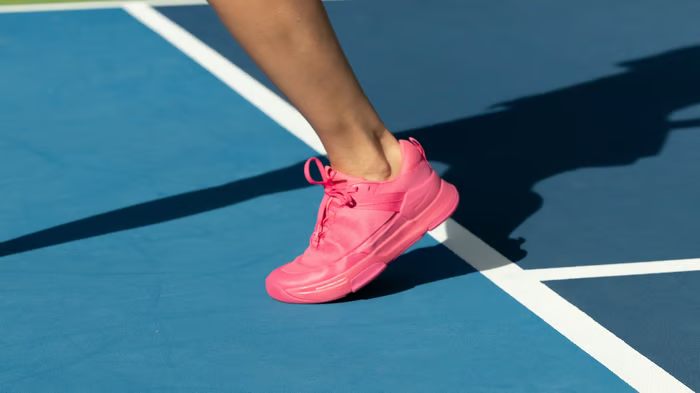
Somewhere in your life, someone has recently become deeply obsessed with pickleball. Your uncle. Your boss. That couple three doors down who now speak exclusively in “dinks” and “kitchens.” It’s not your imagination — pickleball has been the fastest-growing sport in America for years running, and it’s spilling across the world (India very much included) at a genuinely ridiculous pace.
Here’s the part nobody warns the newcomers about, though: pickleball will happily destroy your ankles if you play it in the wrong shoes.
We see it every week. Someone laces up their comfiest running trainers, sprints sideways for a drop shot, and — pop. Because pickleball, for all its chill, pickle-flavoured branding, is a game of sudden, violent, side-to-side movement. And side-to-side is the one thing running shoes are physically built not to do.
So let’s fix that. Here’s how to pick the right pair, followed by our favourites for every type of player.
First, a public service announcement: your running shoes are a liability
We’ll say it plainly, because it genuinely matters: do not play pickleball in running shoes.
Running shoes are engineered for exactly one direction — forward. They’re tall, soft, and cushioned to roll you heel-to-toe in a straight line. That’s brilliant for a 5K and borderline dangerous on a pickleball court, where you’re constantly lunging sideways, stopping dead, and changing direction on a dime. All that plush, elevated foam that feels amazing while jogging becomes a wobbly little tower just begging your ankle to roll clean off the edge.
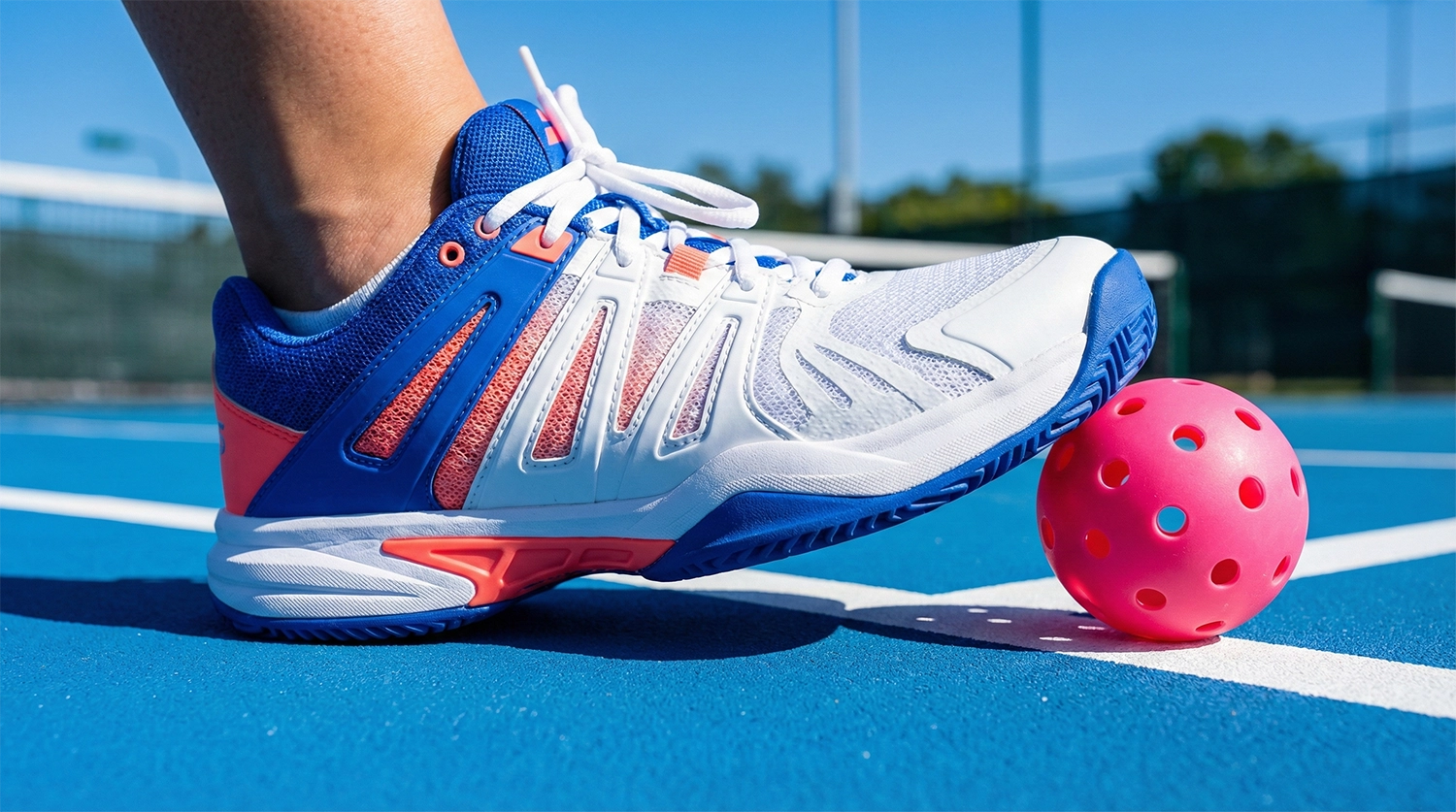
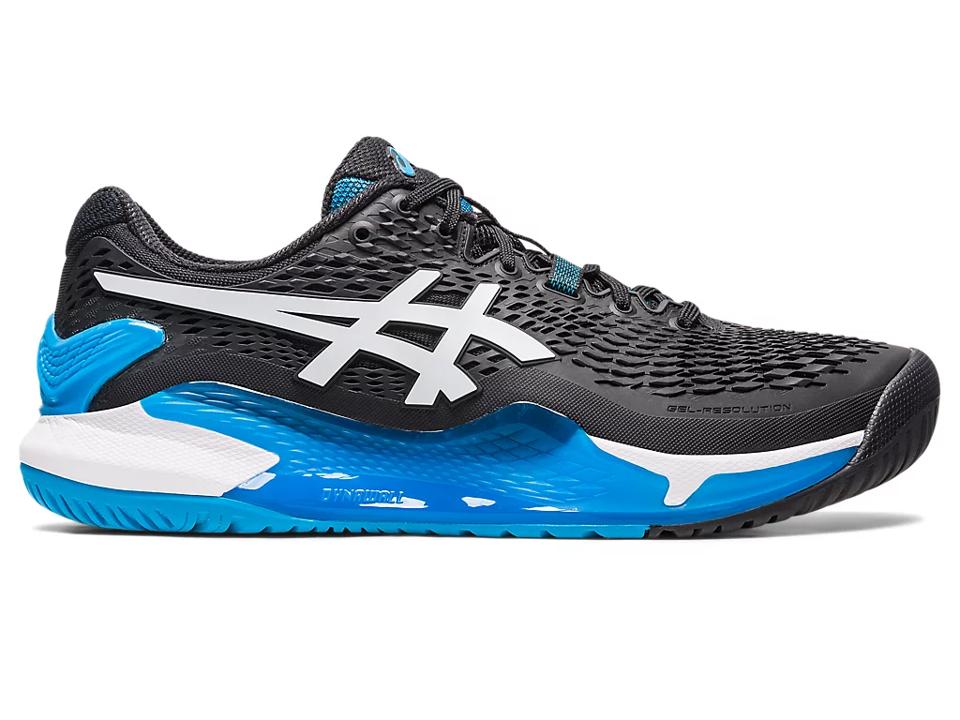
Court shoes — the family that includes tennis and pickleball shoes — are the opposite. They sit lower to the ground for stability, they’re reinforced along the sides to survive hard lateral cuts, and their outsoles are built to grip and pivot rather than launch you forwards. Switching to a proper court shoe is the single biggest upgrade you can make to both your game and your joints. Everything after this is just detail.
What separates a great pickleball shoe from a gimmick
Now that half the sporting-goods world has slapped the word “pickleball” on a shoebox, here’s how to spot the real thing from the marketing costume.
Traction is king. Look for a grippy rubber outsole, ideally with a herringbone or similarly patterned tread that bites the court and lets you stop and pivot without skating across it. This is what keeps you upright during those frantic exchanges at the net.
Lateral support is non-negotiable. The upper should feel locked-in and reinforced through the sides, so aggressive side-steps don’t spill your foot over the edge of the sole. If a shoe feels tippy the moment you lean into it, put it straight back on the shelf.
Toe durability matters more than you’d expect. Pickleball players drag their toes — a lot — on serves and lunges. The good pairs armour the toe with an extra rubber cap so you don’t wear a hole clean through them inside a month.
Cushioning should be balanced, not bouncy. You want enough padding in the heel and forefoot to absorb hours of stop-start pounding, but not the sky-high stack of a max-cushion running shoe. Low and stable beats tall and squishy every single time here.
And check the fit personality: some brands run notoriously narrow, others offer proper wide options. Buying the wrong shape is the fastest possible route to blisters and quiet regret.
One last thing — indoor and outdoor courts wear shoes differently. Indoor (gym-floor) play rewards a non-marking outsole with a slightly smoother tread, while outdoor concrete courts are brutally abrasive and demand a tougher, more durable rubber. Plenty of shoes now handle both, but if you play mostly outdoors, prioritise durability — your wallet will absolutely notice the difference.
Do you actually need “pickleball” shoes?
Fair question — and the honest answer is: not necessarily.
Here’s the not-so-secret truth: most “pickleball shoes” are court shoes, and a good tennis shoe will serve you brilliantly on a pickleball court. They share the same DNA — low profile, lateral stability, grippy court-ready outsoles — because the two sports demand almost identical footwork. If you’ve already got a solid pair of tennis or court shoes sitting in the cupboard, you can absolutely play in those and skip the dedicated purchase entirely.
That said, the new wave of pickleball-first brands now designing from the ground up — the likes of SQAIRZ, Diadem, Franklin and a growing crowd of others — are fine-tuning details like toe-drag protection and grip patterns for exactly how pickleball is played. So a purpose-built pair can be a genuine upgrade rather than just clever labelling. Just remember the one hard rule: tennis or pickleball shoes, yes; running, basketball, or casual lifestyle sneakers, absolutely not.
The best pickleball shoes for every kind of player
Enough theory. Here are the pairs worth your money right now, sorted by the kind of player you are. (Prices and stock shift constantly, so always check the latest before you commit.)
Best all-around: the Babolat Jet Mach. A court shoe that’s quietly become a genuine pickleball favourite — light, fast, grippy, and durable enough to take a real beating. If you want one do-everything pair and refuse to overthink it, start right here.
Best built-for-pickleball pick: the SQAIRZ XRZ. From one of the brands actually designing for pickleball rather than borrowing from tennis, this is about as durable as court shoes get, with serious ankle support and reliable grip. A premium splurge, but a pair you won’t be replacing any time soon.
Best for speed and agility: the Mizuno Wave Exceed Tour. Low-to-the-ground and springy thanks to Mizuno’s Wave plate and responsive midsole, it’s made for players who live on the move and want to feel quick and balanced deep into a long, sweaty session.
Best for wide feet: the K-Swiss Express. Lightweight, supportive, and — crucially — available in shapes that won’t crush a wider foot. If most court shoes feel like a medieval vice, consider this your relief.
Best value: the Skechers Viper Court with Arch Fit. Affordable, comfortable straight out of the box, and happy on both indoor and outdoor courts, with the sneaky-good arch support Skechers has quietly mastered. The Wilson Rush Pro Ace “Pickler” is another excellent value pick hovering around the hundred-dollar mark.
Best grip for explosive players: the Franklin ACV Pro. If your game is all sudden bursts and last-second saves, these serve up some of the stickiest traction going — purpose-built for players who simply never stop moving.
Getting the fit right
Court shoes want to fit a little differently to your everyday sneakers, so here’s a quick fit primer before you buy.
You’re chasing lockdown, not looseness. A pickleball shoe should feel snug and secure through the midfoot and heel — that’s what stops your foot sliding around during hard cuts — while still leaving roughly a thumb’s width of room up front, so your toes aren’t jammed on every lunge.
Try them on late in the day or straight after activity, when your feet are at their largest, and always with the socks you’ll actually play in. Double-check that the heel doesn’t slip and the sides feel genuinely supportive when you lean your weight into them.
And the same golden rule from every good shoe applies here too: there is no break-in period. A proper pair should feel stable and comfortable from the very first rally. If it doesn’t, it simply isn’t the shoe for you — move on.
Pay attention to width, too. If your foot spills over the edge of the sole or the sides pinch, you need a wider shape, not just a longer one — going up a full size to chase width only leaves your heel swimming. And a good snug midfoot lace-lock will do more for your on-court stability than any single spec printed on the box.
Know when to retire them
Pickleball shoes live hard, fast lives, and a worn-out pair quietly stops protecting you long before it falls apart.
Keep a close eye on the outsole — once that tread is buffed smooth, your grip (and a good chunk of your safety) disappears with it. Watch for a thinning or worn-through toe-drag zone, flattened cushioning that no longer springs back, and any new little aches creeping in after you play. Outdoor players will chew through outsoles noticeably faster than indoor ones, courtesy of all that abrasive concrete.
There’s no universal mileage counter for court shoes the way there is for running, but if the grip’s gone or the support feels dead underfoot, don’t wait for an injury to make the call for you. Fresh rubber is cheap; a sprained ankle and six weeks off the court are not.
The bottom line, in 30 seconds
For the skimmers, here’s everything that actually matters, boiled right down.
Never, ever play pickleball in running shoes — you need a low, stable court shoe.
Prioritise grippy tread, real lateral support, and a reinforced toe.
Pick for your feet and your surface: wide options if you need them, tougher rubber if you’re outdoors.
Get the fit snug-but-not-cramped, and expect absolutely zero break-in.
Replace them the moment the grip or the support starts to fade.
And if you just want a safe bet, an all-rounder like the Babolat Jet Mach or a value pick like the Skechers Viper Court will get almost anyone happily onto the court.
Now go dink responsibly — and maybe, finally, stop borrowing your running shoes for a sport that is quite literally trying to sprain you.