

Walking into a running store should be simple. You run, you need shoes, but how to choose running shoes can it be?
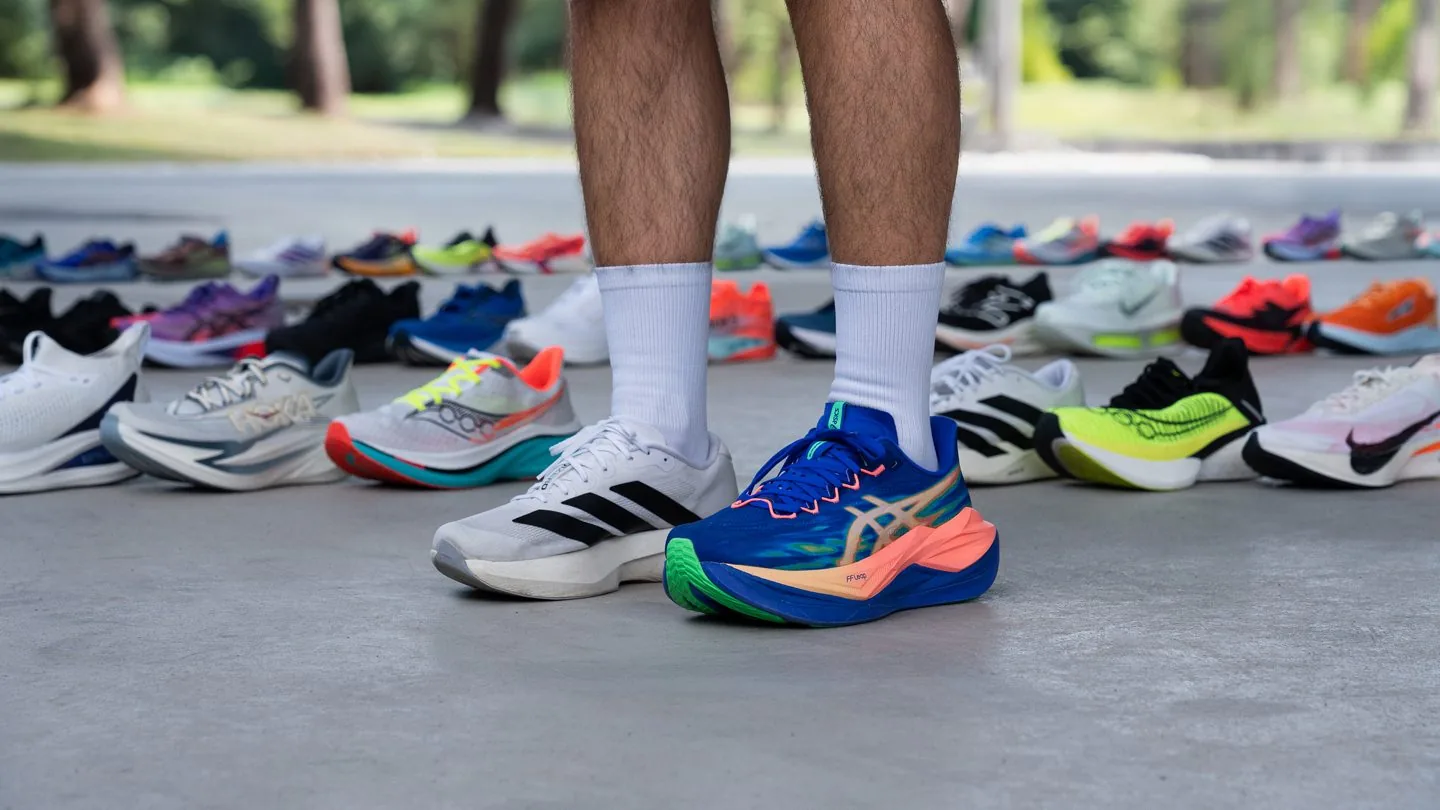
Then you see The Wall.
Hundreds of shoes, all screaming for attention, plastered with words that sound faintly made up. “Neutral.” “Stability.” “4mm drop.” “Energy return.” “Carbon-plated propulsion.” You came in to buy shoes, and somehow you’re being asked to sit a biomechanics exam.
Here’s the good news: most of that wall is marketing, and the actual decision is far simpler than the industry wants you to believe. You don’t need a sports-science degree. You need to answer a few honest questions, ignore a lot of noise, and — radical idea — trust your own feet.
We’re a sneaker magazine, so believe us when we say this next part hurts: this is the one time we’re going to beg you to stop caring about how the shoe looks. (Typing that physically pained us.) Now let’s get you a pair that loves you back.
Step one: what are you actually running for?
Before anything else, be brutally honest about the running you’ll genuinely do — not the fantasy version where you’re a sub-three-hour marathoner by October.
Are you jogging a gentle 3K around the block a few times a week? Grinding out long, sweaty weekend runs? Pounding a treadmill at the gym? Attacking muddy trails? Or — let’s be real — buying “running shoes” mostly to run errands and look sporty at brunch?
This single answer quietly decides everything downstream: how much cushioning you want, how grippy the sole needs to be, how much you should spend. A casual jogger and a trail ultra-runner are shopping for completely different animals. Nail down your use case first, and that overwhelming wall of shoes suddenly shrinks to one manageable corner.
Meet your feet (yes, there’s a test)
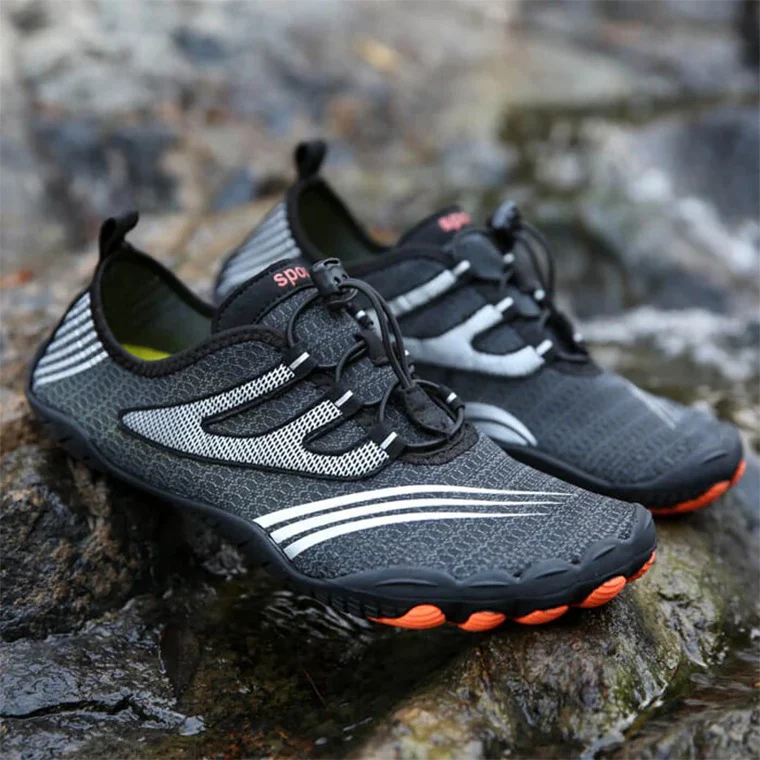
Every foot is a little bit weird, and yours is no exception. The classic starting point is your arch and how your foot rolls when it lands — otherwise known as pronation, the scariest-sounding word on the whole wall.
Quick translation. When you run, your foot naturally rolls inward a touch to absorb impact. Roll inward too far and you “overpronate” (often flatter feet). Barely roll at all and you “underpronate,” or supinate (often higher arches). Land somewhere in the sensible middle and congratulations — you’re “neutral.”
Want a rough read at home? Do the wet test. Dampen the sole of your foot and step onto a piece of paper or a dry tiled floor. A big, full footprint with almost no arch gap? Likely low arches. A skinny print with just a thin strip connecting heel and toe? High arches. Something in between? Neutral, you beautifully average creature.
Now, the plot twist the industry tends to bury: modern research suggests the whole pronation-equals-injury panic was wildly oversold. Matching a “corrective” shoe to your exact gait matters far less than simply finding a pair that feels genuinely comfortable. Use the arch info as a loose starting point, not a life sentence.
The jargon, finally translated
Ready to decode the rest of the wall? Here’s your cheat sheet, minus the sales pitch.
Heel-to-toe drop is just the height difference between the heel and the forefoot, measured in millimetres. A big drop (10–12mm) suits heel-strikers and feels traditional and familiar. A low drop (0–6mm) shifts more of the work onto your forefoot and calves. Neither is objectively “better” — but switching drastically overnight is a superb way to introduce yourself to your own Achilles tendon.
Cushioning (or “stack height”) is simply how much foam sits between you and the pavement. Max-cushion shoes feel like plush marshmallows and soak up the pounding of long distances. Minimal shoes give you ground feel and a sense of speed. Pick your poison.
Stability versus neutral just tells you whether the shoe has extra built-in structure to gently guide an overpronating foot (stability), or whether it leaves you happily to your own devices (neutral). If you’re comfortable and not getting injured, neutral is a perfectly lovely place to live.
And those carbon plates everyone whispers about? They’re the stiff plates baked into pricey “super shoes,” teamed with bouncy, space-age foam to make you measurably faster. Brilliant for racing, brutal on your bank balance, and utterly unnecessary for your first pair.
Fit is everything (get this wrong and nothing else matters)
If you skim one section, make it this one. The most perfect specs in the world are worthless bolted to a badly fitting shoe.
Rule one: size up. Your running size is usually half a size to a full size bigger than your everyday sneakers, because feet swell on the move and your toes need room to breathe and splay. Aim for roughly a thumb’s width of space between your longest toe and the front of the shoe.
Rule two: shop at the right time. Try shoes on in the evening, or straight after a run, when your feet are at their largest and most swollen. Shoes fitted first thing in the morning have a nasty habit of feeling like medieval torture devices by kilometre three.
Rule three: bring the socks you’ll actually run in. That chunky pair changes the fit far more than you’d expect.
Rule four: the heel should lock in with zero slip, and the width should feel snug but never pinchy. And now, the golden, non-negotiable law of running shoes: there is no “break-in period.” A proper running shoe should feel good the very moment you lace it up. If a pair needs breaking in, what it’s actually doing is breaking you.
Road, trail, or treadmill?
Where your feet land dictates what belongs underneath them.
Road shoes are the sensible default: lighter, smoother-soled, and cushioned for the relentless, unforgiving flatness of pavement and concrete. If you run streets, footpaths, or the treadmill, this is your lane — and yes, treadmills are soft enough that road shoes are perfectly at home there.
Trail shoes are the rugged, outdoorsy cousins: aggressive lugs for grip, tougher and more protective builds, and often a plate to stop a surprise rock from ruining your entire afternoon. The moment mud, gravel, roots, or proper hills enter the picture, you’ll want that extra bite.
A small note for anyone running through Indian summers or the monsoon: prioritise a breathable mesh upper so your feet don’t cook, and never underestimate outsole grip once the roads turn slick. Your ankles will send a thank-you card.
The test drive — and knowing when to let go
You’d test-drive a car before buying it. Extend your shoes the same courtesy.
Plenty of running-specialty stores will pop you on a treadmill, film your gait, and hand over a few tailored options — genuinely worth doing, especially for a first pair. Shopping online? Lean on generous return windows: many brands now let you properly run in a pair and send them back if they’re wrong. Whatever you do, resist committing based on a single timid lap around the shop carpet.
And once you’ve finally found The One, accept that it won’t last forever. Most running shoes are cooked after roughly 500–800km (that’s about 300–500 miles). The warning signs are easy to spot: flattened, deeply creased midsole foam, outsole tread worn smooth, and — the big tell — mysterious little aches creeping in after runs that never used to hurt. When the bounce dies, replace them before your knees lodge a formal complaint.
And how much should you actually spend?
Less than you think — at least to begin with.
The temptation is to assume the most expensive shoe must be the best shoe. It isn’t. It’s usually just the fastest, lightest, and most fragile, built for people chasing personal bests, not for people building a habit.
For a first pair, a dependable, well-cushioned everyday trainer is the smart buy. It’ll be comfortable, durable, and forgiving while your body adapts to the mileage. Save the flashy race-day rockets for when you’ve actually got a race day.
Pro tip: last season’s models are the real value sweet spot. Shoes get quietly “updated” every year, often with changes you’d need a microscope to spot, and the outgoing version routinely sells for a fraction of the shiny new one. Same shoe, smaller dent in the wallet.
How to choose running shoes, in 30 seconds
Short on patience? Here’s the entire guide, boiled right down.
Work out what you’ll actually run, and on what surface.
Get the fit right before anything else — size up, leave toe room, try them on late in the day, and demand zero break-in.
Treat your arch and gait as a loose guide, not gospel.
Match the shoe to your terrain: smooth for road, lugged for trail.
Ignore the fancy carbon plates until you’re genuinely racing.
Spend modestly on your first pair, and upgrade only as the habit sticks.
Replace the pair somewhere around 500–800km.
And above everything else, chase comfort over spec sheets.
The one rule that beats every other rule
Here’s the secret the entire industry spends fortunes trying to complicate: the best running shoe is the one that feels best on your feet.
That’s it. That’s the cheat code. Every pronation chart, foam name, and drop number exists purely to help you arrive at “oh, these feel amazing” — and if a pair nails that on the very first jog, the spec sheet doesn’t get a vote.
So take the jargon lightly, take the fit deadly seriously, and go find a pair worth putting real miles on. Your future self — the one actually enjoying the run rather than nursing a heel blister — is quietly counting on you.
Now go. And okay, fine: if the pair that feels perfect also happens to look absolutely incredible, we promise not to tell anyone you noticed.